
Top Knife Gate Valve Manufacturers in China
China’s knife gate valve sector serves demanding industries, from mining and wastewater treatment to pulp and paper. Buyers often compare manufacturers by more than price. They need to assess body materials, gate design, sealing options, pressure ratings, and support for abrasive or solids-heavy service. A valve that looks robust in a catalog may behave differently when handling thick slurry. Details matter.
The broader market offers useful context, but it is not a measure of knife gate valves alone. Grand View Research estimated the global industrial valves market at USD 78.5 billion in 2023 and forecast a 4.8% compound annual growth rate from 2024 to 2030. That figure covers many valve types. It should not be read as knife gate valve market size. W. Edwards Deming, a manufacturing-quality authority rather than a knife gate valve specialist, famously said, “Quality is everyone’s responsibility.” The point applies to procurement: consistent inspection, traceable materials, and clear testing records matter at every production stage.
This guide profiles leading knife gate valve manufacturers in China and considers practical factors behind their claims. It looks at product range, manufacturing capability, customization, export experience, and after-sales support. Company statements are useful, but they are not independent proof. Ask for relevant test documents, confirm the valve’s suitability for the actual medium, and review technical drawings before ordering. A supplier may offer an attractive specification; the service conditions still decide whether it is the right choice.
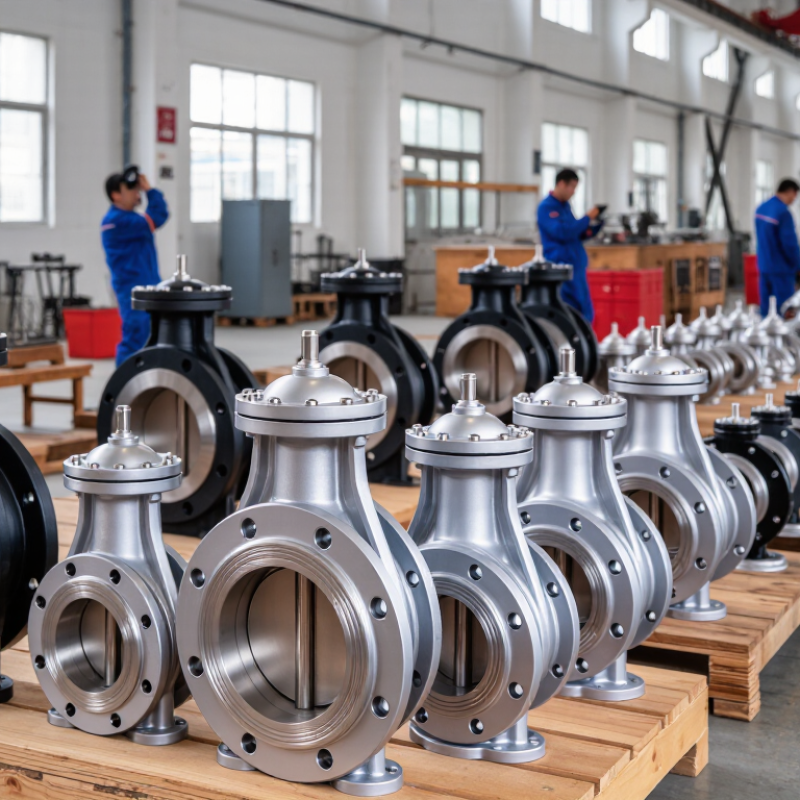
Knife Gate Valve Basics: Gate Designs, DN Sizes, and PN Ratings
Knife gate valves are designed to move a flat blade through the flow path, cutting through liquids that may contain fibers or suspended solids. Gate design affects sealing and service. A unidirectional design seals against pressure from one direction; bidirectional models are intended to seal from either side when specified. Resilient seats can provide tight shutoff in suitable media, while metal seats may better tolerate abrasion. Neither option fits every process.
DN indicates nominal pipe size, not a guaranteed measurement of the valve’s internal opening. A DN 150 valve, for example, should be checked against the connected pipe, flange drilling, and available installation space. In a slurry line, also consider solids, blade clearance, and whether the valve can be flushed or serviced safely. Small details matter.
PN is a nominal pressure designation, not a promise of the same allowable pressure under every temperature or operating condition. Confirm the pressure-temperature limits, test standard, body material, and seat compatibility on the technical datasheet. A valve may match the DN and PN markings yet still suit the service poorly. The label is only part of the choice. Field conditions can be messier than a selection chart suggests.
| Valve configuration | Gate and sealing design | Typical DN range | Common PN ratings | Typical applications |
|---|---|---|---|---|
| Unidirectional knife gate valve | Designed to seal against pressure from one specified direction; the seat and body arrangement determine the preferred flow direction. | DN 50–DN 1200 | PN 6, PN 10, PN 16 | Pulp and paper stock, wastewater, and slurry lines where the pressure direction is controlled. |
| Bidirectional knife gate valve | Seat arrangement is intended to provide shutoff with pressure applied from either direction. Leakage performance depends on the seat design and service conditions. | DN 50–DN 1000 | PN 6, PN 10, PN 16 | Wastewater, mineral processing, and general process lines that may experience flow reversal. |
| Through-conduit knife gate valve | The open gate retracts clear of the flow passage, helping reduce obstructions and material build-up in suitable services. | DN 80–DN 1200 | PN 6, PN 10 | Bulk solids, fibrous media, and some slurry duties; selection should account for particle size and abrasiveness. |
| Resilient-seated knife gate valve | An elastomer seat provides a soft sealing surface. Seat material must be selected for the medium, temperature, and chemical compatibility. | DN 50–DN 1000 | PN 6, PN 10, PN 16 | Water, wastewater, and mildly abrasive services within the seat material’s operating limits. |
| Metal-seated knife gate valve | Metal-to-metal seating is used where service conditions may be unsuitable for soft seats; shutoff performance varies by design and application. | DN 50–DN 1200 | PN 6, PN 10, PN 16 | Abrasive or higher-temperature process duties, subject to the valve’s specified materials and limits. |
| Flanged-end valve | End connections use flanges selected to match the piping standard, DN, and pressure designation. | DN 50–DN 1200 | Commonly PN 6–PN 16 | Installations requiring bolted pipe connections and straightforward removal for maintenance. |
| Wafer or lug-style valve | Compact body fits between flanges (wafer) or may use tapped lugs for bolting (lug style); verify flange compatibility before installation. | DN 50–DN 1000 | Commonly PN 6–PN 16 | Space-conscious piping layouts in water, wastewater, and process plants. |
Reading the ratings: DN is the nominal size designation, not a direct measurement of the valve’s internal bore. PN is a nominal pressure designation; for example, PN 10 corresponds to a nominal 10 bar designation and PN 16 to 16 bar. Allowable working pressure depends on the valve design, materials, temperature, and applicable standard. Size and rating availability varies by product, so confirm the manufacturer’s data sheet for the exact configuration.
Related Posts
-
How to Choose the Right Knife Valve for Your Application
-
How to Choose a Knife Gate Valve in 2026?
-
Why Choose a Knife Gate Valve for Industrial Applications?
-
Understanding Industry Standards for the Best Knife Gate Valves
-

Advantages of Using Knife Gate Valves in Various Industries
-
Why Choose a Stainless Check Valve for Your System?