
Why Choose a Knife Gate Valve for Industrial Applications?
In demanding industrial systems, valve selection affects safety, maintenance time, and production continuity. A Knife Gate Valve is often chosen when pipelines carry thick, abrasive, or solids-laden media. Its thin gate travels through the flow path, helping cut through slurry, pulp, ash, and similar materials. This design can provide dependable shutoff where ordinary valves may clog or suffer excessive resistance.
Field experience shows the value of simple, accessible equipment. Operators can inspect the packing, body, and gate without dismantling an entire line. In wastewater plants, mining facilities, and paper mills, this access may shorten maintenance work during scheduled shutdowns. However, performance depends on correct sizing, pressure ratings, seat materials, and actuator selection. A valve installed without reviewing these details can leak or wear sooner than expected.
Not every application fits.
Engineering teams should compare media concentration, temperature, pipeline orientation, and cycling frequency before specifying a Knife Gate Valve. Manufacturer data, test records, and recognized industrial standards provide stronger evidence than sales claims alone. Reliable suppliers should explain limitations, including situations requiring a resilient-seated, metal-seated, or specialized slurry valve. In practice, no component is perfect; even a robust gate valve may struggle with high throttling demand or unsuitable solids. That is an important point to question. Choosing well means balancing purchase cost with inspection access, replacement intervals, and the real consequences of an unexpected shutdown. This article examines those practical reasons and shows where a Knife Gate Valve can deliver measurable value.
What Is a Knife Gate Valve and How Does It Work?
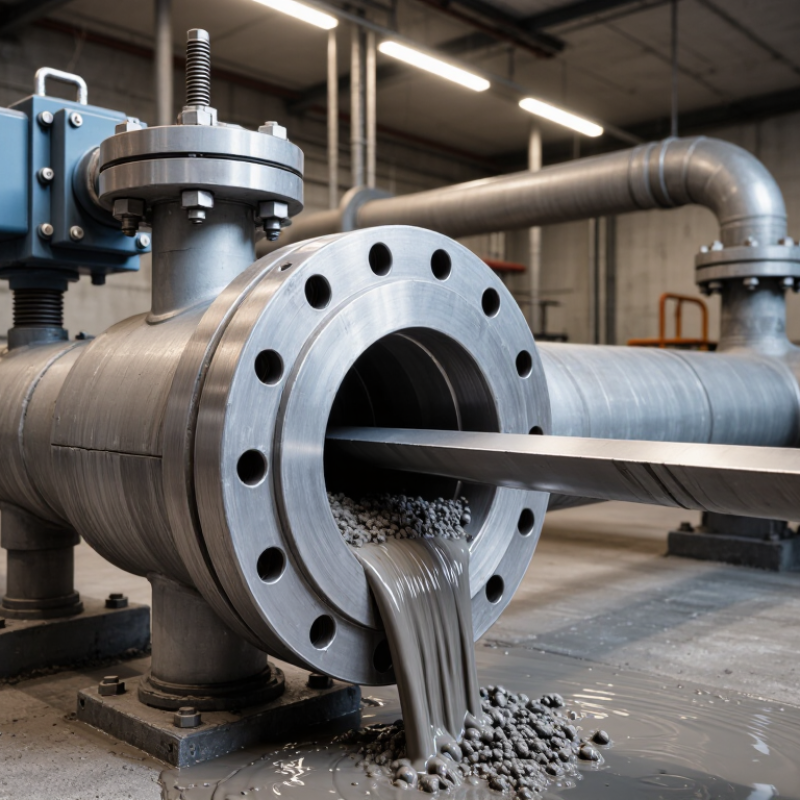
A knife gate valve uses a thin, sharpened gate to control flow through a pipeline. The gate moves vertically inside the valve body. When fully raised, it leaves a relatively open passage for media. When lowered, it cuts through and blocks the stream.
This design suits wastewater, pulp, mining slurry, ash, and other lines carrying solids. The cutting edge can penetrate settled material that might obstruct a conventional gate. Operators usually select a rising-stem or non-rising-stem version, depending on space and maintenance access. Pneumatic or electric actuators can automate the movement, while manual handwheels support simpler installations. Simple mechanics.
The U.S. Environmental Protection Agency’s 2022 Clean Watersheds Needs Survey estimated $630.1 billion in wastewater infrastructure needs over twenty years. Such investment increases pressure for valves that are accessible, durable, and correctly specified. Yet a knife gate valve is not a universal answer. It generally supports isolation better than precise throttling. High-velocity flow can also accelerate seat and gate wear. Field inspections often reveal the overlooked issue: solids collect around the lower body when drainage is poor. Engineers should check pressure rating, slurry concentration, temperature, actuator force, and maintenance clearance before selection. The UN World Water Development Report 2024 notes that agriculture represents about 70% of global freshwater withdrawals, reinforcing the need for dependable isolation in treatment and distribution systems. But reliability depends on installation, not the valve alone.
Why Choose a Knife Gate Valve for Industrial Applications? - What Is a Knife Gate Valve and How Does It Work?
| Data Dimension | Knife Gate Valve Information | Industrial Relevance |
|---|---|---|
| Definition | A linear-motion valve that uses a flat or beveled gate with a sharp lower edge to start, stop, or isolate fluid flow. | Designed especially for slurries, powders, dry bulk solids, wastewater, pulp stock, and other media that may contain suspended particles. |
| How It Works | An actuator moves the gate vertically through the flow path. In the open position, the gate retracts from the passage; in the closed position, it blocks the opening and seals against the seat. | The cutting action helps the gate pass through fibrous, viscous, or particle-laden media with less risk of wedging than many conventional shutoff valves. |
| Primary Function | On/off isolation service. | Suitable for isolating equipment, pipelines, tanks, pumps, and process sections during operation or maintenance. |
| Typical Flow Media | Water, wastewater, abrasive slurries, mineral concentrates, coal dust, ash, pulp stock, powders, pellets, and dry bulk solids. | The valve is selected when the process medium may clog, abrade, settle, or damage valves intended mainly for clean liquids or gases. |
| Common Size Range | Approximately DN50 to DN1200 (NPS 2 to NPS 48), depending on the valve design and service. | Large sizes are practical because the design uses a relatively thin gate and a compact body compared with some full-port valve types. |
| Pressure Capability | Common product classes include approximately PN6, PN10, PN16, or ASME Class 150; the actual rating depends on construction, size, temperature, and manufacturer specifications. | Appropriate for many low- to moderate-pressure process lines, but the exact pressure-temperature rating must be verified before selection. |
| Temperature Range | A typical general-service range may be about −20°C to 200°C (−4°F to 392°F), while specialized metal-seated or high-temperature designs may extend beyond this range. | Temperature limits are governed by body, gate, seat, packing, liner, and actuator materials rather than by the valve name alone. |
| Body Materials | Common options include cast iron, ductile iron, carbon steel, stainless steel, and corrosion-resistant lined constructions. | Material selection should consider corrosion, erosion, pressure, temperature, and the chemical composition of the process medium. |
| Seat Configurations | Resilient seats, metal seats, and bidirectional or unidirectional sealing arrangements are commonly available. | Resilient seats can improve shutoff for many liquid services, while metal seats may offer better resistance to high temperature or abrasive particles. |
| Actuation Options | Manual handwheel, pneumatic cylinder, electric actuator, or hydraulic actuator. | Pneumatic and electric actuation support remote operation, automation, emergency shutdown logic, and integration with process-control systems. |
| Flow Resistance | When fully open, many knife gate valves provide a relatively unobstructed passage, although the exact pressure loss varies by port and body design. | Lower flow resistance can help reduce pumping energy and limit turbulence in suitable full-port applications. |
| Main Advantages | Compact face-to-face length, comparatively low weight, effective isolation, cutting action, and suitability for large line sizes. | These characteristics can simplify installation and maintenance in space-constrained process systems. |
| Important Limitations | Generally not recommended for continuous throttling, high-velocity control service, or applications where severe vibration may occur. | Using the valve partially open can increase turbulence, vibration, seat wear, and erosion. A control valve may be more suitable for regulation. |
| Maintenance Considerations | Inspect packing, seat condition, gate edges, actuator alignment, fasteners, and signs of leakage or abrasive wear. | Routine inspection is particularly important in slurry and abrasive services, where solids can accelerate seat and gate wear. |
| Best-Fit Applications | Mining and mineral processing, wastewater treatment, pulp and paper, power-generation ash handling, chemical processing, cement, and bulk-solids handling. | Choose a knife gate valve when reliable isolation is required for difficult media and when the service conditions match the valve’s pressure, temperature, sealing, and material limits. |
Note: Pressure, temperature, size, leakage, and material values are representative engineering ranges. Final selection should be based on the applicable standards, process conditions, valve design, and the supplier’s certified data sheet.
Related Posts
-
How to Choose a Knife Gate Valve in 2026?
-

Advantages of Using Knife Gate Valves in Various Industries
-
Maximizing Value: How Exceptional After-Sales Service Reduces Repair Costs for Best Gate Valves
-
Best Cryogenic Ball Valves for Global Buyers in 2026?
-
Top Globe Valve Manufacturers for Global Buyers Guide
-
Unmatched Quality From China to the World Featuring Best Globe Valve