
How to Choose the Right Knife Valve for Your Application
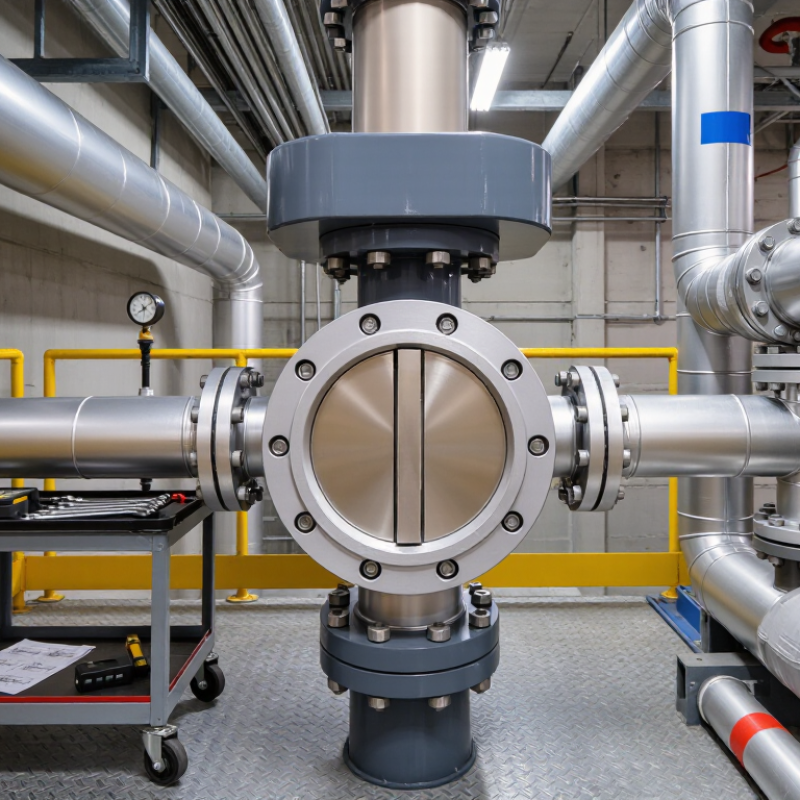
Choosing the right Knife Valve begins with understanding the process, not the catalog page. As valve specialist Philip L. Skousen observes, “Valve selection begins with understanding the process, not the valve.” This principle remains practical in demanding industrial environments. A Knife Valve may control thick slurry, dry powder, wastewater, pulp, or abrasive mineral streams. Each service creates different demands.
Look beyond line size. Check the medium’s solids content, temperature, pressure, flow direction, and chemical behavior. A valve handling gritty slurry may require a reinforced body and resilient seat. A dry powder line may need careful sealing around the gate. In a wastewater plant, trapped debris can affect closing performance. Small details matter. They often become expensive problems.
This guide explains how to compare body materials, gate designs, seats, packing, and actuation methods. It also considers manual, pneumatic, electric, and hydraulic operation. Site access deserves attention. A compact valve can still be difficult to maintain between crowded pipe supports. I have seen specifications focus on pressure ratings while ignoring cleaning access. That is an avoidable weakness.
No Knife Valve suits every application. Sometimes, the selected design looks correct but performs poorly after installation. Perhaps the medium was tested only under ideal conditions. Perhaps cycling frequency was underestimated. This is where careful engineering judgment matters. Review operating data, not assumptions. Confirm compatibility with the manufacturer. Then evaluate lifecycle cost, maintenance needs, and failure consequences before making the final choice.
Define the Process Conditions and Media Characteristics
How to Choose the Right Knife Valve for Your Application
Define the Process Conditions and Media Characteristics
Selecting a knife valve starts with the process, not the valve catalog. Record operating pressure, temperature, flow direction, and cycle frequency. Small details often control long-term performance. A slurry at 20°C behaves differently from a hot, dry powder. Both may appear simple on paper.
Identify the media’s solids content, particle size, abrasiveness, viscosity, and chemical behavior. Fibers can wrap around the gate. Sharp particles may wear sealing surfaces quickly. Corrosive media can attack the body, gate, or packing. Check whether the valve must provide bubble-tight shutoff, or only isolate the line during maintenance. That distinction affects material selection and cost.
Field experience shows that operating conditions rarely remain constant. A valve sized for clean water may struggle when sediment increases after heavy rain. This is where selection becomes less certain. Ask operators about deposits, vibration, pressure spikes, and cleaning methods. Their observations may reveal more than a standard specification sheet. It is also worth reviewing the expected open-close cycles and available actuator force. A large valve may require slow movement to prevent surges. A smaller valve may restrict flow and create unwanted pressure loss. Do not overlook installation space or access for packing adjustment. A technically suitable valve can still become difficult to maintain. Test samples when the media is abrasive, sticky, or unusually fibrous. Real conditions matter.
| Selection Dimension | Process Question | Typical Conditions or Media | Recommended Knife Valve Consideration | Key Design or Material Check |
|---|---|---|---|---|
| Media Phase | Is the medium a liquid, gas, dry solid, slurry, or a mixture? | Water, air, powder, granules, pulp stock, ash, or mineral slurry. | Use a standard shut-off design for clean fluids; use a slurry or abrasive-service design when solids are suspended or conveyed. | Confirm whether the valve must isolate, regulate, or prevent reverse flow. A knife valve is primarily intended for isolation. |
| Solid Concentration | How much suspended or entrained solid is present? | Low-solids liquid, moderate slurry, or high-solids mixture. | Higher solids generally require a full-port passage, a robust gate, and a seat arrangement that reduces material accumulation. | Check solids size, settling tendency, and whether the body cavity can be flushed or drained. |
| Particle Size | What is the largest particle that can pass through the line? | Fine powders, fibrous material, coarse aggregate, or large suspended particles. | Avoid a reduced opening if particles may bridge, lodge, or block the valve. | Compare the valve bore, gate clearance, and line size with the maximum particle diameter. |
| Abrasiveness | Will the medium wear the gate, seat, or body during repeated cycling? | Sand, ore concentrate, fly ash, glass particles, or mineral slurry. | Select abrasion-resistant wetted components and a design suitable for solids service. Minimize throttling where erosion is expected. | Evaluate particle hardness, concentration, velocity, and expected cycle count. |
| Corrosiveness | Does the medium attack metallic or elastomeric components? | Acidic or alkaline liquids, chloride-containing water, chemicals, or salt solutions. | Choose body, gate, stem, seat, and packing materials according to the actual chemical composition and temperature. | Review concentration, pH, chloride level, oxidation potential, and compatibility data from the material supplier. |
| Temperature | What are the minimum, normal, and maximum operating temperatures? | Ambient service, hot process fluid, steam-related service, cryogenic service, or thermal cycling. | Select seat, packing, coating, and actuator components for the complete temperature range, not only the normal value. | Account for start-up, shutdown, heat tracing, thermal expansion, and possible temperature spikes. |
| Pressure | What are the normal, maximum, and differential pressures? | Low-pressure gravity flow, pressurized slurry, pump discharge, or high differential pressure. | Choose a pressure class and body construction that exceed the maximum allowable operating pressure at the design temperature. | Check upstream pressure, downstream pressure, shut-off differential, and pressure direction. |
| Flow Velocity | What is the normal and maximum velocity through the valve? | Slow settling slurry, high-velocity liquid, pneumatic conveying, or intermittent flow. | High velocity can increase erosion, noise, vibration, and seat wear, especially with abrasive solids. | Verify that the valve is fully open during normal flow and avoid using it as a throttling device unless specifically designed for that duty. |
| Leakage Requirement | How much leakage is acceptable after closure? | Non-critical isolation, process containment, hazardous fluid isolation, or zero-visible-leakage requirements. | Select the appropriate resilient or metal-seated configuration and define the required leakage class or test criterion. | Consider seat wear, solids in the media, thermal expansion, and whether bubble-tight shut-off is required. |
| Flow Direction | Is the pressure direction constant or reversible? | One-way pump discharge, bidirectional pipeline, or changing process flow. | Use a bidirectional design when reverse flow is possible; verify the manufacturer’s pressure-direction limitations. | Check seat orientation, gate loading, downstream pressure, and the need for a separate check valve. |
| Fibrous or Stringy Media | Can the medium wrap around the stem or obstruct the gate? | Pulp fibers, textile waste, sludge, paper stock, or organic solids. | Consider a non-rising stem, suitable gate edge geometry, and a body design that reduces hang-up points. | Assess fiber length, moisture content, plugging risk, and cleaning access. |
| Dry Bulk Solids | Will powder or granular material flow by gravity or pneumatic conveying? | Cement powder, grain, ash, plastic pellets, or dry mineral products. | Use a valve intended for dry solids, with sealing and gate guidance suitable for dust loading. | Review dust explosibility, static electricity, particle size distribution, and required enclosure classification. |
| Actuation | How often must the valve operate and how quickly must it close? | Manual occasional isolation, frequent automated cycling, emergency shutdown, or remote operation. | Match manual, pneumatic, hydraulic, or electric actuation to cycle frequency, available utilities, and required fail position. | Calculate actuator thrust or torque using maximum differential pressure, packing friction, solids loading, and safety margin. |
| Installation Position | Where will the valve be installed in relation to the pipe and equipment? | Horizontal pipeline, vertical pipeline, hopper outlet, pump discharge, or confined access area. | Confirm that the selected configuration permits proper gate travel, drainage, maintenance, and actuator clearance. | Allow room for stem movement, actuator removal, inspection, flushing, and replacement of wear components. |
| Maintenance Conditions | How easily can the valve be isolated, cleaned, and serviced? | Continuous production, frequent washdown, remote locations, or hazardous-access areas. | Specify accessible packing, replaceable seats where appropriate, drain or flush connections, and position indication. | Provide safe isolation, lockout points, drainage, lifting provisions, and an inspection schedule based on service severity. |
| Environmental Exposure | Will the valve face weather, salt spray, dust, vibration, or submersion? | Outdoor installation, marine atmosphere, wastewater plant, dusty plant area, or buried service. | Select coatings, fasteners, actuator enclosures, and stem protection for the surrounding environment. | Check corrosion category, ingress protection, ambient temperature, ultraviolet exposure, and flood risk. |
| Standards and Safety | Which piping, pressure, emissions, and safety requirements apply? | General industrial service, hazardous process, potable water, wastewater, or regulated chemical handling. | Specify applicable design, testing, pressure, fire-safety, emissions, and site standards before final selection. | Document design pressure, design temperature, materials, inspection requirements, testing method, and certification needs. |
Related Posts
-
Why Choose a Knife Gate Valve for Industrial Applications?
-
How to Choose a Knife Gate Valve in 2026?
-

Advantages of Using Knife Gate Valves in Various Industries
-

7 Essential Benefits of Knife Valves for Efficient Flow Control in Industrial Applications
-
What is a Knife Valve and How Does it Work in Industry?
-
The Ultimate Guide to Choosing the Best Gate Valve for Your Industrial Needs