2026 Top Stainless Ball Valves for Global Buyers

Global buyers choosing Stainless Ball Valves face a practical question: will the valve keep sealing after years of pressure cycles, temperature changes, and routine operation? The answer depends on more than a polished body or a low quoted price. Buyers need to compare stainless-steel grade, seat material, pressure rating, end connections, test documentation, and traceability. Small details matter. A rough casting, unclear material certificate, or poorly matched seal can complicate installation and shorten service life.

The World Stainless Association reported 58.4 million tonnes of global stainless-steel crude production in 2023, up 4.6% from 2022. That figure describes the wider material landscape, not valve output; it should not be mistaken for a valve-market forecast. For quality thinking, W. Edwards Deming’s often-cited principle, “Quality is everyone’s responsibility,” is relevant to buyers, manufacturers, and inspectors alike. Deming was a quality-management expert, not a ball-valve specialist, so his words are a guiding principle rather than product advice. This guide compares leading options for global procurement through practical criteria: materials, design, certifications, testing evidence, and supplier support. One caveat remains: specifications on paper cannot replace checking a valve against the actual fluid, operating conditions, and maintenance plan. No selection is perfect. The best choice is the one whose documented performance fits the real service conditions—and whose supplier can answer detailed questions without vague assurances.
2026 Top Stainless Ball Valves for Global Buyers

What Stainless Steel Ball Valves Are and How They Work

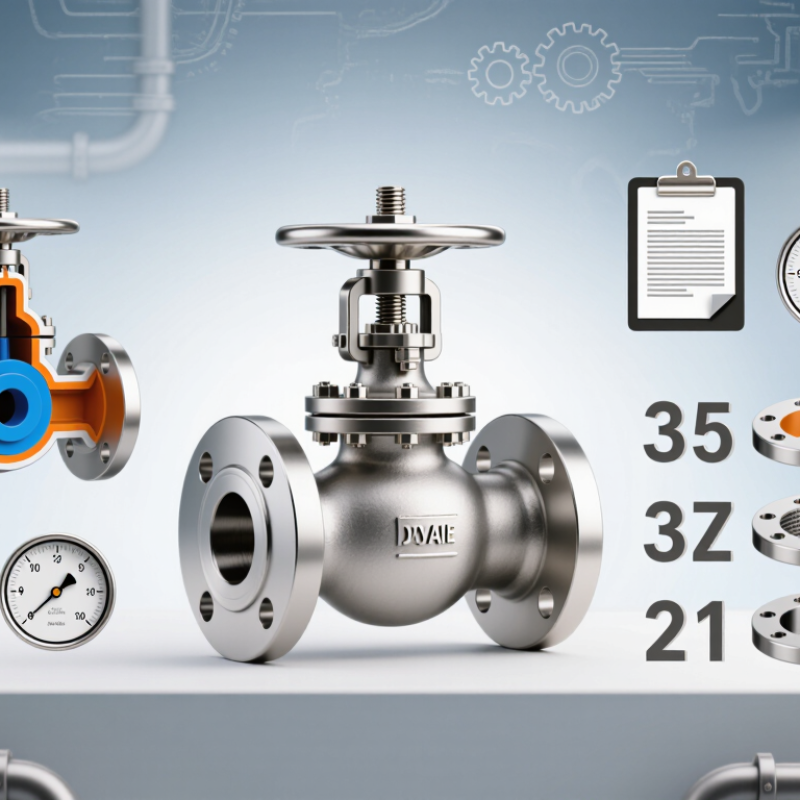
Stainless steel ball valves control fluid with a drilled sphere that rotates inside the valve body. The ball rests between sealing seats. Turn the handle about a quarter-turn, and its bore lines up with the pipe. Fluid flows through. Turn it sideways, and the solid surface blocks the passage. The motion is quick. In some systems, rapid closure can cause pressure surges, so operating speed matters.

The handle moves a stem, which rotates the ball. Sealing seats help limit leakage around it, while the body contains the pressure. Stainless steel can resist corrosion, but performance depends on the steel grade, fluid chemistry, temperature, and maintenance. A damp outdoor line and a hot process line may need different specifications. A valve that seems right on paper may still be awkward when handle clearance is checked. That detail is easy to miss.

Tips: Check the flow direction, pressure rating, connection type, and available space before installation. Open or close the valve fully; partial positioning may wear seats in ways operators do not expect.

2026 Top Stainless Ball Valves for Global Buyers — What Stainless Steel Ball Valves Are and How They Work

Stainless steel ball valves use a rotating, bored ball to start or stop flow. A quarter-turn (90°) aligns the bore with the pipeline to open the valve or turns it across the flow path to close it.

The chart compares typical chromium composition limits for common stainless steel grades. Values are shown as weight percent and are based on ASTM A240 plate specifications; cast valve-body specifications may differ. Material selection should also consider the fluid, temperature, pressure, and applicable product standards.

Key Components, Stainless Grades, and Design Features

A stainless ball valve depends on several parts working together: the body contains pressure, the polished ball controls flow, and the stem transfers handle movement. Seats seal around the ball; seals protect the stem and body joints. Small details matter. Seat material should match the fluid, temperature, and cycling frequency. PTFE suits many general services, while higher temperatures may require another seat design. The World Stainless Association’s Stainless Steel in Figures 2024 reports global stainless-steel production of 58.4 million tonnes in 2023. That scale suggests a mature supply chain, but it does not guarantee consistent valve quality.

Grade selection needs more than a “stainless” label. Type 304 is common for general service, while molybdenum-bearing 316 offers better resistance to chloride-related corrosion. It is not immune to pitting, especially in warm, stagnant saltwater. For cast valve bodies, buyers may encounter CF8 and CF8M, broadly corresponding to 304- and 316-type chemistry. Confirm the specified casting or forging grade, not just the marketing description. Also check pressure-temperature ratings, stem retention, and seat compatibility. ISO 5208:2015 specifies pressure testing and leakage assessment for industrial valves. Ask for the actual test basis and results. A datasheet can look complete and still omit details that matter in service.

2026 Top Stainless Ball Valves for Global Buyers - Key Components, Stainless Grades, and Design Features

Selection Area Common Option Key Characteristics Typical Applications Buyer Checks
Valve body Stainless steel, forged or cast The body contains pressure and supports the internal components. Forged and cast construction have different manufacturing routes; the appropriate choice depends on size, pressure class, design, and applicable specification. Process lines, utilities, food and beverage, chemical service Confirm body material, pressure-temperature rating, design standard, and material traceability.
Ball and flow passage Stainless steel ball; full-port or reduced-port bore The ball rotates to open or shut the flow path. A full-port design generally has a bore close to the connecting pipe’s inside diameter; a reduced-port design has a smaller passage. Full port: lower flow restriction; reduced port: space- or cost-conscious installations Check bore size, ball finish, flow requirements, and whether the design suits the process media.
Stem and anti-blowout feature Stainless steel stem with retained or anti-blowout design The stem transfers actuator or handle movement to the ball. A properly designed stem retention feature helps prevent stem ejection under pressure. Manual or actuated on/off isolation Review stem material, retention design, operating torque, and actuator compatibility.
Seats and seals PTFE or other application-specific polymer; metal seats for suitable services Soft seats can provide tight shutoff over their specified operating range. Temperature, pressure, media compatibility, and cycling can limit polymer-seat suitability. Metal seats may be selected for particular high-temperature, abrasive, or severe-service conditions. Clean liquids and gases; selected demanding services with suitable seat design Verify chemical compatibility, temperature and pressure limits, shutoff class, and fire-safe requirements where applicable.
304 / 304L stainless steel Wrought grades; cast counterpart commonly designated CF8 Widely used austenitic stainless steel with general corrosion resistance. It is not a preferred choice for many chloride-rich environments because pitting and crevice corrosion can occur. General industrial service and environments with limited chloride exposure Assess chloride content, temperature, cleaning chemicals, and the specified product form and grade.
316 / 316L stainless steel Wrought grades; cast counterpart commonly designated CF8M Molybdenum-bearing austenitic stainless steel, generally offering better resistance to pitting and crevice corrosion than 304 in chloride-bearing environments. It is not immune to seawater corrosion. Chemical processing, marine-adjacent service, and applications requiring improved corrosion resistance Check actual media and temperature; do not treat 316 as universally suitable for seawater or concentrated chlorides.
Duplex stainless steel 2205 duplex grade, such as UNS S32205 Duplex microstructure combines austenitic and ferritic characteristics and typically provides higher strength than common austenitic grades, with good resistance to several forms of chloride-related corrosion. Selected chemical, offshore, and chloride-bearing applications Confirm the exact grade, heat treatment, fabrication quality, media limits, and applicable design rating.
Floating-ball design Ball supported by the seats Line pressure pushes the ball toward the downstream seat to help achieve shutoff. Commonly used for smaller and moderate-size valves, subject to the design’s pressure and torque limits. General-purpose isolation duties Check allowable pressure, valve size, seat material, differential pressure, and operating torque.
Trunnion-mounted design Ball supported by upper and lower trunnions Mechanical support reduces the load carried by the seats and can reduce operating torque in larger or higher-pressure designs. Exact performance depends on the specific construction. Larger-bore or higher-pressure pipeline applications Review the pressure class, seat arrangement, cavity-relief provisions, and required testing.
End connections Flanged, threaded, socket-weld, or butt-weld Connection choice affects installation, maintenance, alignment, and suitability for the piping system. Dimensions and ratings vary by standard and valve class. New installations, replacements, and modular process systems Match end type, facing, dimensions, pressure class, and piping specification.
Design and testing standards Examples include ASME B16.34, API 608, ISO 17292, API 598, and ISO 5208 Standards address different aspects of valve design, dimensions, pressure ratings, or testing. Applicability depends on valve type, market, contract, and service requirements. Specification and procurement across international projects State the required standard and edition in the purchase specification; confirm the supplier’s documented compliance and test records.
Operation and actuation Lever, gear operator, pneumatic actuator, or electric actuator Quarter-turn operation is typical. Automated options support remote or frequent operation but require appropriate torque sizing and interface details. Manual isolation, control-system integration, and automated process lines Confirm operating frequency, fail position if required, supply conditions, mounting interface, and accessory needs.

Selection note: Material grades and valve features are general guidance, not a substitute for engineering review. Confirm compatibility with the actual fluid, concentration, temperature, pressure, cleaning regime, and applicable project codes before purchase.

Common Valve Types, Port Designs, and Connection Options

For global buyers, ball-valve selection starts with flow path and service conditions. A full-port design keeps the bore close to the pipe’s internal diameter, helping reduce pressure loss and allowing some cleaning tools to pass. Reduced-port valves are more compact, but their narrower opening can restrict flow. Floating-ball designs suit many smaller lines; trunnion-mounted designs support larger balls and higher operating loads. Two-way valves isolate a line, while three-way versions divert or mix flow. Port choice matters.

Connection details can decide whether a valve fits the installation. Threaded ends are compact, but buyers must confirm thread form, sealing method, and local piping practice. Butt-weld and socket-weld ends create permanent joints; flanged ends are easier to remove for maintenance. Sanitary clamp connections suit systems that need frequent cleaning. The World Stainless Association reported 58.4 million tonnes of global stainless-steel melt-shop production in 2023, a useful indicator of the material’s broad industrial use, not valve demand. Grand View Research valued the industrial-valves market at USD 79.4 billion in 2023. That figure covers many valve types, so it cannot predict demand for stainless ball valves alone. A practical specification should state port design, pressure and temperature range, end connection, and media compatibility. Small details matter. Verify them against the actual piping drawings.

How to Compare Top Stainless Ball Valves in 2026

How to Compare Top Stainless Ball Valves in 2026

Compare valves against the actual service, not a “stainless” label. Check the body grade, pressure-temperature rating, bore size, seat material, and stem sealing. Chlorides, heat, and repeated cycling can change which details matter most. World Stainless reported global stainless-steel melt-shop production of 58.4 million tonnes in 2023, but abundant stainless steel does not make every grade suitable for every fluid. Small details matter. Ask suppliers for material certificates and traceability, then verify that the stated grade matches the valve body and trim.

For a practical comparison, match the rated conditions to your line’s maximum pressure and temperature, including startup or cleaning cycles. ASME B16.34 provides valve pressure-temperature rating requirements; ISO 5208 covers pressure testing of industrial valves. Request the applicable test records, leakage classification, and inspection scope rather than relying on “tested” alone. Also compare operating torque and end connections; a tight quarter-turn handle can be a poor fit for frequent manual operation. One gap buyers sometimes overlook is seat compatibility with the process fluid. I would not assume the lowest quote is the best value, though lifecycle costs are easy to estimate badly without real maintenance data.

Global Buyer Considerations: Standards, Sourcing, and Selection

2026 Top Stainless Ball Valves for Global Buyers

Global buyers should assess stainless ball valves against the actual service, not a supplier’s broad “industrial grade” description. Check the medium, operating pressure, temperature range, and expected cycling. A valve handling clean water may need different seats from one exposed to hot process fluids or chlorides. Details matter.

Standards and documentation need careful review. Confirm which design, testing, and material standards apply in the destination market and project specification. Ask for material certificates, pressure-test records, and clear identification of the body, ball, stem, and seats. If corrosion resistance is critical, verify the stainless grade rather than relying on appearance. A bright surface proves little. Certificate formats and test scope can vary, so resolve gaps before shipment.

Sourcing decisions should include more than unit price and lead time. Compare pressure-temperature ratings, port size, end connections, dimensions, spare-part availability, and packaging for long-distance transport. A mismatch in flange dimensions can delay installation, even when the valve itself is sound. Ask suppliers how they control inspection and traceability, and request evidence suited to the order. In practice, paperwork can look complete while leaving key questions unanswered. Buyers should challenge those gaps, then document agreed specifications before production.

REQUEST A QUOTE

Menu
[all-fields]