

- 713.590.1312
- sale@pandbtools.com
Why Choose a GRP Storage Tank for Water Storage?
Reliable water storage is becoming harder to treat as an afterthought. The WHO/UNICEF Joint Monitoring Programme reported that 2.2 billion people lacked safely managed drinking-water services in 2022. UNESCO’s 2024 World Water Development Report says global water demand has risen by about 1% annually over the past four decades, and is expected to continue growing at a similar rate through 2050. These figures describe a broad infrastructure challenge, not a case for one tank material. Still, they explain why dependable storage matters. A dry tap is not an abstract statistic.
A Grp Storage Tank, made from glass-reinforced plastic, can offer a practical option for municipal, industrial, agricultural, and building water systems. Its relatively light construction can simplify transport and installation, while its corrosion resistance may reduce upkeep compared with some conventional materials. The American Water Works Association’s AWWA D120 standard addresses the design of fiberglass-reinforced plastic tanks. That is useful guidance, not a blanket guarantee of performance. Tank quality, potable-water suitability, capacity, foundation design, and installation all need careful review. One overlooked detail can become a costly problem. GRP is not automatically the right choice for every site: ultraviolet exposure, water chemistry, temperature, and local certification requirements matter. This article examines the benefits and trade-offs, helping readers assess whether a GRP tank fits their specific storage needs.
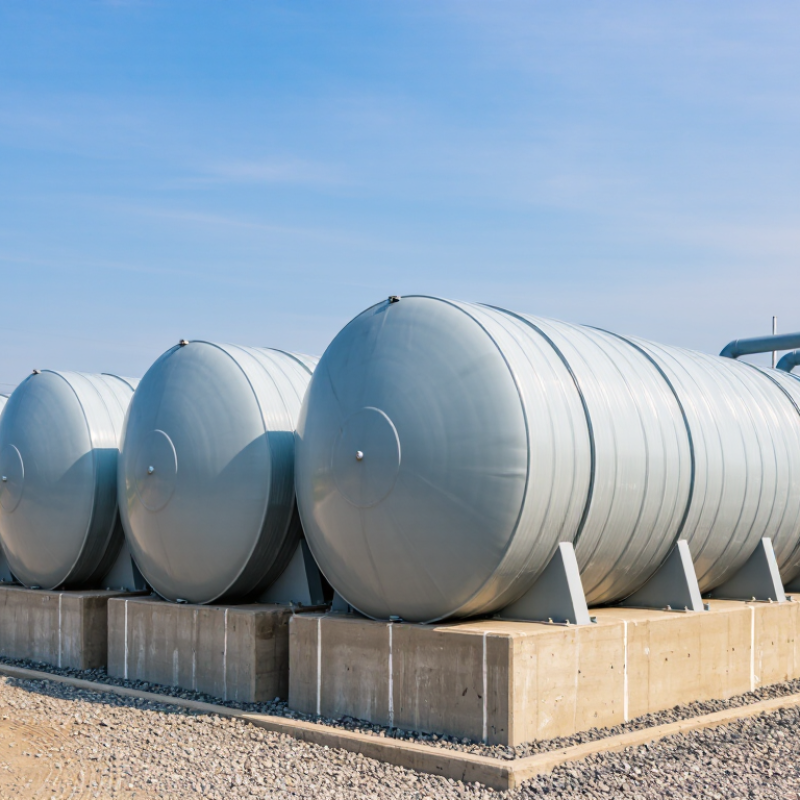
What a GRP Water Storage Tank Is
A GRP water storage tank is a container made from glass-reinforced plastic. Fine glass fibers sit within a resin matrix, helping the material stay strong while remaining relatively light. Many tanks use factory-made panels joined on site with bolts and sealed joints. Other designs are molded as single units. Construction varies, so panel thickness, bracing, and seal details should be checked against the tank’s intended capacity and installation conditions.
Inside, a tank may have a smooth surface or a separate liner, depending on its design. A roof, access hatch, inlet, outlet, and overflow pipe form part of the complete storage system. Picture a maintenance worker opening the hatch to inspect a joint or check for sediment. Small details matter. For drinking water, confirm that the materials are approved for potable-water contact; GRP alone does not guarantee that. The tank also needs a sound, level base and enough clearance for inspection. A panel tank can be practical where access is tight, but more joints mean more places to examine. That trade-off is easy to overlook.

How GRP Tanks Are Designed and Installed
GRP tank design starts with the stored water, daily demand, peak draw, and available footprint. The 2024 UN World Water Development Report notes that global water use has risen by roughly 1% annually over the past four decades. That trend makes dependable storage useful, but capacity should come from site-specific demand, not guesswork. Engineers also assess water temperature, exposure, wind, seismic forces, and foundation loads. EN 13280 covers certain above-ground GRP cisterns for cold water up to 10,000 litres; larger or differently configured tanks need an appropriate design basis. Standards have limits. They do not replace engineering judgment.
Installation quality matters just as much. The support slab must be level, adequately strong, and prepared for the full operating load. Crews typically assemble modular panels with specified seals and fasteners, tightening joints in the required sequence. Small alignment errors can become leaks. Inlet, outlet, overflow, and vent positions should match approved drawings, with access left for inspection. Before service, installers should check connections and complete the specified leak test. Record the results. One detail is easy to overlook: site conditions can differ from the drawings, so measurements should be verified before assembly. A qualified engineer should review the foundation and installation method for the actual location.
Why Choose a GRP Storage Tank for Water Storage?
Design and installation: Water weighs approximately 1 tonne per cubic metre, so tank capacity gives a useful first estimate of the stored-water load. A 50 m³ tank, for example, holds about 50 tonnes of water. The foundation and supports must also account for the tank’s own weight and site-specific design requirements.
Key Properties That Support Water Storage
A GRP storage tank combines glass fibres with a resin matrix, creating a structure that is strong without the weight of many steel tanks. Its lighter panels can simplify transport and installation, especially where access is limited. Modular construction also allows tanks to be assembled on site and sized for a building’s available space. The joints matter, though. Poorly fitted seals can become a weak point, so careful assembly and inspection are essential.
Corrosion resistance is another useful property. GRP does not rust when exposed to water, and its inner surface can be smooth and easy to clean. For drinking-water use, the tank’s materials and any internal lining should be confirmed as suitable for that application; “GRP” alone does not guarantee water-quality compliance. Check the access hatch, vents, and overflow too. Small details count.
GRP is not automatically insulated. In cold or hot locations, the tank may need added protection to help limit temperature changes and condensation. Sun exposure can also affect the exterior finish over time, depending on its design and protective coating. A level, stable base helps distribute the water’s considerable weight. It sounds obvious, but it is easy to underestimate. Regular checks of seals, supports, and visible surfaces can catch wear before it becomes a leak.
Common Applications of GRP Water Tanks
GRP water tanks commonly serve homes, schools, clinics, and small communities where water supply is intermittent. Their sectional construction can fit narrow access routes, then assemble on site beside a pump room or rooftop. The WHO/UNICEF Joint Monitoring Programme reported that 2.2 billion people lacked safely managed drinking-water services in 2022. That figure does not mean a tank alone solves access or water-quality problems. It does show why reliable storage matters between deliveries or supply interruptions. For drinking water, verify that the tank’s materials and fittings are suitable for potable-water contact.
Farms use GRP tanks to buffer irrigation water near fields, reducing the need for frequent refilling. FAO reports that agriculture accounts for about 70% of global freshwater withdrawals. In factories and commercial buildings, tanks can hold process water, cleaning water, or dedicated fire reserves. A tank beside a greenhouse might have to withstand sun, wind, and regular pump cycling; design details matter. GRP is corrosion-resistant, but it is not maintenance-free. Check foundations, joints, access covers, and water condition, and confirm chemical compatibility before specifying a tank. I would not assume every site needs the same configuration.
Factors to Consider When Choosing a GRP Tank
Why Choose a GRP Storage Tank for Water Storage?
Factors to Consider When Choosing a GRP Tank
Choosing a GRP tank starts with the water, site, and operating routine—not the material alone. Confirm whether the stored water is potable, and check its chemistry and temperature against the tank design. The U.S. EPA’s 2023 Drinking Water Infrastructure Needs Survey and Assessment estimated $625 billion in drinking-water infrastructure needs over 20 years. That national figure is not a GRP-tank cost estimate, but it highlights why lifecycle planning matters. Fit matters.
Measure the installation area, including access for delivery, lifting, and future repairs. Check foundation capacity and local wind or seismic design requirements with a qualified engineer. For drinking-water contact, ask for current evidence of compliance with NSF/ANSI/CAN 61, where applicable. AWWA D120-21 provides design and construction requirements for fiberglass-reinforced plastic tanks; verify that the proposed design matches the project’s needs. Don’t assume every GRP tank meets the same specification.
Inspect panel joints, seals, ladders, vents, and internal access details before approving a quote. Ask how UV exposure, cleaning chemicals, and inspection intervals affect the selected resin and fittings. A corrosion-resistant shell is not maintenance-free; that assumption is tempting, but worth challenging. Request written design limits, warranty conditions, and a maintenance plan, then compare them with the site’s actual operating conditions.
Why Choose a GRP Storage Tank for Water Storage? – Factors to Consider When Choosing a GRP Tank
| Factor | What to Check | Why It Matters | Practical Selection Guidance |
|---|---|---|---|
| Required storage capacity | Daily demand, peak usage, refill rate, and the reserve needed during supply interruptions. | An undersized tank may not meet demand; an oversized tank can increase cost and may result in water remaining stored for longer. | Estimate demand over the intended reserve period, then account for usable volume, outlet level, and any required emergency reserve. |
| Water use and contact requirements | Whether the water is for drinking, general domestic use, irrigation, or an industrial process. | Tank materials, liners, fittings, and construction details must suit the water and its intended use. | For potable water, request documentation showing that the complete tank system is suitable for drinking-water contact under the rules applicable at the installation location. |
| Site and installation conditions | Available footprint, access for delivery, foundation design, drainage, and installation clearance. | Panel tanks can be assembled on site, which can help where access is restricted, but they still require a suitable, level support structure. | Confirm tank dimensions, assembly access, base requirements, and the full operating weight—including stored water—with a qualified designer. |
| Water pressure and tank configuration | Whether the tank is at ground level, elevated, or connected to a pump or pressurized system. | GRP tanks are commonly used as atmospheric storage tanks; they are not automatically suitable as pressure vessels. | Specify the intended operating arrangement and ensure that pumps, vents, overflows, and connections are designed for the tank’s rated service conditions. |
| Temperature and environment | Expected water temperature, outdoor exposure, sunlight, wind, and local weather conditions. | Temperature and environmental exposure can affect the tank, seals, fittings, and water quality over time. | Check the manufacturer’s stated operating limits and whether an approved cover, UV-resistant finish, insulation, or weather protection is needed. |
| Structural and site loads | Water weight, wind exposure, seismic conditions, roof or platform capacity, and support spacing. | Water weighs approximately 1,000 kg per cubic metre, so a full tank can impose a substantial load on its base or supporting structure. | Have the foundation and tank support system checked for the full design load and relevant local building and environmental requirements. |
| Water quality and hygiene | Protection from dust, insects, light, debris, and contamination during filling and storage. | A suitable tank alone cannot guarantee water quality; covers, vents, screens, pipework, and cleaning practices also matter. | Look for a secure cover, screened ventilation and overflow openings, accessible inspection points, and a practical cleaning plan. |
| Maintenance and inspection | Access to the interior, fittings, seals, supports, and external surfaces. | Routine inspection can help identify leaks, damage, sediment, or deterioration before they disrupt service. | Confirm safe access and follow the tank documentation and local guidance for inspection, cleaning, and repair intervals. |
| Service life and warranty | Specified design conditions, inspection requirements, repairability, and warranty exclusions. | Service life depends on design, installation, water conditions, exposure, and maintenance; it is not determined by material type alone. | Compare documented ratings and warranty terms, and verify that the proposed tank is designed for the actual site and water conditions. |
| Total installed cost | Tank, foundation, transport, assembly, connections, access equipment, and ongoing maintenance. | The purchase price may not include the supporting structure, site preparation, or installation work. | Compare quotations on a like-for-like basis, including capacity, accessories, installation scope, and any required compliance documentation. |
Note: Selection guidance is general. Confirm tank ratings, water-contact suitability, structural requirements, and local regulatory requirements for the specific project.