Why Choose Glass Mold Cladding Powder for Your Needs?
Choosing Glass Mold Cladding Powder is a practical decision about surface protection, process consistency, and the demands of a specific production line. Glass molds face repeated heating and cooling, contact with molten glass, and frequent handling. Over time, these conditions can affect surface finish and mold life. A suitable cladding powder may help create a durable working surface, but its performance depends on the base material, application method, and operating conditions. There is no universal formula.
Powder composition, particle size, and flow behavior all deserve attention. So do coating thickness and the quality of the bond with the mold. Small details matter. A coating that looks smooth after application may still need testing under real thermal cycles. Engineers should compare supplier data with the mold’s actual temperature range, glass type, and maintenance routine. Trial runs can reveal uneven coverage, cracking, or changes in release behavior that specifications alone may not show. Keep clear records. These results make later adjustments more reliable.
This guide explores why manufacturers consider Glass Mold Cladding Powder, what properties to assess, and which questions to ask before selection. It also recognizes a limitation: product descriptions cannot replace application-specific testing. That may sound cautious, but it is useful. The right choice is the one supported by evidence from the intended process, not simply the one with the most impressive claims.
What Is Glass Mold Cladding Powder?
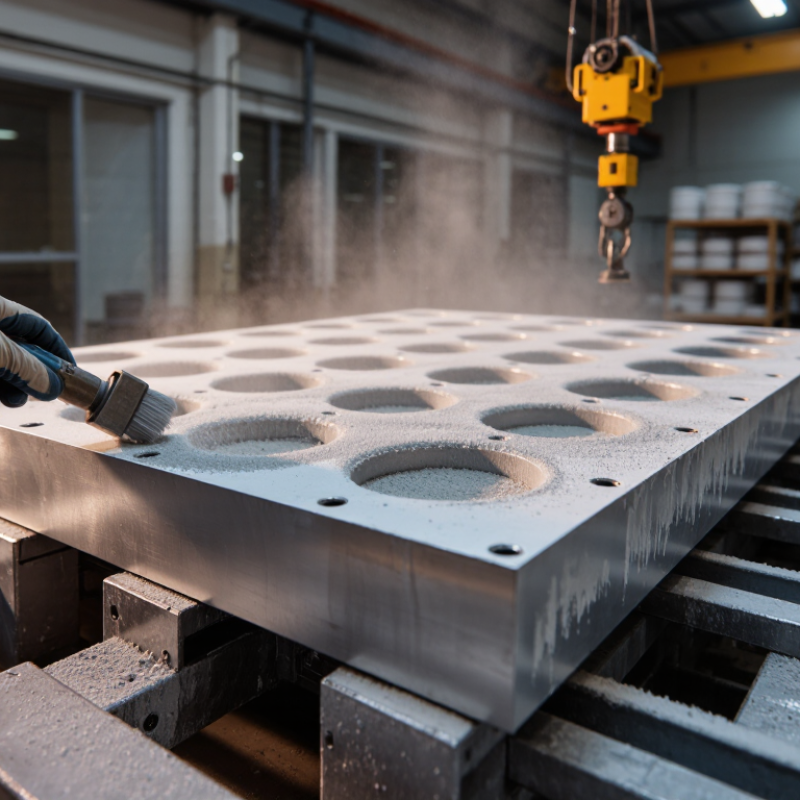
Glass mold cladding powder is a powdered material used to create a protective layer on selected areas of a metal mold. It is not mixed into the glass. Instead, it is applied to the mold surface through a process suited to the powder and equipment, such as thermal spraying or laser cladding. The finished layer may help resist wear, heat exposure, or surface damage during repeated forming cycles.
Its composition varies. Some powders use nickel- or cobalt-based alloys, while others are designed for particular operating conditions. The right choice depends on the mold material, working temperature, glass type, and application method. A powder that performs well in one setup may not bond reliably in another. Small details matter, including surface preparation and layer thickness. The term can sound more precise than it is. Product data and a controlled trial are useful before treating a powder as a direct replacement. A thin, uneven coating can affect mold performance, so the application process deserves as much attention as the powder itself.
How Is Glass Mold Cladding Powder Applied?
Glass mold cladding powder is applied only after the mold surface is inspected for cracks, scale, and worn areas. The surface is cleaned, then roughened or preheated as required by the selected process. For thermal spraying, powder is fed into a hot gas stream and deposited in overlapping passes. For laser cladding, a focused beam melts powder onto the surface, creating a metallurgically bonded layer. These methods are not interchangeable; the powder composition and mold alloy determine the suitable route. Keep it clean.
ASM Handbook, Volume 5A, reports that thermal-sprayed coating thicknesses can range from about 50 micrometres to several millimetres, depending on process and application. That broad range is a useful reference, not a mold-specific target. Operators should set thickness, temperature, and pass speed through material trials, then inspect for pores, cracks, and uneven coverage. A polished finish helps the mold release glass consistently. That is the tidy version. Real molds rarely behave so neatly: corners heat differently, and a small buildup can alter the shape of a bottle neck. Finishing and dimensional checks matter as much as deposition.
What Benefits Does It Offer in Glass Molding?
Glass mold cladding powder can form a protective surface layer on mold components exposed to heat and repeated contact. When properly selected and applied, it may improve resistance to wear and oxidation, helping the mold maintain a more consistent working surface. That can support smoother glass release and reduce marks caused by a rough or deteriorating mold. Small details matter: a faint drag line on a molded part may point to surface wear, but it can also have other causes.
The benefits depend on the powder composition, application quality, mold material, and operating conditions. A coating that performs well in one production setup may not suit another. It is not a cure-all. Uneven coverage or poor preparation can limit performance, so inspection and process control remain essential. In practice, compare coated and uncoated parts under the same conditions, checking release behavior, surface finish, and coating wear over repeated cycles. Results may take time to interpret.
Tips: Clean and prepare the mold surface before coating. Record temperatures and cycle counts during trials. Check for flaking or uneven wear, and reassess the coating choice when defects persist.
Which Properties Affect Its Performance?
Why Choose Glass Mold Cladding Powder for Your Needs?
Which Properties Affect Its Performance?
A cladding powder succeeds when its chemistry, particle size, and bond suit the mold and production cycle. In shop-floor use, uneven powder flow can create thin spots around corners, while excess dilution can soften the finished layer. Check particle-size distribution, not just the average. ISO 4497 describes sieve analysis for metal powders, helping buyers compare size fractions. Small details matter.
Hardness and thermal behavior both shape service life. ASM Handbook property tables report thermal expansion of roughly 17 × 10⁻⁶ per kelvin for austenitic stainless steel near room temperature, versus about 10–13 × 10⁻⁶ per kelvin for many gray irons. These are illustrative ranges, not cladding specifications; the actual alloy and temperature range matter. A mismatch can increase stress during heating and cooling. Harder is not always better. Excessive hardness may raise cracking risk under repeated thermal cycling.
Porosity, oxide content, and adhesion deserve close inspection after application. ASTM E384 provides a microindentation hardness test method, useful for mapping hard and soft zones across a cross-section. Pair hardness readings with visual checks for pores and cracks, and review the powder’s chemistry certificate and recommended application conditions. One caveat: published data cannot replace a trial on the actual mold. Small process changes can alter the result.
How Can You Choose the Right Cladding Powder?
Why Choose Glass Mold Cladding Powder for Your Needs?
How Can You Choose the Right Cladding Powder?
Choose a powder by matching it to the mold’s real working conditions. Confirm the mold alloy, peak temperature, temperature cycling, glass-contact conditions, and cleaning chemicals. Then compare adhesion, hardness, thermal-shock resistance, release behavior, film thickness, and curing range. Color is tempting. It tells little about performance.
Industry figures offer context, not a product guarantee. Grand View Research’s Powder Coatings Market Size, Share & Trends Analysis Report estimated the global powder coatings market at USD 13.5 billion in 2023. It projected a 5.8% compound annual growth rate from 2024 to 2030. These figures describe the broad market, not glass-mold formulations specifically. For a candidate powder, ask for technical data that identifies test methods and operating limits. Vague claims are hard to compare.
Request coated test coupons or run a controlled trial on a representative mold. Test it hot. Track the number of production cycles, then inspect for cracking, blistering, buildup, and transfer marks. Record actual temperatures and cleaning steps; small differences can change results. I would treat one successful run as a clue, not proof. A powder that performs well on one mold may behave differently on another alloy or under a different thermal cycle.
Why Choose Glass Mold Cladding Powder?
Choose powder that suits the cladding process and the mold’s service conditions. Particle size is one practical screening factor: it affects powder feeding and deposition, but alloy chemistry and compatibility with the mold material matter too.
Typical Powder Particle-Size Ranges by Process
Ranges shown are representative industry ranges, not universal specifications. Confirm the recommended powder size and alloy with your equipment and powder supplier.