

- 713.590.1312
- sale@pandbtools.com
What Is the Best EV BMS System from China?
Choosing the best Ev Bms System from China requires more than comparing prices or advertised cell counts. A battery management system must protect cells, communicate accurately, and remain stable under real operating conditions. In practice, engineers examine voltage sampling, temperature sensors, balancing performance, current measurement, and communication protocols. A reliable unit should respond quickly when a cell reaches an unsafe limit. It should also record useful fault data instead of simply shutting down.
Chinese BMS manufacturers offer a wide range of solutions, from compact boards for electric scooters to high-current systems for energy storage and commercial vehicles. The strongest suppliers usually provide test reports, firmware documentation, sample support, and traceable production procedures. Factory experience matters. A supplier that can explain calibration methods and thermal testing deserves closer attention. CAN communication must be checked with the intended inverter or vehicle controller. Compatibility is often underestimated.
No single answer fits every battery pack. That assumption can fail. Cell chemistry, pack voltage, discharge current, enclosure design, and operating temperature all change the selection. Buyers should request practical evidence, such as cycling records, protection thresholds, and test results from comparable projects. They should also clarify software update procedures and warranty responsibilities before placing an order. Some suppliers communicate confidently, yet offer limited technical records. That is a warning sign.
This guide compares important technical and commercial factors behind China’s leading options. It focuses on measurable performance, integration experience, supplier credibility, and long-term service. The goal is not to promote the cheapest product. It is to identify the Ev Bms System that offers dependable protection for a specific application.
What Is an EV BMS and Why Does It Matter?
What Is the Best EV BMS System from China?
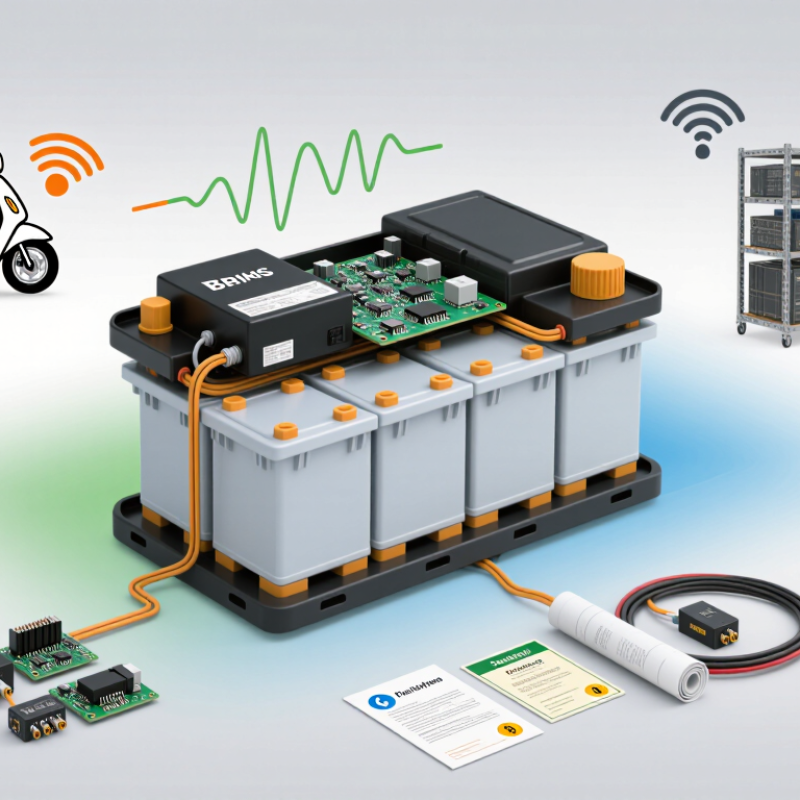
An EV BMS is the battery pack’s control and safety layer. It measures every cell’s voltage, temperature, and current during charging and driving. It also estimates state of charge and state of health. These figures guide charging limits, power delivery, cooling, and emergency shutdowns.
A capable Chinese EV BMS should provide accurate sensing, stable cell balancing, and dependable communication through CAN. In practical testing, temperature sensors near busbars can reveal uneven heating that average pack data may hide. Good systems also record faults clearly, helping technicians trace insulation problems or weak cells. Safety evidence matters. Look for documented validation, traceable testing, and development practices aligned with relevant automotive safety requirements. No BMS is perfect. Sensor drift and estimation errors still deserve attention.
Tips: Check balancing speed, measurement accuracy, operating temperature, and sleep-mode power use. Ask for test records, communication details, and fault-response behavior. Test the BMS with the actual battery chemistry and cooling design, not only a laboratory module. A dashboard may look impressive while hiding delayed alarms. That deserves a second look.

What Is the Best EV BMS System from China?
What Is an EV BMS and Why Does It Matter?
An EV Battery Management System monitors individual cell voltages and temperatures, estimates state of charge, controls charging and discharging limits, and helps prevent overvoltage, deep discharge, overheating, and cell imbalance.
The chart uses representative lithium-ion EV pack configurations. Voltage values are calculated from a typical 3.6 V nominal cell voltage and a 4.2 V fully charged cell voltage. A capable BMS must support the pack’s series-cell count and voltage range.
How Chinese EV BMS Systems Manage Battery Safety and Performance
A strong Chinese EV BMS system does more than display battery percentage. It continuously measures cell voltage, temperature, current, and insulation conditions. These readings help the controller detect overheating, overcharging, deep discharge, and unusual voltage differences. In practical testing, accurate sensors matter because a small reading error can reduce usable range or increase safety risks.
The system balances cells during charging and adjusts power delivery during acceleration. It can also limit charging when one module becomes too hot. During winter operation, battery heating may improve charging acceptance and driving performance. During fast charging, thermal monitoring becomes especially important. A reliable BMS records fault events, supports remote diagnostics, and communicates clearly with the vehicle controller. However, no system is perfect. Poor wiring, weak calibration, or delayed maintenance can still create problems.
Tips: Check sampling accuracy, balancing speed, temperature coverage, and communication stability before choosing a system. Ask for test records under hot, cold, and high-load conditions. Inspect how the BMS reacts to a failed sensor. A useful system should enter a safe state, provide a clear warning, and preserve essential vehicle control. Also, review software update procedures and service support. These details often reveal more than a product brochure.
Key Features of the Best Chinese EV BMS Solutions
The best Chinese EV BMS solutions combine accurate sensing, fast protection, and practical software integration. The IEA Global EV Outlook 2024 reported nearly 14 million electric car sales in 2023, with China representing about 60% of the global total. This scale demands dependable battery monitoring, not attractive specifications alone.
A strong system measures each cell’s voltage, temperature, and current continuously. It should estimate state of charge and state of health under changing loads. Passive balancing is common, but active balancing can reduce energy differences across large packs. Thermal protection must react quickly near charging connectors and module edges. Safety comes first. Communication through CAN or CAN FD supports charger, inverter, and vehicle-controller coordination. Secure firmware updates and detailed fault logs also simplify service work.
Functional safety matters. Designers should align development with ISO 26262 and validate fault detection through realistic abuse and vibration tests. BloombergNEF’s 2024 Battery Price Survey placed the average lithium-ion pack price at 115 US dollars per kWh. Lower pack costs increase pressure on BMS efficiency and durability. A good Chinese solution should also support flexible cell chemistries, modular wiring, and cold-weather calibration. Field testing may reveal sensor drift that laboratory tests miss. No algorithm is perfect. Some systems still estimate remaining range too confidently, especially after rapid charging or long storage. Independent validation remains essential. (Sources: IEA Global EV Outlook 2024; BloombergNEF Battery Price Survey 2024; ISO 26262.)
How to Compare Chinese EV BMS Manufacturers and Products
What Is the Best EV BMS System from China?
How to Compare Chinese EV BMS Manufacturers and Products
Choosing the best EV BMS system from China requires more than comparing prices. Start with the vehicle’s battery chemistry, voltage range, peak current, and cooling design. Ask whether the BMS supports accurate state-of-charge and state-of-health calculations. These functions matter during winter starts, steep climbs, and repeated fast charging.
Request technical documents, sample units, and communication details before placing a large order. Check CAN protocols, balancing current, fault records, insulation monitoring, and emergency disconnect control. A reliable manufacturer should explain its testing process clearly. Factory evidence matters. Look for cell traceability, end-of-line testing, thermal cycling, vibration testing, and software version control. Independent laboratory reports can support these claims, but they should match the exact product revision.
I have found that integration support often separates a usable BMS from an impressive datasheet. Ask how engineers handle firmware changes, false alarms, and field failures. Response time matters. Test the sample with real cells, not only a simulator. Record voltage differences, temperature readings, communication stability, and shutdown behavior under load. No supplier is perfect. I once underestimated connector quality, and a small contact problem caused unstable readings. That mistake changed my evaluation checklist. Warranty terms, spare-unit policies, and local technical support also deserve careful review. A lower purchase price may become expensive when calibration data or replacement parts are unavailable.
What Is the Best EV BMS System from China? - How to Compare Chinese EV BMS Manufacturers and Products
| Comparison Dimension | Entry-Level EV BMS | Passenger-EV BMS | Commercial-EV BMS | What to Verify Before Purchase |
|---|---|---|---|---|
| Typical Application | Low-speed vehicles, small utility EVs and converted vehicles | Passenger cars, SUVs and small electric platforms | Buses, trucks, vans and fleet vehicles | Vehicle voltage, battery chemistry, pack capacity and duty cycle |
| Supported Cell Chemistry | Usually LFP or NMC | LFP, NMC and other lithium-ion chemistries, depending on calibration | LFP and NMC are common; chemistry-specific parameters are required | Cell voltage limits, temperature limits and charge/discharge curves must match the cell datasheet |
| Nominal Battery Voltage | Typically 12–96 V | Typically 200–800 V | Typically 400–1,000 V, depending on vehicle architecture | Maximum cell count, total voltage measurement range and insulation design |
| Cell Monitoring Channels | Approximately 4–24 cells per monitoring unit | Approximately 12–24 cells per monitoring unit, with multiple units for larger packs | Modular monitoring for large series-connected battery packs | Measurement accuracy, channel isolation, sampling rate and expandability |
| Cell-Voltage Accuracy | Target approximately ±10–20 mV | Target approximately ±5–10 mV | Target approximately ±5–10 mV with documented calibration | Test results at different temperatures and across the complete operating voltage range |
| Current Measurement Accuracy | Typically ±1–2% of full scale | Typically ±0.5–1% of full scale | Typically ±0.5–1% of full scale, subject to sensor selection | Shunt or Hall sensor type, rated current, offset drift and calibration method |
| Balancing Method | Passive balancing, commonly 30–100 mA | Passive balancing commonly 50–200 mA; active balancing available for selected designs | Passive or active balancing, selected according to pack size and service strategy | Balancing trigger conditions, thermal impact, balancing current and serviceability |
| Communication Interfaces | CAN, UART, RS485 or Bluetooth may be available | CAN is standard; additional diagnostic or service interfaces may be provided | Multiple CAN networks, isolated interfaces and fleet-data connectivity may be required | CAN baud rate, message database, diagnostic protocol, cybersecurity and software-update method |
| Main Protection Functions | Overvoltage, undervoltage, overcurrent, short circuit and temperature protection | Cell, pack, current, temperature, insulation and contactor monitoring | The functions above plus pre-charge, HV interlock, crash signal and redundant fault handling | Fault thresholds, response time, shutdown behavior, event logging and recovery logic |
| State-of-Charge Estimation | Coulomb counting with voltage-based correction | Coulomb counting combined with temperature, aging and operating-history compensation | Model-based estimation with periodic calibration and fleet-data analysis | SOC error under dynamic load, low-temperature operation and aged-cell conditions |
| State-of-Health Functions | Basic capacity-loss estimation may be available | Capacity, resistance and cycle-history monitoring is commonly expected | Detailed degradation, service-life and warranty-data reporting is preferable | Definition of SOH, test methodology, data retention and export capability |
| Temperature Measurement | Usually 2–8 NTC sensors | Multiple NTC sensors distributed across modules and high-current areas | Expanded temperature monitoring for modules, busbars, contactors and cooling circuits | Sensor accuracy, open/short detection, sampling interval and thermal alarm thresholds |
| High-Voltage Safety | Normally not required for low-voltage systems | HVIL, pre-charge control, contactor control and insulation monitoring are commonly required | Redundant contactor control, isolation monitoring and emergency-disconnect integration are recommended | Electrical safety test reports and compliance with the target vehicle-market regulations |
| Environmental Protection | Enclosures commonly range from IP54 to IP65 | IP65 or higher is often selected for vehicle-mounted systems | IP67 or a vehicle-specific equivalent may be required for exposed locations | Ingress rating, vibration, shock, salt spray, humidity and temperature-cycle test results |
| Operating Temperature | Commonly about −20°C to +60°C | Commonly about −40°C to +85°C for the electronic unit, depending on design | Automotive-grade temperature performance is preferred for severe climates | Operating and storage limits, derating behavior and cold-start performance |
| Functional-Safety Readiness | Basic protection design; formal safety evidence may be limited | Safety process documentation and diagnostic coverage should be available for vehicle projects | ISO 26262-based development evidence is strongly preferred for production vehicles | Safety goals, FMEA, fault-tree analysis, diagnostic coverage and software traceability |
| Relevant Testing and Compliance | Electrical, thermal and basic EMC testing | Automotive EMC, vibration, environmental and battery-system testing | Vehicle-level validation, UN 38.3 transport testing and market-specific regulatory compliance | Actual laboratory reports, test conditions, sample configuration and report validity |
| Software and Data Services | Mobile application or basic PC configuration tool | PC calibration software, diagnostics, data logging and firmware update support | Fleet monitoring, remote diagnostics, secure updates and long-term data access | Source-code ownership, communication documentation, update security and technical support response time |
| Best-Fit Selection Rule | Choose for cost-sensitive, low-voltage projects with limited integration needs | Choose for balanced safety, accuracy, integration and production scalability | Choose for high uptime, extensive diagnostics, fleet operation and documented validation | The best system is the one that passes the complete application-specific validation plan |
Note: The figures shown are practical comparison ranges commonly used for EV BMS evaluation. Exact performance depends on the battery chemistry, cell configuration, current sensor, software calibration, enclosure design and vehicle integration. Request model-specific datasheets, validation reports and communication documentation before making a purchasing decision.
Which EV BMS System from China Best Fits Your Needs?
Choosing the best Chinese EV BMS depends on your battery chemistry, voltage range, and operating conditions. The IEA Global EV Outlook 2024 reported nearly 14 million electric car sales in 2023, representing about 18% of global car sales. This rapid growth increases demand for accurate monitoring, stable communication, and traceable safety testing. A suitable BMS should measure every cell, detect temperature changes quickly, and balance cells without wasting significant energy. It should also support CAN communication and clear fault records for service technicians.
BloombergNEF’s 2024 Battery Price Survey reported an average global battery-pack price of 115 dollars per kilowatt-hour in 2024. Lower pack costs make efficient BMS design more important, not less. Real packs behave differently. An engineering review should examine balancing speed, standby consumption, sensor accuracy, and protection response under heat and vibration. For higher-voltage systems, ask for evidence related to insulation monitoring, contactor control, and functional-safety processes. Standards such as ISO 26262, IEC 62619, and UNECE R100 can guide verification, but certification claims still need independent checking. Factory audits, software update procedures, failure-analysis records, and long-term technical support deserve equal attention. A low quotation may hide integration work. That is the uncomfortable part. The best fit is the system that matches your cells, vehicle duty cycle, service resources, and documented risk controls.