

- 713.590.1312
- sale@pandbtools.com
What Are the Best Gas Testers from China?
Choosing the best Gas Testers from China requires more than comparing prices, screen sizes, or advertised detection ranges. A dependable instrument must protect workers in confined spaces, chemical plants, mines, laboratories, and maintenance areas. It should identify hazards quickly, display clear readings, and remain stable in demanding environments.
Trevor Kletz, a respected process-safety expert, wrote, “Safety is no accident.” That principle fits gas detection closely. Even an advanced detector can fail when calibration is ignored, sensors are mismatched, or users misunderstand alarm settings. Therefore, this guide examines sensor technology, detection limits, response time, battery performance, enclosure ratings, calibration records, and after-sales support.
Chinese manufacturers offer many capable portable, fixed, and multi-gas instruments. Some provide strong value and practical customization. Others may present impressive specifications without sufficient independent verification. That difference matters. Buyers should request test reports, quality certificates, calibration procedures, and evidence of supply-chain traceability. Compliance claims also require careful checking against the destination market’s requirements.
There is no universal “best” model. A detector suitable for methane monitoring may be unsuitable for oxygen deficiency or toxic gases. Field experience often exposes details that brochures omit, such as glove-friendly buttons, audible alarms in noisy rooms, or sensor drift after repeated exposure. Small choices matter.
This review is not perfect. Product data can change, and supplier performance may vary by batch or region. Readers should validate current specifications before purchasing. The goal is practical guidance: matching reliable Gas Testers with real workplace risks, trained operators, and documented maintenance.
What Are Gas Testers and How Do They Work?
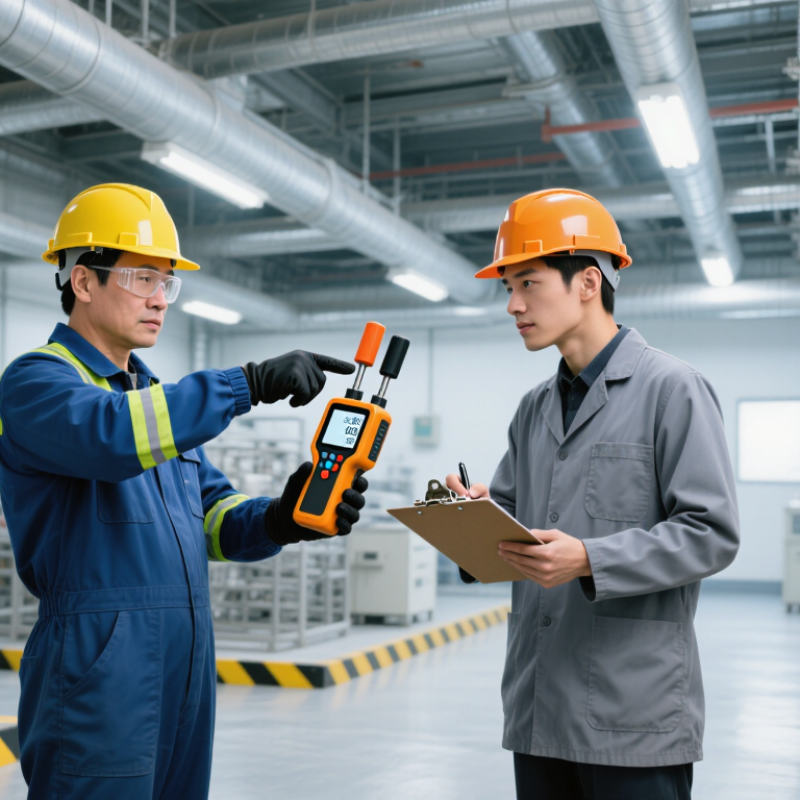
Gas testers are portable instruments that measure hazardous gases in air. They commonly check oxygen, carbon monoxide, hydrogen sulfide, and combustible vapors. A sensor converts gas exposure into an electrical signal, while the display shows concentration or alarm status. Simple, but not effortless.
Electrochemical sensors suit toxic gases, while catalytic-bead sensors detect combustible gases. Infrared sensors measure gases without consuming the target gas. Photoionization sensors can identify many volatile organic compounds. OSHA defines oxygen-deficient atmospheres as below 19.5% and oxygen-enriched atmospheres as above 23.5% (29 CFR 1910.146). NIOSH lists 100 ppm as the immediately dangerous level for hydrogen sulfide and 1,200 ppm for carbon monoxide in its Pocket Guide.
Field experience shows that sampling technique matters as much as sensor quality. Operators should test from outside a confined space, using a pump and probe when needed. Gases may collect at different heights. Methane tends to rise, while heavier vapors can settle near the floor. Instruments also need bump testing, calibration, fresh batteries, and sensor replacement. A neglected tester becomes a false source of confidence. That is uncomfortable, but true. China-made gas testers can be practical choices when their calibration records, sensor response times, alarm settings, and compliance documentation are independently verified. Performance data should matter more than a low purchase price.

Which Types of Gas Testers Are Made in China?
Chinese manufacturers produce several practical types of gas testers for industrial, commercial, and environmental use. Portable single-gas detectors commonly monitor oxygen, carbon monoxide, hydrogen sulfide, or combustible gases. They are compact, belt-mounted, and useful during inspections or maintenance work. Multi-gas detectors combine several sensors in one housing. Many models include audible alarms, vibration alerts, bright screens, and rechargeable batteries.
Fixed gas detectors are designed for continuous monitoring in workshops, boiler rooms, laboratories, and storage areas. They can connect with control panels, ventilation systems, or alarm networks. Chinese factories also make pump-assisted detectors for sampling tanks, pipes, and narrow spaces. These instruments draw air through a tube before measurement. Diffusion models are simpler because surrounding air reaches the sensor directly.
Different sensor technologies suit different gases. Electrochemical sensors measure many toxic gases and oxygen. Catalytic bead sensors detect combustible gases, while infrared sensors can offer better stability in some environments. Photoionization detectors are used for volatile organic compounds. In my experience, sensor choice matters more than a crowded feature list. A bright display cannot correct poor calibration.
Quality varies between suppliers. Buyers should check calibration records, response-time data, enclosure ratings, and independent test reports. Ask how often sensors require replacement. Some product manuals remain unclear, which deserves careful review. Field testing under realistic temperature, humidity, and airflow conditions is still necessary. A dependable tester should provide repeatable readings, clear alarms, and traceable maintenance records.
What Are the Best Gas Testers from China? - Which Types of Gas Testers Are Made in China?
| Gas Tester Type | Typical Application | Commonly Detected Gases | Detection Technology | Typical Measurement Examples | Main Advantages | Important Selection Factors | Commonly Referenced Standards |
|---|---|---|---|---|---|---|---|
| Portable Single-Gas Detector | Personal protection, maintenance work, confined-space entry and spot checks | Carbon monoxide, hydrogen sulfide, oxygen, ammonia, chlorine or sulfur dioxide | Usually electrochemical sensing | Oxygen: commonly 0–25% volume; toxic gases: commonly measured in the low-ppm range | Compact, lightweight and simple to operate; suitable for individual workers | Alarm level, sensor life, calibration interval, ingress protection and battery runtime | GB 12358; IEC 62990-1; EN 45544 |
| Portable Multi-Gas Detector | Confined spaces, sewage systems, tunnels, tanks, utility work and industrial inspections | Oxygen, combustible gases, carbon monoxide and hydrogen sulfide; additional channels may be available | Electrochemical, catalytic-bead, infrared or combined sensor technologies | Combustible gas: commonly displayed as 0–100% LEL; oxygen: commonly 0–25% volume | Simultaneous monitoring of several hazards with audible, visual and vibration alarms | Sensor combination, response time, pump or diffusion mode, data logging and intrinsically safe design | GB 12358; IEC 60079-29-1; IEC 62990-1 |
| Combustible-Gas Leak Detector | Pipeline inspection, gas appliance maintenance, industrial leak surveys and facility safety checks | Methane, propane, butane, hydrogen and other combustible gases | Semiconductor, catalytic-bead, infrared or thermal-conductivity sensing | Alarm performance is often specified in relation to the gas concentration or %LEL rather than one universal range | Fast screening of suspected leaks; handheld versions can access difficult areas | Target gas, cross-sensitivity, minimum detectable concentration, probe design and alarm threshold | IEC 60079-29-1; GB/T 50493; relevant hazardous-area requirements |
| Fixed-Point Gas Detector | Continuous monitoring in chemical plants, storage areas, compressor rooms, boiler rooms and workshops | Combustible gases, oxygen and toxic gases selected according to the process hazard | Electrochemical, catalytic-bead, infrared, semiconductor or photoionization sensing | Combustible gas: commonly 0–100% LEL; oxygen: commonly 0–25% volume; toxic gases: application-specific ppm ranges | Continuous operation, relay outputs, centralized alarms and integration with control systems | Installation height, detector location, enclosure rating, calibration access, relay logic and communication protocol | GB/T 50493; IEC 60079-29-1; IEC 61508 where applicable |
| Aspirated or Pumped Gas Monitor | Sampling from tanks, ducts, confined spaces, laboratories and remote or hard-to-reach locations | Oxygen, combustible gases, toxic gases and volatile organic compounds, depending on the sensor module | Internal pump with electrochemical, infrared, catalytic or PID sensors | Range depends on the installed sensor; common configurations include 0–100% LEL, 0–25% oxygen or ppm-level toxic-gas measurement | Remote sampling, controlled flow and improved access to enclosed locations | Sampling-line length, flow rate, condensation, filter maintenance, pump failure alarm and response delay | IEC 60079-29-1; IEC 62990-1; application-specific sampling requirements |
| Photoionization Detector for VOCs | Solvent handling, chemical storage, environmental surveys and industrial hygiene screening | Many volatile organic compounds, including solvent vapors and aromatic hydrocarbons | Ultraviolet photoionization detector, commonly using a 10.6 eV lamp | Common portable configurations measure from low-ppm levels to hundreds or thousands of ppm, depending on the model | Rapid response and high sensitivity for many VOCs | Ionization potential of the target compound, humidity, lamp cleanliness, calibration gas and response factor | IEC 62990-1; EN 45544 where applicable to workplace exposure measurements |
| Infrared Gas Analyzer | Carbon dioxide monitoring, methane detection, process control and applications requiring resistance to oxygen deficiency | Carbon dioxide, methane and selected hydrocarbons | Non-dispersive infrared absorption, commonly called NDIR | Carbon dioxide instruments may use ranges such as 0–5% or 0–10% volume; methane configurations may use %LEL ranges | Good selectivity, long sensor life and no oxygen requirement for many measurements | Optical path cleanliness, temperature compensation, pressure effects, gas composition and calibration method | IEC 60079-29-1; ISO 2614 for infrared carbon-dioxide measurement applications |
| Oxygen Deficiency Monitor | Confined spaces, inert-gas areas, laboratories, food storage and industrial gas installations | Oxygen | Usually electrochemical or paramagnetic sensing | Common alarm-monitoring range: approximately 0–25% volume, with atmospheric oxygen near 20.9% volume | Clear warning of oxygen depletion or enrichment; available in portable and fixed formats | Alarm setpoints, sensor type, temperature compensation, calibration gas and response time | GB 12358; IEC 62990-1; EN 45544 |
| Industrial Process Gas Analyzer | Production lines, combustion control, emissions monitoring and quality assurance | Carbon dioxide, oxygen, carbon monoxide, methane, hydrogen and other process-specific gases | NDIR, electrochemical, zirconia, thermal-conductivity or other application-specific technologies | Ranges are configured for the process and may cover ppm, percentage-volume or higher concentrations | Continuous measurement, configurable outputs and integration with automation systems | Required accuracy, sample conditioning, pressure and temperature, calibration stability and communication interface | Application-dependent; relevant IEC, ISO and industrial process-control requirements |
Note: Measurement ranges are representative examples rather than universal specifications. The actual range, accuracy, alarm level and certification depend on the selected sensor, instrument configuration and intended operating environment.
What Features Define a High-Quality Chinese Gas Tester?
A high-quality Chinese gas tester should prove its performance, not merely display a low price. The IEA’s Global Methane Tracker 2024 estimates that fossil-fuel operations released about 120 million tonnes of methane in 2023. Reliable detection therefore requires accurate sensors, rapid response, and stable readings in demanding workplaces.
Look for sensors matched to the target gas and a clear measurement range. The device should compensate for temperature, humidity, and pressure changes. Cross-sensitivity data matters, especially in mixed-gas environments. IEC 60079-29-1 provides important guidance for flammable-gas detectors. Seek documented testing against this standard, rather than vague claims. A strong enclosure, often rated IP65 or higher, helps protect against dust and water. Audible, visual, and vibration alarms should remain noticeable beside machinery. Data logging, calibration reminders, and a replaceable battery improve field accountability. Still, no instrument stays accurate forever. Calibration records can be incomplete.
Tips: Ask for a recent calibration certificate, sensor-life estimate, response-time test, and alarm verification report. Check readings in a controlled test gas before deployment. Do not accept “factory tested” as sufficient evidence. Independent laboratory results carry more weight. The U.S. NIOSH Pocket Guide also warns that exposure limits differ by substance, so alarm settings need professional review. Small details matter. A poor charging port can undermine an otherwise excellent tester.
How to Compare Chinese Gas Tester Manufacturers and Models?
What Are the Best Gas Testers from China?
How to Compare Chinese Gas Tester Manufacturers and Models?
Comparing Chinese gas tester manufacturers starts with the intended working environment. A detector for confined-space inspection needs different protection than one used near boilers or chemical storage. Check the measurable gases, sensor range, alarm limits, response time, and operating temperature. A compact four-gas model may suit routine entry checks. It may not suit continuous industrial monitoring.
Look closely at sensor technology and calibration procedures. Ask whether the manufacturer provides traceable calibration records, test certificates, and clear replacement intervals. Reliable suppliers should explain accuracy under humidity, vibration, and temperature changes.
Do not rely on a product page alone. Request a sample inspection report and user manual before ordering.
The enclosure also matters. An IP rating, readable screen, loud alarm, and glove-friendly buttons can affect field safety. Compare battery endurance, charging design, data export, and local service response. Some Chinese manufacturers offer strong customization, but quality can vary between production batches. I have found that a low price often hides limited documentation or slow technical support. That is worth questioning.
Test the actual model.
Check warranty terms carefully. A longer warranty is useful only when replacement sensors and repair channels are available. Verify quality systems, factory testing, and independent certification relevant to your market. No checklist is perfect. A short pilot test in real working conditions may reveal alarm delays, uncomfortable straps, or unclear readings before a larger purchase.
How to Choose the Best Gas Tester for Your Application?
What Are the Best Gas Testers from China?
Choosing the best gas tester from China starts with the hazard, not the manufacturing location. Identify the gases, expected concentrations, temperature range, and work environment. Oxygen deficiency, combustible gases, and toxic vapors require different sensor combinations. NIOSH’s Pocket Guide lists hydrogen sulfide’s IDLH concentration at 100 ppm, so a basic oxygen monitor may be dangerously incomplete.
For confined spaces, examine response time, alarm levels, calibration controls, data logging, and battery duration. Check whether the instrument meets relevant IEC 60079-29-1 requirements for combustible gas detection. An IP rating also matters when rain, dust, or washdown is common. The U.S. Bureau of Labor Statistics recorded 5,070 fatal work injuries in 2023. A gas tester cannot prevent every incident, but poor maintenance can create avoidable risk. Field experience suggests that teams often compare prices before checking sensor replacement costs. That approach saves money briefly, then becomes expensive. No selection is perfect; application fit matters more than impressive specifications.
Tips: Request independent test certificates and calibration records. Perform a bump test before each shift, following the manufacturer’s instructions. Check alarm audibility while wearing hearing protection. Review stored readings after realistic drills. If workers cannot understand the screen quickly, reconsider the model. This detail is easy to underestimate.