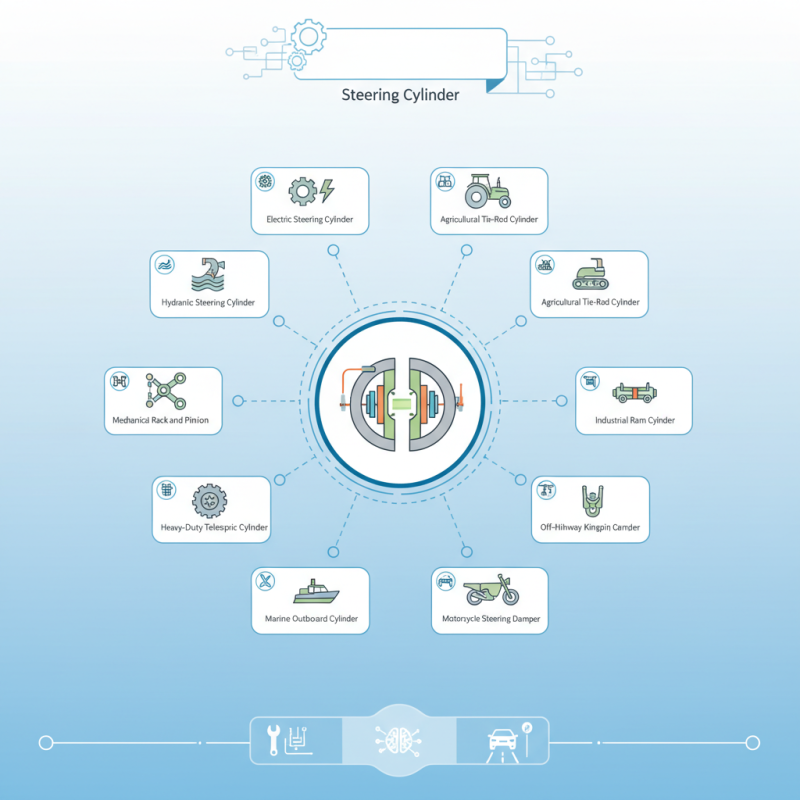
Top 10 Steering Cylinder Types You Should Know About?
The world of Steering Cylinders is diverse and intricate. Understanding the various types is essential for vehicle performance. A steering cylinder plays a crucial role in controlling direction. Different designs cater to distinct needs and applications.
Each steering cylinder type has unique features. Hydraulic, electric, and mechanical variants are popular. Their functions can be complex, and selecting the right one can be challenging. Some people may overlook this critical component. It’s easy to assume one type fits all situations, but that is not true.
Reflection is needed when choosing a steering cylinder. Each type has its strengths and weaknesses. A misunderstanding can lead to poor vehicle handling. A thorough exploration of each type leads to informed decisions. In this article, we will explore the top ten steering cylinder types. Understanding these will enhance your knowledge and ensure better choices.
Overview of Steering Cylinder Functionality and Importance in Vehicles
Steering cylinders play a critical role in vehicle handling. They convert rotational force into linear motion, allowing drivers to control direction smoothly. This functionality is essential for safe operation, affecting stability and responsiveness. A well-functioning cylinder enhances the driving experience.
When choosing a steering cylinder, consider the type of vehicle. Different designs cater to specific needs. For example, larger vehicles often require more robust cylinders to handle extra weight and stress. Understanding these nuances can prevent performance issues.
Tip: Regularly check for leaks around the cylinder. Small leaks can lead to larger problems if left unattended.
Another point to reflect on is maintenance. Neglected cylinders can wear out faster. Ensure routine checks are part of your vehicle's service schedule.
Tip: Don't wait for a noticeable problem to arise before inspecting your steering system. Proactive measures can save time and money in the long run.
Types of Hydraulic Steering Cylinders and Their Applications in Machinery
Hydraulic steering cylinders are crucial in various machinery. They provide precise control and enhance performance. These cylinders convert hydraulic pressure into linear motion. Many types function differently but serve similar purposes. For example, single-acting cylinders rely on pressure in one direction. They are often simpler and less expensive. In contrast, double-acting cylinders offer more power and versatility. They work in both directions, making them ideal for complex tasks.
Another type worth noting is the tandem cylinder. It combines the power of multiple cylinders into one unit. This design increases efficiency in larger machinery. Then there are potentiometric cylinders. They provide feedback on position, which helps in automation. However, they can be more delicate and may require careful calibration. Many engineers must consider the specific application before choosing a type.
The challenges lie in maintenance and compatibility. These cylinders need regular checks to ensure efficient operation. Some types may not fit every machine design. Therefore, misunderstandings can lead to frustration and complications. The choice often depends on the unique requirements of the project, which can be overwhelming. Balancing performance and durability is an ongoing task.
Top 10 Steering Cylinder Types You Should Know About
| Type | Application | Features | Advantages |
| Single-Acting Cylinder | Forklifts | Operates in one direction | Cost-effective and simple design |
| Double-Acting Cylinder | Excavators | Operates in both directions | More control and pushing power |
| Telescopic Cylinder | Dump Trucks | Multiple nested cylinders | Compact design with high extension |
| Rotary Cylinder | Industrial Machinery | Speeds up rotational motion | Efficient power transfer |
| Side-Load Cylinder | Cranes | Handles side forces | Supports greater load stability |
| Compact Cylinder | Agricultural Equipment | Space-saving design | Ideal for tight areas |
| Heavy-Duty Cylinder | Mining Equipment | Robust construction | Handles extreme loads |
| Mini Cylinder | Robotic Applications | Small size | Precise movements |
| Locking Cylinder | Safety Mechanisms | Locks in position | Enhanced safety features |
| Linear Actuator Cylinder | Automated Systems | Converts rotary motion to linear | Versatile in applications |
Electric Steering Cylinders: Innovations and Advantages in Modern Vehicles
Electric steering cylinders are transforming how vehicles handle. These smart systems offer precise control and better responsiveness. They make driving smoother and more enjoyable. Unlike traditional systems, electric cylinders do not rely on hydraulic fluids. This means less maintenance and a cleaner environment.
Innovations in electric steering technology have led to significant advantages. Energy efficiency is a major benefit. These systems only use power when needed. This reduces energy consumption, which is great for electric vehicles. Additionally, electric steering allows for easy integration with advanced driver-assistance systems. This enhances safety features, making cars smarter.
However, technology is not without flaws. Electric steering can feel less connected to the road. Some drivers miss the feedback from traditional systems. Also, the reliance on electric components means that failure can lead to loss of control. As we embrace these new systems, it's essential to reflect on balancing innovation with the driving experience.
Comparison of Global Market Trends for Steering Cylinder Designs
The global market for steering cylinders has shown significant changes in recent years. According to a market research report, the steering cylinder segment is expected to grow at a CAGR of about 4.5% from 2023 to 2028. This growth is driven by innovations in automotive technology and increasing demand for energy-efficient systems.
Various designs of steering cylinders cater to different applications. For instance, hydraulic and electric cylinders are the most common types. While hydraulic cylinders offer high responsiveness, electric cylinders promote energy efficiency. However, issues like maintenance and installation complexity can affect their adoption. The growing trend toward electric vehicles is pushing manufacturers to rethink traditional designs.
Geographically, the Asia-Pacific region dominates the market, accounting for over 40% of total sales. This dominance is due to the booming automotive industry in countries like China and India. Nonetheless, many emerging markets still lack adequate infrastructure. This presents both a challenge and an opportunity for industry players. Lack of skilled labor in certain regions can be a barrier to technology transfer and adoption.
Top 10 Steering Cylinder Types - Global Market Trends
This chart illustrates the market share of various steering cylinder types globally. Hydraulic and electric cylinders dominate the market, reflecting their widespread usage in modern vehicles. Other types, while having smaller shares, cater to specific applications and industries.
Safety Standards and Regulatory Compliance for Steering Cylinder Production
When producing steering cylinders, safety standards and regulatory compliance are crucial. Ensuring that every component meets these guidelines is essential for functionality. These standards often vary by region, reflecting local safety laws and requirements. Manufacturers must stay informed about these regulations to avoid legal consequences.
Quality control in production should not be overlooked. Each steering cylinder must undergo rigorous testing. This includes pressure testing, durability assessments, and performance evaluations. Even minor defects can lead to significant safety risks. Regular audits can help identify compliance gaps. Consistency in production processes is key, yet often neglected.
Collaboration with regulatory bodies can enhance compliance efforts. Engaging with industry experts offers insights into evolving standards. It’s essential to adapt continuously. Ignoring these standards can be detrimental. Manufacturers should view compliance as a path to improvement, not just an obligation.