

- 713.590.1312
- sale@pandbtools.com
Who Are the Top Slab Formwork Manufacturers in China?
Choosing among China’s top slab formwork manufacturers requires more than comparing prices or glossy catalogs. The right supplier should match the demands of your project, from floor dimensions and concrete loads to site access and reuse targets. Small details matter. Ask for technical drawings, load data, material specifications, and clear guidance on assembly. Check whether quoted panel sizes fit your slab layout without excessive cutting or awkward joints.
This guide explores manufacturers and the factors that help distinguish them, including production capability, quality control, customization, delivery support, and documented project experience. A smooth plywood face may reduce patching, while sturdy beams and connectors can make repeated cycles more predictable. Still, specifications on paper do not tell the whole story. Request samples, verify references where possible, and clarify how damaged parts or replacement components are handled. That extra work can feel tedious. It is often worthwhile.
“Top” is not a universal ranking. A supplier suited to a large infrastructure project may not be the best choice for a compact residential build. Compare slab formwork systems against your drawings, crew experience, schedule, and total cost across multiple pours. Even this approach has limits: site conditions change, and advertised reuse figures may depend on careful handling. Treat them as claims to verify, not promises. The sections ahead offer a practical starting point for assessing Chinese manufacturers with informed questions and realistic expectations.
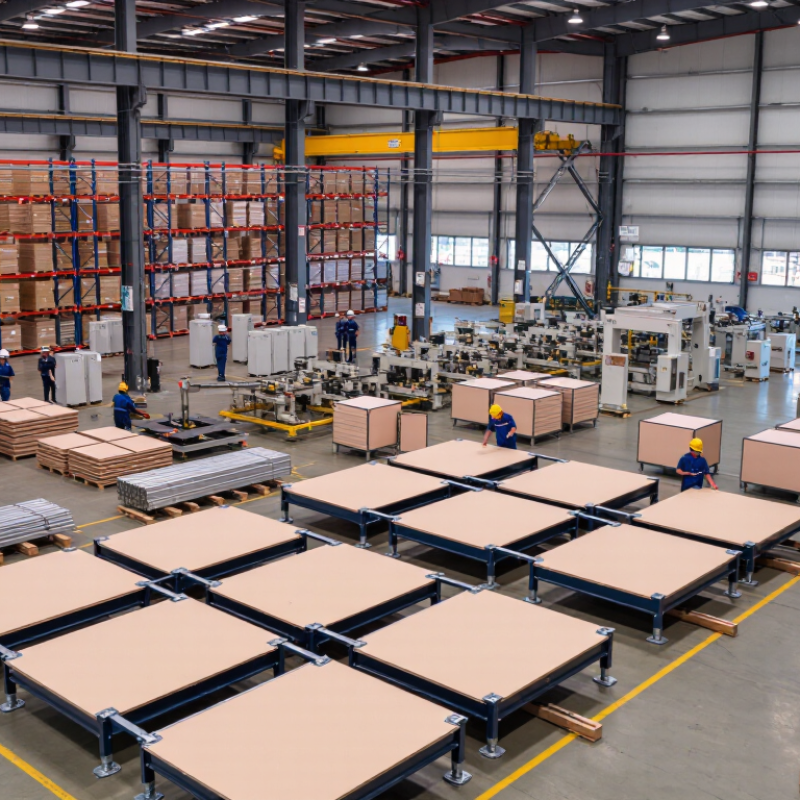
What Slab Formwork Is and How It Is Used
Slab formwork is a temporary support system that shapes and holds fresh concrete until it can carry its own weight. It usually includes a deck, beams, props, and connecting parts. The deck creates the slab’s underside, while props transfer loads to a stable surface below. It is temporary. But the setup must be precise.
On site, crews place and level the supports, install beams and deck panels, then check dimensions and joints before concrete is poured. Small gaps can leak cement paste. Uneven supports may create variations in slab thickness or surface level. Details matter.
During placement, workers monitor the formwork for movement and keep loads distributed as planned. After the concrete gains sufficient strength, the forms are removed according to the project’s requirements. Timing depends on factors such as concrete strength, span, temperature, and support conditions, so a fixed schedule does not suit every job.
A practical point is easy to overlook: tidy components do not guarantee a sound system. The supporting ground, connections, and installation quality matter just as much. A short site check can catch problems, though it cannot replace proper design and inspection.

How to Assess Slab Formwork Manufacturers in China
Assessing a slab formwork manufacturer in China starts with the system, not the catalogue. Ask for layout drawings, panel dimensions, allowable loads, and the stated deflection limits. Check whether props, beams, and connections are designed to work together. A neat product photo proves little. Request technical documents and confirm that the specifications match the equipment you will receive.
Look closely at production consistency. Compare sample panels with drawings, measuring thickness, edge straightness, and connection spacing. Ask how steel is treated against corrosion and how damaged parts are repaired. If possible, inspect the factory or arrange an independent quality check before shipment. Check recent export references, production capacity, packaging details, and spare-part availability. A low quote can hide extra costs for freight, replacements, or missing components. It happens.
Trial assembly matters. Have site staff build a small section and note how quickly panels align, lock, and release. Ask the manufacturer to explain safe assembly procedures and provide clear instructions in a language your crew understands. Check whether the supplier responds with specific answers when you raise a technical issue. Vague promises deserve follow-up. No system is perfect; document any awkward connections or repeated adjustments before approving a larger order.
Who Are the Top Slab Formwork Manufacturers in China? — How to Assess Slab Formwork Manufacturers in China
Use the criteria below to compare suppliers without relying on unverified rankings. Request evidence for the exact product configuration and project conditions being considered.
| Assessment dimension | What to assess | Evidence to request | Warning signs |
|---|---|---|---|
| System suitability | Check whether the offered system suits the slab layout, floor height, slab thickness, soffit finish, and construction sequence. | Product catalogue, component drawings, layout proposal, and a bill of materials for the specified project. | A generic product list presented as a complete design without project-specific layouts or assumptions. |
| Load design and stability | Confirm design loads, load paths, prop or shore capacity at the specified extension, bracing, and stability of the assembled falsework. Allow for concrete, reinforcement, formwork, workers, and construction operations as required by the project design. | Project-specific calculations, stated design assumptions, component capacity tables, and assembly and bracing plans. | A single capacity figure with no configuration, extension, support conditions, or calculation basis. |
| Product quality and materials | Review material specifications, dimensions, weld quality, surface protection, and consistency between supplied parts and approved drawings. | Material certificates where applicable, inspection records, dimensional checks, welding quality documentation, and coating specifications. | Unclear material grades, undocumented substitutions, or inconsistent component dimensions. |
| Testing and quality control | Determine how incoming materials, in-process work, finished components, and any claimed load tests are inspected and recorded. | Inspection and test plans, traceable test reports, calibration records for relevant equipment, and corrective-action records. | Test documents that do not identify the tested item, configuration, method, or issuing party. |
| Safety information | Check that the supplier provides clear assembly, bracing, access, inspection, loading, striking, and storage instructions suitable for the system. | Installation and dismantling instructions, safety guidance, component identification, and inspection checklists. | Instructions that omit bracing or rely on unverified assumptions about site conditions. |
| Engineering support | Assess the supplier’s ability to answer technical queries, revise layouts, and coordinate design information with the project team. | Sample calculations and drawings, a defined technical review process, and named roles responsible for design and revisions. | No clear responsibility for checking or approving project-specific design documents. |
| Manufacturing and delivery capacity | Verify whether production planning, packaging, and delivery schedules can meet the project programme and shipment requirements. | A production schedule, packing list format, delivery plan, and records or references for comparable project orders. | Unconfirmed lead times, vague delivery commitments, or no process for handling shortages and damaged items. |
| Compatibility and replacement parts | Check component interchangeability within the offered system, availability of replacements, and compatibility claims for equipment from other systems. | Interface drawings, dimensional tolerances, compatibility statements, and replacement-part availability details. | Compatibility claims without measurements or written confirmation for the specific components. |
| Commercial clarity and lifecycle value | Compare the scope of supply, exclusions, packaging, transport, spare parts, maintenance needs, and reuse assumptions—not only the initial price. | Itemized quotation, stated exclusions, warranty terms, maintenance guidance, and documented reuse conditions. | A low headline price that excludes essential components or gives no basis for reuse claims. |
| References and after-sales service | Check experience with comparable slab projects and the availability of technical assistance, spare parts, and a process for resolving defects. | Verifiable project references, contactable customers where permitted, service response procedures, and warranty documentation. | References that cannot be independently checked or unclear responsibility after delivery. |
Comparison note: Evaluate suppliers against the same project scope and acceptance requirements. Have project-specific temporary-works designs reviewed and approved by appropriately qualified professionals under the applicable local requirements.
Profiles of Leading Chinese Slab Formwork Manufacturers
Chinese slab formwork manufacturers range from large integrated factories to regional workshops focused on steel or timber-faced systems. Their profiles differ in production scale, material choices, and technical support. Some supply modular aluminum panels for repetitive floor layouts. Others make adjustable steel props, beams, and plywood panels for varied site conditions. These are different strengths, not a simple ranking.
An established producer should be able to explain panel dimensions, allowable loads, connection details, and reuse expectations. Ask for drawings and assembly instructions, then compare them with the project’s floor plan. Look closely at corners, drop panels, and openings. Small mismatches can slow installation. A sample panel helps reveal weld quality, coating coverage, and edge finishing better than a catalog image.
Manufacturing capacity matters, but so does communication after delivery. Some factories can customize panel sizes or bundle props and beams with the formwork. Confirm what is actually included. A polished brochure can conceal unclear tolerances or limited site guidance. That deserves scrutiny. Buyers should also check whether replacement parts are available and whether the supplier can provide consistent specifications across batches. Even a capable manufacturer may not suit every project.
Key Products and Technologies Offered by These Manufacturers
Chinese slab formwork manufacturers offer modular aluminum panels, steel frames, timber-faced decks, support props, and beam systems. Some suppliers also provide table forms for large floor areas and adjustable drop-heads for early striking. Product dimensions, panel weights, and connection details matter on site. A lightweight panel can speed handling, but only if its joints stay tight under wet concrete pressure.
Technology varies by factory. Automated cutting and welding can improve repeatability, while digital design tools help coordinate openings and slab edges. Ask for load tables, assembly drawings, and sample inspection records. A catalog can look perfect; real site handling is less tidy. Check how workers align panels and secure props, not just how the system appears in a rendering.
Tips: Confirm slab thickness, support spacing, and concrete pressure before ordering. Request a sample connection. Small gaps can leak grout.
When comparing manufacturers, look for clear tolerances and replacement-part availability. Ask whether panels suit your crane capacity and typical floor layout. Trial-assemble a corner or beam junction before a large purchase. It may reveal awkward pins or slow adjustments. Factory photos help, but they do not replace documented testing or a practical site review.
How to Select a Manufacturer for a Construction Project
Who Are the Top Slab Formwork Manufacturers in China?
How to Select a Manufacturer for a Construction Project
Choosing a slab formwork manufacturer starts with the project, not the catalogue. Compare the system’s stated load capacity with your slab thickness, pour sequence, and support spacing. Ask for clear technical documents, including panel dimensions, connection details, and safe assembly guidance. A vague load chart is a warning sign.
Request sample panels or arrange a small trial assembly before placing a large order. Check whether joints align, edges stay straight, and components can be handled comfortably by the crew. Ask how the manufacturer tests its products and what evidence supports its reuse-cycle claims. Details matter. A polished brochure is not proof of consistent production quality.
Evaluate service as carefully as price. Confirm lead times, replacement-part availability, packaging, and the process for resolving damaged or mismatched components. If drawings change, can the technical team respond with revised layouts? That practical question can prevent delays. Compare the total cost across expected uses, not only the first purchase price. It is easy to overvalue a low quote; I would still leave room for the possibility that a cheaper system costs more in labor. Judge every supplier against the site’s actual constraints.
Slab Formwork Selection: Fresh Concrete Load by Slab Thickness
Values are calculated using a normal-weight concrete density of 24 kN/m³: load per square metre equals concrete density multiplied by slab thickness. When evaluating a manufacturer, confirm that the proposed formwork system’s rated capacity covers the project’s full design loads. These figures include fresh concrete self-weight only; formwork weight, workers, equipment, impact, and other applicable design loads must be assessed separately.