

- 713.590.1312
- sale@pandbtools.com
What Are the Top Refrigeration Chiller Types?
Choosing the right Refrigeration Chiller begins with the building, process, and climate. A supermarket, hospital, and plastics factory rarely need the same solution. Heat load, water availability, operating hours, noise limits, and maintenance access all influence the decision. The best chiller is not always the one with the highest efficiency rating.
Professor Armin Hafner, a respected refrigeration researcher at NTNU, emphasizes this practical principle: “A good refrigeration system must be efficient, reliable, safe, and serviceable.” That statement matters on a hot afternoon, when a cooling tower is running continuously and a failed pump can interrupt production. Air-cooled chillers usually simplify installation because they avoid condenser-water circuits. Water-cooled chillers can deliver strong efficiency, especially in large facilities with stable water treatment. Evaporative systems may perform well in suitable dry climates. Absorption chillers can use recovered heat, although their controls and maintenance demands may be underestimated.
The compressor also changes the equipment’s behavior. Scroll chillers suit smaller loads and modular applications. Screw chillers provide flexible capacity control for commercial and industrial sites. Centrifugal chillers often serve large buildings with steady cooling demand. These categories overlap.
Real projects are messier.
A chiller selected from a catalogue may perform poorly after installation. Fouled tubes, oversized pumps, weak airflow, or incorrect setpoints can erase expected savings. Engineers should compare full-load and part-load performance, refrigerant requirements, service support, sound levels, and lifecycle cost. This guide examines the top Refrigeration Chiller types and explains where each design works best. It also questions a common assumption: maximum efficiency on paper does not guarantee the lowest cost in practice.
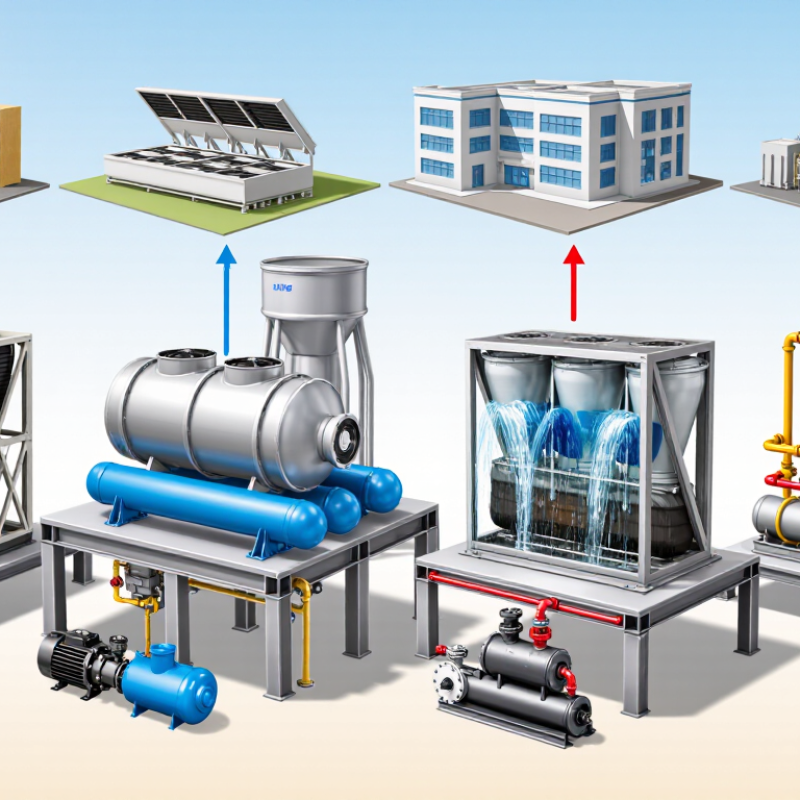
Chiller Basics: Purpose, Main Components, and Operating Principles
What Are the Top Refrigeration Chiller Types?
A chiller removes heat from water or another circulating fluid. That cooled fluid serves air-handling units, process equipment, or data rooms. The basic circuit includes a compressor, condenser, expansion device, and evaporator. Pumps move water through the system. Controls adjust capacity as cooling demand changes. The International Energy Agency reports that global space-cooling energy demand has more than tripled since 1990 (IEA, The Future of Cooling, 2018). Efficiency now matters beyond comfort.
Air-cooled chillers reject heat through outdoor coils and fans. They need less water and simpler maintenance. Water-cooled chillers use a cooling tower, condenser pump, and water treatment system. They often achieve better efficiency, especially in large facilities. Absorption chillers use heat instead of mainly electric compression. Their performance depends on available steam, hot water, or recovered heat. The U.S. Department of Energy identifies cooling as a major energy load in commercial buildings, making equipment selection a serious operating decision.
The operating sequence is straightforward. The evaporator absorbs heat, and the compressor raises refrigerant pressure. The condenser then releases heat outdoors or into condenser water. Finally, the expansion device lowers pressure before the cycle repeats. Real buildings are less tidy. Dirty coils, unstable flow, and incorrect sensors can erase expected savings. A 1°C water-temperature change can affect control stability and comfort. Engineers should compare full-load and part-load performance using AHRI-certified rating data, not brochure claims alone (AHRI Standard 550/590).

Air-Cooled Chillers: Design, Applications, and Performance
What Are the Top Refrigeration Chiller Types?
Air-cooled chillers reject heat through condenser coils and fans, not cooling towers. Their simpler water system suits offices, hospitals, retail buildings, and factories with limited water access. A typical unit sits outdoors, often beside a service road, where technicians can reach filters, coils, and compressors quickly.
Design choices directly shape performance.
Microchannel coils reduce refrigerant volume and cabinet size, while variable-speed fans improve control during mild weather. AHRI Standard 550/590 evaluates chillers at full-load and part-load conditions, including integrated part-load value. That matters because buildings rarely operate at peak load all day. The U.S. Department of Energy reports that variable-speed equipment can reduce motor energy substantially during partial-load operation, although actual savings depend on controls and maintenance.
There is pressure to improve. The International Energy Agency’s The Future of Cooling report states that space-cooling energy demand has more than tripled since 1990. It could more than triple again by 2050 without stronger efficiency measures.
Air-cooled systems avoid tower-water treatment, but hot ambient air can sharply reduce capacity and efficiency. Dusty coils make the problem worse. In practice, a chiller may meet its catalog rating yet disappoint on a polluted rooftop.
Engineers should compare seasonal performance, sound levels, refrigerant requirements, and service access—not only nominal capacity. Site measurements are still essential. Some selections look perfect on paper.
Water-Cooled Chillers: Operation, Benefits, and Requirements
Water-cooled chillers remove heat from chilled water through a refrigeration cycle. The evaporator cools water for air-handling units or process equipment. The compressor then raises the refrigerant pressure and temperature. In the condenser, cooling water carries this heat to a cooling tower. It sounds simple. In practice, every flow rate matters.
These chillers often deliver strong efficiency for large buildings and continuous industrial loads. Their performance can remain stable during hot weather when the system is correctly sized. They also operate with less outdoor noise than many air-cooled systems. However, they require a cooling tower, pumps, water treatment, and suitable mechanical-room space. Poor water quality can create scale, corrosion, or biological growth inside the heat exchangers.
Reliable operation begins with accurate load calculations and proper pipe sizing. Technicians should verify chilled-water flow, condenser-water temperature, refrigerant pressures, and approach temperatures during commissioning. Strainers need regular inspection, while sensors require periodic calibration. In field inspections, neglected tower maintenance is a common source of efficiency loss. No installation is perfect. Unexpected fouling, changing occupancy, or undersized pumps can reduce capacity. Operators should record temperatures and energy use, then adjust controls based on real measurements rather than assumptions.
What Are the Top Refrigeration Chiller Types?
Indicative full-load coefficient of performance (COP) values show why water-cooled chillers are often selected for medium- and large-scale cooling systems. Water-cooled screw and centrifugal chillers typically achieve higher efficiency than air-cooled units, but they require a cooling tower, condenser-water pumps, water treatment, and regular maintenance. Absorption chillers generally have lower electrical COP because they use heat as their primary energy source.
Values are representative engineering ranges converted to midpoint estimates; actual performance depends on load, entering and leaving water temperatures, ambient conditions, and system design.
Absorption Chillers: Heat-Driven Cooling and Common Uses
What Are the Top Refrigeration Chiller Types?
Absorption chillers use heat instead of relying mainly on electric compressors. They commonly operate with steam, hot water, exhaust heat, or direct combustion. The cooling cycle uses an absorbent and refrigerant, often water and lithium bromide. According to the U.S. Department of Energy’s Combined Heat and Power Technology Fact Sheet, single-effect units typically reach a COP of 0.65–0.75. Double-effect models usually reach 0.95–1.20. Higher efficiency demands hotter driving water and tighter control.
This technology fits hospitals, district energy systems, factories, and buildings with steady waste heat. IEA reported that global space-cooling electricity demand could more than triple by 2050, rising from about 2,020 TWh in 2016 to roughly 6,200 TWh. Absorption chillers may reduce peak electrical demand when heat is available. Yet the benefit is not automatic. Poor heat recovery, unstable loads, or weak water treatment can reduce performance. Cooling towers also require careful maintenance, especially in humid climates.
Tips: Match the chiller to the heat source before comparing COP. Check entering-water temperatures, annual operating hours, and backup cooling needs. Keep condenser tubes clean. Small fouling losses can become expensive. A detailed hourly load study is better than a simple capacity estimate. Designs can still be imperfect. That should be measured, not hidden.
How to Compare Chiller Types for Different Cooling Needs
Choosing a chiller starts with the cooling load, not the equipment label. Air-cooled chillers reject heat through outdoor fans and suit small or water-constrained sites. They usually install faster, but their efficiency can fall during hot afternoons. Water-cooled chillers use cooling towers and often deliver better full-load efficiency. They need water treatment, pumps, and more maintenance space. Centrifugal chillers fit large, steady loads, while screw chillers handle variable demand more comfortably. Absorption chillers can use waste heat, yet their performance depends heavily on a reliable heat source.
The International Energy Agency’s The Future of Cooling report projects that global space-cooling energy demand could more than triple by 2050. That forecast makes part-load efficiency important. Compare the integrated part-load value, leaving-water temperature, ambient conditions, and annual operating hours. Do not rely on one catalogue rating. A 2023 U.S. Department of Energy guide also stresses controls, sequencing, and commissioning as major efficiency factors. In practice, a smaller modular system may outperform a larger machine that cycles poorly. This is easy to overlook.
Tips: Map hourly loads before selecting capacity. Check peak summer temperature, water availability, noise limits, and service access. Request lifecycle costs, not only purchase prices. Measure seasonal efficiency after installation. The “best” type may change when electricity tariffs, water costs, or future expansion are included. Mistakes still happen, especially when designers compare rated efficiency under different test conditions.
What Are the Top Refrigeration Chiller Types? - How to Compare Chiller Types for Different Cooling Needs
| Chiller Type | Operating Principle | Typical Cooling Capacity | Indicative Full-Load COP | Water Requirement | Main Advantages | Key Limitations | Best-Fit Applications |
|---|---|---|---|---|---|---|---|
| Air-Cooled Reciprocating Chiller | Reciprocating compressors circulate refrigerant, while outdoor air removes heat through condenser coils. | Approximately 10–500 refrigeration tons, depending on configuration. | About 2.5–3.5; actual performance depends on leaving-water temperature, ambient temperature, and part load. | No condenser water or cooling tower is required; only chilled-water-loop water may be needed. | Compact, relatively simple, suitable for smaller loads, and generally easier to install than water-cooled systems. | Lower efficiency at high outdoor temperatures; more compressor vibration and noise than many rotary designs. | Small commercial buildings, process cooling, laboratories, and facilities without cooling-tower infrastructure. |
| Air-Cooled Scroll Chiller | Scroll compressors use orbiting scroll elements to compress refrigerant; condenser fans reject heat to ambient air. | Approximately 10–200 refrigeration tons per packaged unit or modular system. | About 2.8–3.6 at full load, with good performance at reduced load when compressors are staged. | No cooling-tower water; requires water only in the chilled-water distribution loop. | Quiet operation, fewer moving parts, modular capacity control, and relatively low routine maintenance. | Efficiency and capacity can decrease during hot weather; large installations may require multiple modules. | Offices, retail buildings, schools, healthcare facilities, and light industrial applications. |
| Air-Cooled Screw Chiller | Twin-screw or single-screw compressors continuously compress refrigerant; air-cooled condensers reject heat outdoors. | Approximately 100–700 refrigeration tons, with some systems outside this range. | About 2.8–3.8 at full load, subject to operating conditions and compressor control. | No condenser water or cooling tower; chilled-water-loop water is still required. | Handles relatively large loads, offers continuous capacity modulation, and avoids tower-water treatment. | Requires substantial outdoor space and may have higher sound levels and lower peak efficiency than water-cooled alternatives. | Medium-sized commercial buildings, manufacturing plants, warehouses, and process-cooling systems. |
| Water-Cooled Centrifugal Chiller | A centrifugal impeller compresses refrigerant vapor; condenser water transfers heat to a cooling tower or another heat-rejection system. | Commonly 300–2,000+ refrigeration tons for large central plants. | Approximately 5.0–7.0 at full load under favorable design conditions; integrated plant efficiency is lower after pumps and towers are included. | Requires condenser-water piping, cooling towers or equivalent heat rejection, makeup water, blowdown, and water treatment. | Very high capacity and efficiency, especially for large buildings with steady cooling demand. | Higher installation complexity, tower maintenance, water consumption, and sensitivity to low-load surge conditions if poorly selected. | District cooling, data centers, airports, universities, hospitals, and large commercial central plants. |
| Water-Cooled Screw Chiller | Twin-screw compressors compress refrigerant, while condenser water carries heat to a cooling tower or heat-rejection loop. | Approximately 100–1,500 refrigeration tons. | About 4.5–6.5 at full load, depending on refrigerant, temperatures, and controls. | Requires condenser-water circulation, cooling-tower water management, and routine treatment. | Robust operation, strong part-load control, and suitability for variable or process-related cooling loads. | More auxiliary equipment and maintenance than air-cooled systems; water use may be unacceptable in arid locations. | Industrial plants, large commercial facilities, and applications requiring dependable variable-capacity cooling. |
| Absorption Chiller | Uses heat from steam, hot water, direct combustion, or waste heat to drive an absorption refrigeration cycle instead of relying mainly on mechanical compression. | Approximately 100–1,500 refrigeration tons, depending on heat source and design. | Thermal COP is commonly about 0.6–0.8 for single-effect and approximately 1.0–1.4 for double-effect systems; electrical input is comparatively low. | Usually requires condenser water and cooling-tower operation; water treatment remains important. | Can use waste heat or combined heat and power, reduces electrical demand, and has few major moving parts. | Lower thermal efficiency, larger footprint, slower response, and dependence on a suitable, reliable heat source. | Industrial sites, cogeneration plants, campuses, and facilities with continuous waste heat or steam availability. |
| Evaporative-Cooled Chiller | Evaporation of water pre-cools condenser air, allowing refrigerant heat rejection at a lower condensing temperature than standard air cooling. | Commonly 50–500 refrigeration tons, varying by design and climate. | Approximately 3.5–5.0 at full load under suitable design conditions. | Uses water for evaporation and requires water treatment, but may use less water than a separate open cooling-tower arrangement. | Higher efficiency than conventional air cooling in dry climates while avoiding a fully separate condenser-water loop. | Performance varies with humidity; requires water management and is not ideal where water availability is severely limited. | Dry or moderately dry climates, commercial buildings, and industrial facilities seeking improved air-cooled efficiency. |
Note: Capacity and COP figures are indicative industry ranges rather than guaranteed ratings. Actual performance depends on entering and leaving chilled-water temperatures, outdoor conditions, part-load operation, refrigerant, fouling, controls, and whether pump and cooling-tower power are included.