Top Police LED Lightbar Manufacturers for Global Buyers
Police Led Lightbar selection now depends on measurable performance, not merely brightness or a dramatic showroom appearance. Global buyers must compare optical coverage, flash patterns, power consumption, mounting strength, thermal control, and service support. A lightbar may look impressive on a display vehicle, yet perform poorly behind rain, dust, or reflective glass.
Recent industry reports provide useful context. Grand View Research valued the global automotive lighting market at approximately USD 34 billion in 2023, with continued growth expected through 2030. MarketsandMarkets also identifies LED adoption, energy efficiency, and connected vehicle systems as major lighting trends. These reports cover automotive lighting broadly, not police equipment specifically. That limitation matters. Buyers should not treat general market figures as direct Police Led Lightbar sales data.
“Visibility is communication, not decoration,” says John Olson, an emergency-vehicle lighting executive associated with Whelen Engineering. The principle is simple. Every flash must be understood quickly. Professional buyers should also examine SAE J595 and SAE J845 testing references, supplier quality systems, warranty terms, and replacement-part availability. Field experience reveals uncomfortable details: loose brackets create vibration, poorly sealed modules collect moisture, and excessive brightness can reduce practical clarity. More light is not always better.
This guide reviews leading Police Led Lightbar manufacturers for global buyers. It considers engineering depth, manufacturing consistency, product flexibility, documentation, and after-sales reliability. Some comparisons remain imperfect because manufacturers publish different test conditions. That gap deserves attention. A careful purchasing decision should combine report data, verified specifications, independent testing, and feedback from trained fleet operators.
What Defines a High-Quality Police LED Lightbar Manufacturer
A high-quality police LED lightbar manufacturer begins with controlled engineering, not bright samples. Designers should explain beam patterns, flash timing, thermal paths, and power draw in plain language. The lightbar must remain visible across rain, dust, glare, and low temperatures. That matters. Durable housing, sealed connectors, and vibration-resistant mounts protect performance during long vehicle shifts. Manufacturers should provide measured photometric data, ingress testing, electromagnetic compatibility results, and clear operating limits. Claims without records deserve caution.
Experienced manufacturers also build around installation reality. They account for roof curvature, cable routing, siren integration, service access, and vehicle-specific load limits. A good production team uses traceable components and repeatable end-of-line tests. Each unit should receive inspection records, serial tracking, and practical maintenance guidance. Field support matters too. Response time, spare-part availability, warranty terms, and technical training often reveal more than polished brochures. Buyers should request sample reports and verify whether factory tests match delivered configurations.
Reliability is never proven by one demonstration. Independent assessment, pilot fitting, and seasonal road evaluation expose weaknesses early. No test covers every road. A thoughtful manufacturer admits that. They revise designs after failures, publish changes, and protect customer feedback. I would also examine production consistency, not just the brightest unit on display. A dependable partner communicates limits honestly and helps buyers document performance, installation, and maintenance over time. That discipline supports safer, more predictable fleet operations.
Key Product Types and Features for Different Police Vehicles
Top Police LED Lightbar Manufacturers for Global Buyers
Key Product Types and Features for Different Police Vehicles
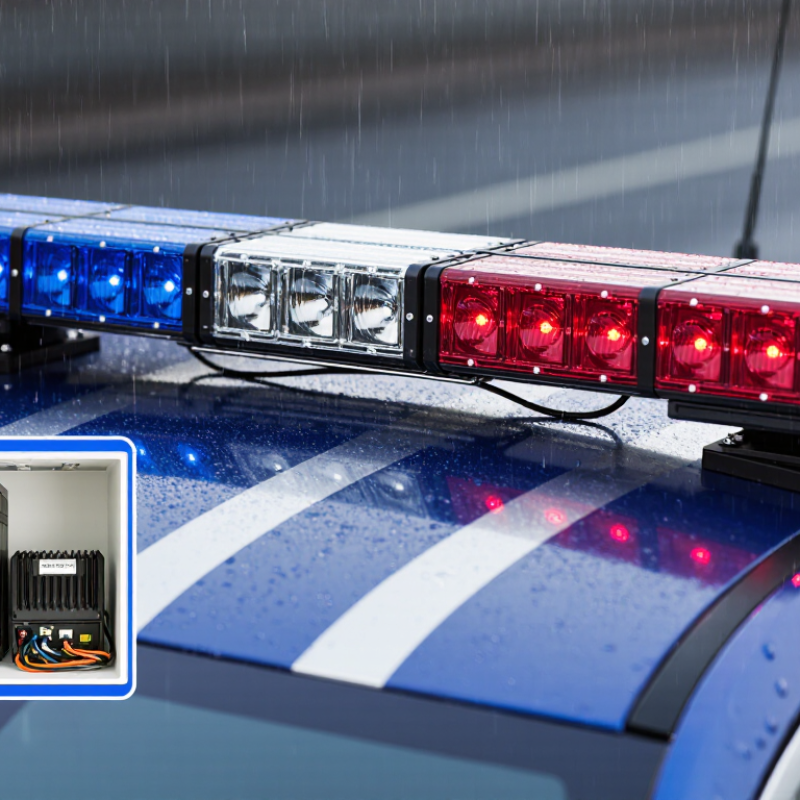
Police vehicles need warning lighting matched to their size, mission, and operating environment. Full-size lightbars suit patrol SUVs and sedans, offering wide visibility from intersections and side angles. Low-profile bars reduce wind resistance and fit vehicles requiring a discreet roofline. Compact mini-bars work well for utility vehicles, temporary fleets, and smaller response units. Motorcycles often need modular front, rear, and side LED units instead of one roof-mounted bar.
Key features include high-efficiency LEDs, clear optics, and multiple flash patterns for daytime and nighttime visibility. Durable housings should resist dust, rain, vibration, and temperature changes. Reliable mounting matters on rough roads. A secure bracket should not loosen after repeated movement. Current draw also deserves attention, especially on vehicles carrying radios, cameras, and computers. Brightness alone is not enough. Excessive glare may reduce practical visibility for nearby drivers and officers.
Tips: Match the lightbar length to the roof, not just the vehicle class. Check voltage, mounting space, ingress protection, and control compatibility before ordering. Request test data for vibration, thermal performance, and electromagnetic compatibility. Local requirements can differ, so confirm them with a qualified fleet engineer. A product may look excellent in a catalog but perform poorly after installation. Field testing remains valuable, even when specifications appear complete.
How Global Buyers Should Evaluate Lightbar Manufacturers
Global buyers should evaluate a police LED lightbar manufacturer beyond brightness claims. MarketsandMarkets’ 2024 automotive lighting report forecasts steady industry growth through 2028, but broad market growth does not prove lightbar quality. Ask for measured candela, flash-pattern data, thermal results, and warranty failure rates. A credible manufacturer should explain testing conditions clearly. Request samples, not only brochures.
Field experience matters. Examine the lightbar after long rooftop exposure, vibration, dust, and heavy rain. Check aluminum structure, lens clarity, cable sealing, and connector strain relief. IP ratings help, but they do not replace real validation. SAE J595 and SAE J845 provide useful performance references, while ECE R65 may apply in relevant markets. Confirm which tests were independently witnessed. Small details matter.
Supply reliability deserves equal attention. Deloitte’s 2024 Global Automotive Supplier Study highlights continuing pressure from logistics volatility, component shortages, and cost control. Ask whether critical LEDs, drivers, and seals have approved alternatives. Require production traceability, inspection records, spare-part availability, and documented change control. A low quotation can become expensive when a replacement lens takes eight weeks. That happens.
Manufacturers should also explain brightness management, electromagnetic compatibility, and vehicle integration. Ask for installation drawings and power-consumption figures at actual operating voltage. Do not accept “lifetime” without a test definition. One weakness remains easy to miss: after-sales communication. Test it before purchasing. A technically strong supplier that responds slowly may still create operational delays.
International Standards, Certifications, and Compliance Requirements
Top Police LED Lightbar Manufacturers for Global Buyers
International standards shape every serious police LED lightbar purchase. UNECE Regulation No. 65 specifies warning-light performance, flash patterns, and photometric requirements for approved vehicles. In North America, buyers often compare SAE J595 and SAE J845 test classifications. These standards examine visibility, warning intensity, and durability under demanding conditions. A certificate alone can mislead. Verify the exact model, configuration, and approval scope.
Electromagnetic compatibility also matters. CISPR 25 evaluates radio disturbances from vehicle components, while ISO 11452 examines immunity against electromagnetic interference. A compliant lightbar should not disrupt radios, navigation systems, or control modules. IEC 60529 ingress ratings help buyers assess protection from dust and water, but laboratory ratings cannot replace installation checks. Test it cold. Test it wet.
The 2024 MarketsandMarkets Emergency Vehicle Lighting Market report projects growth from approximately USD 1.2 billion in 2023 to USD 1.7 billion by 2028. This expansion increases supplier competition, but not every factory offers equal traceability. Request accredited laboratory reports, production inspection records, photometric curves, and material details. Check whether testing covered the final lens, controller, wiring, and mounting system. One overlooked connector can weaken an otherwise compliant installation. Experienced buyers should also review regional marking rules, warranty procedures, and replacement-part continuity before approving international shipments.