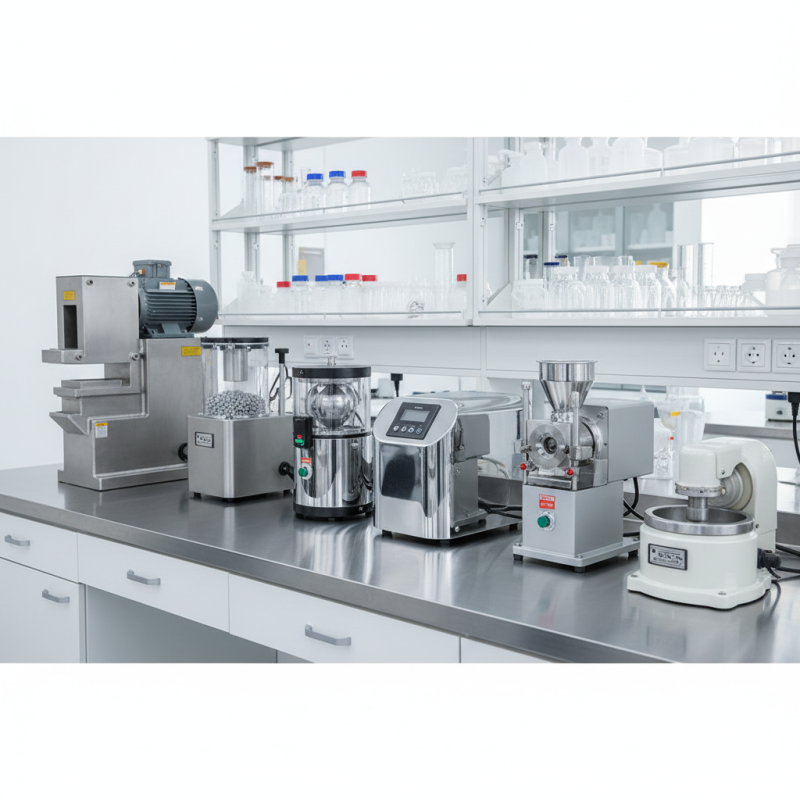
Top 5 Laboratory Sample Pulverizers You Need to Know?
In the world of material analysis, a laboratory sample pulverizer is essential for precise sample preparation. These tools provide consistent particle size reduction, facilitating accurate testing. Choosing the right pulverizer can significantly impact research outcomes.
Various models exist, each designed for different materials and purposes. Some are perfect for hard samples, while others excel with softer specimens. Understanding these distinctions is crucial for optimal lab performance. However, not all users fully grasp their needs, leading to potential inefficiencies.
When selecting a laboratory sample pulverizer, consider factors like capacity, noise levels, and ease of cleaning. The wrong choice can lead to frustrating results. Fostering a better understanding of these machines will enhance research quality significantly.
Key Features to Consider When Choosing Laboratory Sample Pulverizers
When choosing a laboratory sample pulverizer, several factors come into play. One critical feature is the type of material you’ll be processing. Different pulverizers handle various materials differently, affecting particle sizes and purity. Consider the hardness and moisture content of your samples. This will guide you toward the most suitable equipment.
Another essential aspect is the pulverizer’s capacity. It should match your workload requirements. A small lab may not need high-capacity machines. A smaller unit can save space and energy. Ensure it meets your sample size and throughput needs.
Tips: Always check user reviews for real-world performance insights. You may discover user experiences that highlight potential issues. Engaging with fellow researchers can provide unique recommendations, too.
Durability is also key. Lab equipment faces wear and tear. A robust design can extend the lifeline of your pulverizer. Look for features like reinforced casings and sturdy components. Remember that maintenance requirements can vary significantly between models. Frequent checks can prevent major breakdowns. Choosing the right pulverizer can improve your lab's efficiency and output quality significantly.
Types of Laboratory Sample Pulverizers and Their Applications
Laboratory sample pulverizers are essential tools in various scientific fields. They are designed to grind materials into fine powders, making them suitable for analysis. Different types of pulverizers serve different applications. Some are used for hard materials, while others tackle softer substances. Understanding these types can help researchers select the right tool for their needs.
For instance, the ball mill is popular for its versatility. It can grind everything from minerals to polymers. A more specialized tool is the disc mill, ideal for brittle materials. This type often produces consistent particle sizes. However, it can generate heat, potentially altering sensitive samples. Another notable option is the mortar and pestle. Though it’s manual, it offers great control but may not be efficient for larger samples.
However, not all pulverizers are created equal. Some may struggle with specific materials, affecting results. The choice of a pulverizer can significantly impact data integrity. It’s essential to reflect on the sample requirements and the desired outcome. Selecting the wrong pulverizer could lead to compromised results, challenging the research’s validity.
Top 5 Laboratory Sample Pulverizers You Need to Know
| Type of Pulverizer | Material Processed | Typical Application | Advantages |
| Ball Mill | Metals, Ceramics | Material grind for extraction and analysis | Uniform particle size, high efficiency |
| Jet Mill | Pharmaceuticals, Chemicals | Producing fine powders | No contamination, precise size distribution |
| Hammer Mill | Grains, Biomass | Crushing and grinding materials | Versatile, simple to operate |
| Disc Mill | Food, Minerals | Grinding bulk materials | High throughput, easy maintenance |
| Mortar Grinder | Herbs, Chemical Samples | Preparing samples for analysis | Gentle grinding, ideal for fragile samples |
Top 5 Laboratory Sample Pulverizers: Overview and Features
Laboratory sample pulverizers are essential tools for various fields. They can significantly enhance the efficiency of sample preparation. These machines work by grinding materials into finer particles, making it easier to analyze them.
There are several types of pulverizers, each with unique features. Some have high-speed capabilities, allowing for rapid processing. Others focus on achieving uniform particle size, which is crucial for accurate results in experiments. Materials such as ceramics, metals, or rocks can often be processed. However, one must be cautious about cross-contamination during sample preparation. It's easy to overlook this detail, but it’s vital for maintaining the integrity of samples.
Choosing the right pulverizer can be challenging. Some tools may struggle with harder materials. Others can generate excess heat during the grinding process, impacting sample integrity. Users should consider the specific requirements of their materials. It’s often beneficial to consult with experts or conduct trials before making a final decision. This reflection can lead to a more informed choice in the long run.
Comparative Analysis of the Leading Laboratory Sample Pulverizers
When selecting laboratory sample pulverizers, users should focus on various performance metrics. Key aspects include particle size reduction efficiency. Different machines offer unique grinding mechanisms that impact their effectiveness. Some may excel in speed but compromise on uniformity. Others achieve fine results but operate at a slower pace.
It’s crucial to conduct comparative analyses. Look at how different pulverizers handle materials. Some are better suited for hard samples, while others tackle softer substances effectively. Understanding these nuances can lead to better results in the lab. The cost can also vary widely based on features. More expensive options may not always deliver superior performance.
Evaluating user feedback can provide insight into practical use. Users often mention difficulties such as maintenance and noise levels. These factors can affect the overall lab experience. A machine's ease of cleaning is frequently overlooked but essential. Consider these aspects when choosing a pulverizer that fits your research needs.
Top 5 Laboratory Sample Pulverizers
This chart illustrates the performance of the top 5 laboratory sample pulverizers based on the output measured in kilograms per hour. As shown, Pulverizer D has the highest performance, followed by Pulverizer B and Pulverizer C.
Maintenance Tips for Ensuring Longevity of Sample Pulverizers
Maintaining laboratory sample pulverizers is crucial for their longevity. Regular cleaning after each use prevents material buildup. Residue can affect the accuracy of future samples. Ensure all parts are free from contamination. This habit makes a noticeable difference over time.
Check for wear and tear regularly. Pulverizers experience significant stress during operation. Inspect blades for dullness and replace them when necessary. A worn blade can lead to uneven particle size. It might seem minor, but it impacts your results.
Lubrication is essential too. Overlooking this can lead to mechanical failures. Use appropriate lubricants sparingly. Too much can attract dust and debris. Make sure to follow the manufacturer’s guidelines. Adjusting settings for different materials also requires attention. Fine-tune speed and pressure for optimal performance. It’s a small effort that pays off in better results.