Top 5 Infant Series CPR Training Simulators You Need Now?
In today's world, mastering CPR for infants is crucial. An Infant Series CPR Training Simulator can be a vital tool in this learning process. These simulators provide hands-on experience, essential for anyone working with young children. They accurately mimic real-life scenarios, helping caregivers and healthcare professionals respond effectively in emergencies.
While many training options exist, not all simulators are created equal. The best Infant Series CPR Training Simulators stand out with realistic features. They offer various scenarios and feedback, allowing users to practice and refine their skills. However, it's essential to select a simulator that reflects current guidelines and techniques. Some devices may not be as reliable, making proper research essential.
Investing time in learning through these simulators can save lives. Gaining confidence and proficiency in CPR for infants can be a game-changer during critical situations. Therefore, exploring the top options available ensures you're equipped with the best resources. Combining this knowledge with practical training can lead to a higher level of preparedness.
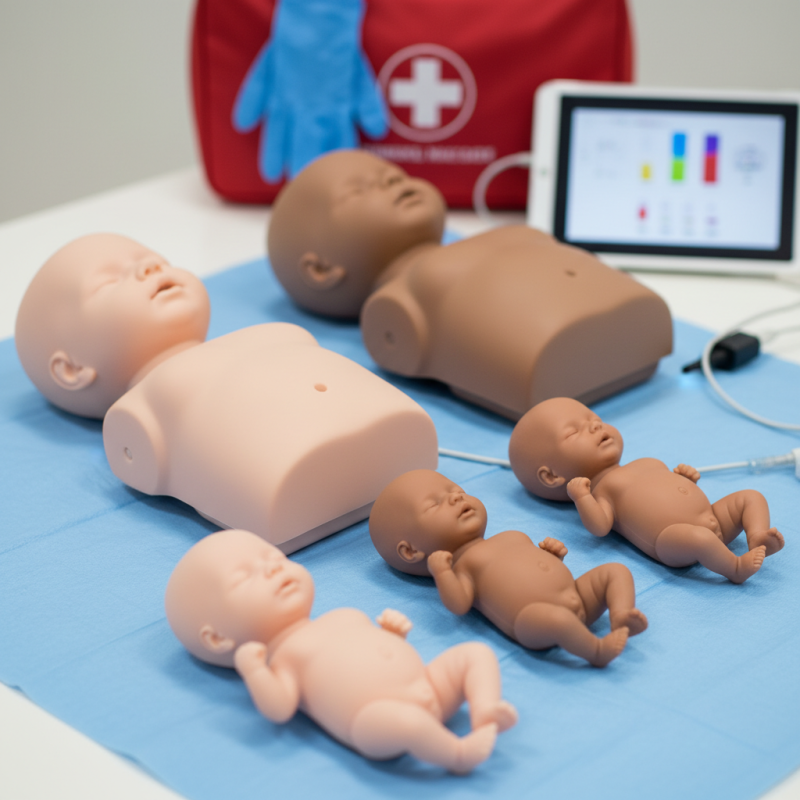
Essential Features of Infant CPR Training Simulators
Choosing the right infant CPR training simulator is crucial. Essential features ensure effective learning and skill retention. Look for models that provide realistic anatomical feedback. Such feedback helps learners understand the correct hand placement and compression depth.
A good simulator should also include adjustable airway resistance. This feature simulates real-life respiratory challenges. Trainees learn to identify signs of airway obstruction. It encourages critical thinking and fast decision-making.
Tips: When selecting a simulator, consider the ease of cleaning. Hygiene is paramount in training environments. Also, pay attention to the weight of the model. It should be portable yet sturdy for practical use.
Interactive technology is another vital aspect. Some simulators offer integration with mobile apps. This feature aids in tracking learning progress and reinforcing techniques. However, remember that technology can sometimes malfunction. Always be ready to adapt your teaching approach when needed.
Top 5 Infant CPR Training Simulators - Features Comparison
Top Brands Offering Infant CPR Training Simulators
When it comes to infant CPR training, choosing the right simulator is crucial. Several top brands offer quality simulators that are designed to provide realistic training experiences. These simulators often come equipped with features like lifelike anatomy and responsive feedback, ensuring learners grasp essential techniques. Trainers often seek simulations that mimic real-life situations. This enhances the learning experience.
Brand reliability is a critical factor. Trusted names in the industry have a reputation for producing high-quality products. Their simulation tools are often designed in consultation with healthcare professionals. This collaborative approach adds credibility to their training tools. However, even the best simulators can have limitations. Users may find certain models are not as user-friendly or that maintenance can be a challenge. It is vital to think critically about the features needed for effective training.
Investing in an infant CPR training simulator can greatly enhance learning outcomes. The most reputable brands ensure that their devices offer a blend of functionality and realism. However, potential buyers should research and assess their specific needs before making a purchase. Each simulator can serve different training environments. Understanding these differences can lead to choices that truly benefit learners.
Comparative Analysis of Top 5 Infant CPR Training Simulators
When choosing an infant CPR training simulator, it’s crucial to evaluate their features meticulously. Training simulators vary in realism. Some offer advanced features like anatomical landmarks and realistic feel. Others may lack detail. This difference can affect the overall learning experience of the trainees.
Consider the realism of the simulator. Does it mimic actual infant body responses? The more lifelike the simulator, the better the mental preparation. A training simulator that closely resembles a real-life scenario can help participants build confidence. However, some simulators may have design flaws, which could hinder learning. Realistic scenarios are essential for teaching critical skills effectively.
Instructor feedback is key to effective training. Some simulators come with built-in feedback systems while others do not. This can be a limitation for some users who flourish with constructive criticism. A lack of feedback can lead to gaps in skills. It’s important to choose a simulator that caters to different learning styles and offers strategic guidance. Ultimately, the right choice can make all the difference in emergency readiness for infants.
User Feedback: Real Experiences with Infant CPR Simulators
In the realm of infant CPR training, user feedback plays a crucial role. Many caregivers and health professionals highlight their real experiences with various infant CPR simulators. A recent report from the American Heart Association indicates that over 200,000 infants in the U.S. may require resuscitation annually. Hence, effective training tools are essential.
Many users express that realistic feedback during training enhances their confidence. For instance, a user noted that the responsiveness of a simulator significantly impacts their learning curve. When practicing, they found that immediate feedback on compression depth and rate made a noticeable difference. However, some users reported feeling overwhelmed by the technology involved. This suggests that not all systems are user-friendly for every caregiver.
Moreover, participants appreciate the importance of hands-on practice. A study from the National Institutes of Health emphasizes that hands-on training enhances retention rates. Yet, some users reflected on their initial discomfort in using simulators. Many admitted that familiarity with the technology took time and patience. Creating a supportive training environment can mitigate this issue, fostering growth in skills and confidence.
Top 5 Infant Series CPR Training Simulators You Need Now? - User Feedback: Real Experiences with Infant CPR Simulators
| Simulator Name | Ease of Use | Realism | User Rating (1-5) | Purchase Recommendation |
| Infant CPR Manikin A | Very Easy | High | 4.8 | Yes |
| Infant CPR Manikin B | Moderate | Medium | 4.5 | Maybe |
| Infant CPR Manikin C | Difficult | Very High | 4.0 | No |
| Infant CPR Manikin D | Easy | High | 4.6 | Yes |
| Infant CPR Manikin E | Very Easy | Medium | 4.7 | Yes |
Best Practices for Using Infant CPR Simulators in Training Sessions
When training for infant CPR, using simulators effectively is crucial. Training sessions should mimic real-life scenarios as closely as possible. This way, participants can gain a true understanding of CPR techniques. Engage learners by incorporating realistic breathing and heart sounds in the simulators. This can enhance their responsiveness in emergencies.
Tips: Always emphasize the importance of compression depth and rate. People often underestimate how hard and fast to press. Use visual markers on the simulator to guide participants. This can improve accuracy and ensure they apply correct techniques during practice.
Encourage immediate feedback during training. Pair participants so they can observe and critique each other. This peer feedback can reveal mistakes that might otherwise go unnoticed. Not everyone learns at the same pace, so allow time for questions and adjustments. Remember, effective training requires reflection and modification based on performance.