Top 10 Industrial PC Features Buyers Should Know?
In today's rapidly evolving manufacturing landscape, understanding the essential features of an Industrial PC is crucial. Experts emphasize this importance, with Dr. John Bennett, a leading figure in industrial computing, stating, "The right Industrial PC can transform operational efficiency." His insights reflect the growing integration of technology in industrial settings.
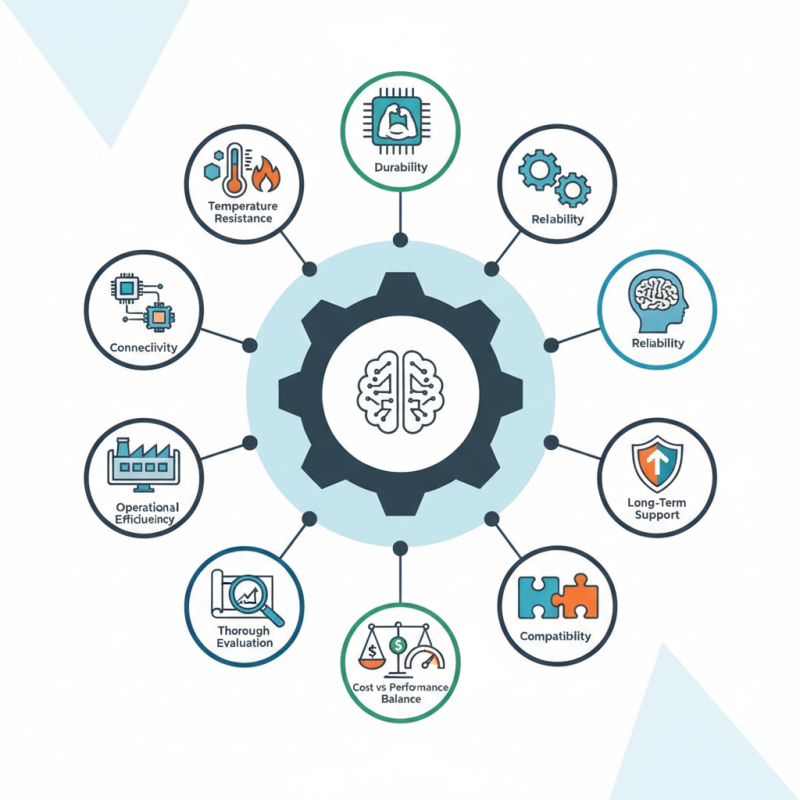
Industrial PCs are designed for harsh environments. They offer durability, reliability, and advanced computing capabilities. Buyers must recognize key features when evaluating their options. For instance, factors such as temperature resistance, processing power, and connectivity play significant roles. In a world where every second counts, choosing the right specifications can make a difference.
However, not all Industrial PCs are created equal. Buyers often overlook critical aspects during their decision-making process. Consideration of long-term support and compatibility with existing systems is vital. Balancing cost and performance is another complex yet essential consideration. Buyers need to embrace a thorough evaluation of their specific needs to make an informed choice.
Key Performance Specifications of Industrial PCs
When selecting an industrial PC, understanding key performance specifications is crucial. These specifications define how well the PC will perform in demanding environments. Industrial PCs often face factors such as extreme temperatures, dust, and vibrations. Thus, durability and reliability are paramount.
The processor is one critical aspect. Different applications require varying performance levels. A powerful multi-core CPU can handle complex computations, but may not be necessary for basic monitoring tasks. Buyers must assess their specific needs. Another essential feature is the memory and storage capacities. Higher RAM allows for mult itasking, while SSDs provide faster data access speeds. These can significantly affect overall system responsiveness.
In addition to processing power, connectivity options are important. Industrial PCs should support various interfaces like USB, Ethernet, and serial ports. Compatibility with existing systems is vital. Power supply requirements also need careful consideration. Some systems may need a backup power solution for uninterrupted operation. Balancing these features can be challenging, but it ensures robust performance in real-world applications.
Durability and Environmental Resilience in Industrial Computers
When evaluating industrial computers, durability and environmental resilience are crucial features. These systems often operate in harsh settings, exposed to dust, moisture, and extreme temperatures. A solid industrial PC should meet stringent standards, like IP ratings for ingress protection. Components must withstand vibrations commonly found in factories and transportation environments.
In addition to physical durability, thermal management is vital. Many industrial PCs lack efficient cooling mechanisms. Excess heat can shorten a computer's lifespan. Look for systems with advanced cooling technologies. Consider options like fanless designs or heat sinks. These can help in environments where traditional cooling may fail.
While manufacturers promote ruggedness, it’s essential to assess real-world performance. User reviews can provide insights into long-term reliability. Sometimes, a system might look tough on paper but falter in actual use. Pressure testing under various environmental conditions is one way to verify performance claims. Knowing these details can guide buyers toward more resilient and dependable industrial PCs.
Connectivity Options and Interfaces for Industrial Applications
When selecting an industrial PC, connectivity options are critical. Industrial applications demand robust interfaces for data exchange and device integration. A recent industry report indicates that 70% of industrial systems rely heavily on Ethernet connections. Reliable Ethernet provides high-speed data transfer essential for real-time monitoring and control.
In addition to Ethernet, USB ports are vital. They enable connections for a variety of peripherals, from scanners to cameras. However, many users often overlook the need for a sufficient number of available ports. Insufficient USB connectivity can limit operational flexibility. This can lead to inefficiencies in multi-device setups.
Moreover, wireless connectivity options, such as Wi-Fi and Bluetooth, are increasingly important. They allow flexibility in device placement and facilitate remote access. Statistics show that over 30% of factories are now integrating IoT devices, which require seamless wireless connections. While these technologies enhance communication, they also present security challenges that need addressing. Many buyers may not fully consider potential vulnerabilities in wireless systems, underscoring the need for thorough evaluations.
Power Supply and Energy Efficiency Considerations
When considering industrial PCs, power supply and energy efficiency play crucial roles. These systems often work in harsh environments, so reliability is key. A strong power supply ensures the device can operate uninterrupted. It’s not just about power capacity; durability matters too. Components should withstand temperature fluctuations and vibrations.
Energy efficiency impacts both operational costs and environmental footprint. A power-efficient industrial PC can save significant amounts in energy bills over time. High-efficiency power supplies convert more electricity into usable power, reducing waste. Look for systems with advanced energy management features. They can adjust power consumption based on load.
It’s essential to reflect on power supply redundancies as well. A single point of failure can halt operations. Some systems offer dual power supplies for this reason. Users need to ensure that the power supply specifications align with their unique needs. Factors like peak load, ambient temperature, and installation space play important roles in this decision.
User-Friendly Features for Enhanced Industrial Usability
User-friendly features in industrial PCs significantly enhance usability, especially in demanding environments. Touchscreen interfaces simplify navigation. Employees can interact directly with applications, reducing training time. Large displays help visualize data clearly. This is important when quick decisions are required.
Ergonomic design matters too. A compact and lightweight PC can fit into tight spaces. This encourages flexibility in workstation setups. Consider the durability of the device. It should withstand dust, moisture, and temperature fluctuations. However, not all industrial PCs excel in these areas. Some may overheat or fail under extreme conditions.
Easy-to-use software is another crucial aspect. Intuitive layouts can speed up operator tasks. But, not all software has a user-friendly approach. Relying heavily on complex programs can frustrate users. Regular feedback from end-users can identify these pain points. This makes it easier to implement necessary changes and improve overall efficiency.
Top 10 Industrial PC Features Buyers Should Know
| Feature | Description | Importance |
| Rugged Design | Designed to withstand harsh conditions, including extreme temperatures and vibrations. | Essential for industrial environments to ensure durability. |
| Fanless Operation | Runs silently with no moving parts, minimizing dust intake. | Crucial for environments requiring minimal noise levels. |
| Wide Operating Temperature Range | Functions effectively in a broad temperature spectrum. | Important for outdoor and temperature-variable locations. |
| Modular Design | Easily customizable with interchangeable components. | Enhances flexibility and future upgrades. |
| Multiple I/O Ports | Includes various ports for connectivity to devices and networks. | Facilitates integration into existing systems. |
| Enhanced Security Features | Includes hardware encryption and secure boot options. | Key for protecting sensitive industrial data. |
| Power Efficiency | Optimized for low power consumption without compromising performance. | Reduces operational costs and environmental impact. |
| High Processing Power | Equipped with powerful CPUs to handle complex applications. | Necessary for data-intensive tasks in industrial settings. |
| User-Friendly Interface | Intuitive UX with customizable settings for ease of use. | Improves efficiency in training and operation. |
| Remote Management Capabilities | Allows monitoring and management from remote locations. | Increases operational efficiency and reduces downtime. |