
What Are the Top Grey Retail Shelving Types in 2026?
Grey Retail Shelving can shape how a store feels before shoppers read a single price tag. In 2026, retailers can choose from gondola units, wall-mounted shelves, modular systems, wire racks, and glass-front displays. Each option suits different products and floor plans. Gondolas create visible aisles for packaged goods, while wall shelves use vertical space for books, accessories, or folded clothing. Wire racks keep items easy to see and can work well in busy stock areas. Glass-front units offer a more polished setting for smaller, higher-value merchandise.
The right choice depends on more than appearance. Check the stated load capacity, shelf adjustability, finish durability, and cleaning requirements before comparing prices. Measure aisle widths and product dimensions, too. A grey metal unit may look calm and modern, but scuffed corners can quickly change that impression. Small details matter.
There is no perfect fixture. A display that works for cosmetics may feel awkward in a grocery aisle. Store traffic, restocking routines, and the weight of products all affect performance. This guide compares common shelving types by use, strengths, and practical trade-offs. It also considers how grey finishes pair with lighting, signage, and neighboring materials. Some decisions still require testing in the actual space. A sample shelf and a measured floor plan can reveal problems that a product photo cannot.
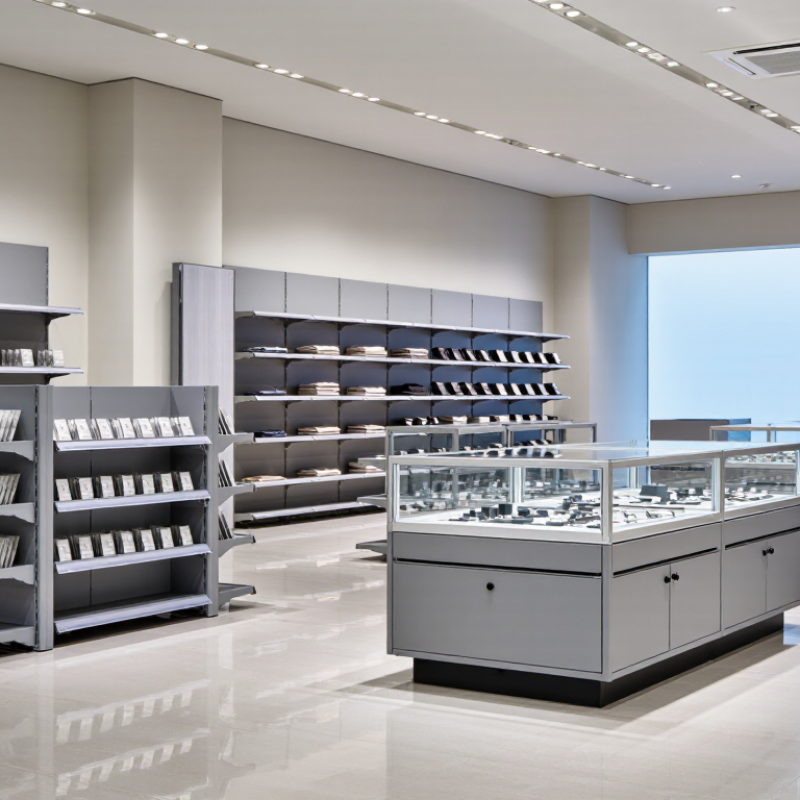
What Defines Grey Retail Shelving and Its Main Fixture Types?
Grey retail shelving refers to store fixtures finished in grey tones, from pale silver to charcoal. The color may come from powder-coated metal, laminate, or painted surfaces, so finish and construction matter as much as appearance. It is not neutral. Under cool lighting, a light grey can look almost white; near warm wood, the same finish may seem darker. Check a sample in the actual store lighting. A small swatch can mislead.
The main fixture types serve different tasks. Gondola shelving stands on the sales floor, often with adjustable shelves on both sides, and suits packaged goods. Wall shelving uses the perimeter efficiently and can keep taller products visible. Endcaps sit at aisle ends, creating a compact spot for seasonal or featured items. Display tables work well for folded goods or products shoppers should handle, while slatwall panels support hooks and small accessories. Match each fixture to product weight, reach, and traffic flow. Confirm shelf load limits and anchoring needs before installation; a crowded aisle or overloaded shelf can undermine an otherwise tidy layout. Grey helps create visual consistency, but it will not hide dust or scuffs equally well across every finish.
What Are the Top Grey Retail Shelving Types in 2026? — What Defines Grey Retail Shelving and Its Main Fixture Types?
| Fixture type | What defines it | Common retail uses | Advantages | Planning considerations |
|---|---|---|---|---|
| Gondola shelving | A freestanding retail unit with a base, uprights, and adjustable shelves; single-sided units often line walls, while double-sided units form aisles. | Groceries, health and beauty products, convenience retail, and general merchandise. | Flexible shelf positions and a familiar layout for organizing a wide range of packaged goods. | Plan aisle width, end displays, base size, and shelf loading; compatible accessories depend on the system. |
| Wall-mounted standards and brackets | Vertical tracks or standards attach to a wall and support adjustable brackets and shelves. | Perimeter displays, book and home-goods sections, and spaces where floor area is limited. | Uses wall space efficiently and allows shelf heights to be changed as assortments shift. | The wall and fixings must suit the expected load. Confirm track, bracket, and shelf compatibility. |
| Slatwall displays | Panels with horizontal grooves accept compatible inserts, shelves, hooks, and other display accessories. | Apparel accessories, packaged items, gifts, and other merchandise displayed on hooks or shelves. | Supports varied merchandising arrangements and makes it easy to reposition compatible accessories. | Panel construction, installation, and accessory ratings affect how much weight can be displayed safely. |
| Gridwall displays | Open wire-grid panels used with compatible hooks, baskets, and shelves; panels may be wall-mounted or supported by a stand. | Small packaged products, accessories, seasonal merchandise, and temporary displays. | Open construction keeps products visible and allows accessories to be rearranged. | Check panel support, stand stability, and accessory fit, especially for heavier items. |
| Wire shelving | A freestanding frame with open wire shelves, commonly adjustable along upright posts. | Back rooms, stock areas, utility zones, and some visible displays requiring open storage. | Open shelves allow airflow and visibility, and the units can be reconfigured for different storage needs. | Small or soft-bottomed products may need shelf liners; verify stability and load limits for each shelf. |
| Freestanding display shelving | A standalone shelf unit designed for placement on the sales floor, often with a distinctive shape or a smaller footprint than aisle gondolas. | Promotional merchandise, feature products, and displays near entrances or checkout areas. | Can create a focused product presentation and be positioned independently of wall fixtures. | Consider footprint, visibility, access, and stability; keep circulation routes clear. |
| Glass display cabinets | Enclosed or partly enclosed cabinets with glass panels and shelves, sometimes with lockable doors. | Fragile, high-value, collectible, or presentation-sensitive merchandise. | Provides product visibility while helping separate merchandise from open-access displays. | Check glass type, door access, cleaning needs, lighting, and suitable placement in the store. |