

- 713.590.1312
- sale@pandbtools.com
Top FPC Stiffener Bonding Machine Manufacturers in 2026?
Choosing a supplier for a Fpc Stiffener Bonding Machine in 2026 takes more than comparing brochure speeds. Buyers need to understand how a machine handles their actual materials, product sizes, and production volume. A stiffener that shifts by a fraction of a millimeter can affect alignment and rework. So can uneven pressure, unstable heating, or a fixture that slows changeovers. Small details matter.
This guide introduces manufacturers and the factors that help distinguish their equipment. It considers practical points such as bonding accuracy, temperature control, operator access, recipe storage, and the availability of installation and maintenance support. These details are worth verifying directly, since published specifications may use different test conditions. Ask for a demonstration with representative FPC samples, and check how the supplier measures repeatability. A polished sample is useful, but it does not show the whole production picture.
There is no universal best machine. A high-throughput line may need different automation from a facility handling frequent product changes or smaller batches. Buyers should also clarify tooling costs, training, spare-part lead times, and service coverage before comparing quotations. This comparison cannot replace a factory audit or technical trial. It can, however, give engineering and purchasing teams a clearer starting point. Some supplier information may be incomplete; that is a reason to ask sharper questions, not to assume a machine will fit.
FPC Stiffener Bonding Basics: Materials, Functions, and IPC-6013 Scope
FPC stiffeners are bonded support pieces, not extra circuit layers. Polyimide suits thin, flexible zones; FR-4 adds rigidity around connectors, while metal may help with heat or mechanical support. Adhesive choice matters too. A thermosetting adhesive can provide a durable bond, while pressure-sensitive adhesive may simplify assembly. The wrong combination can cause edge lift, local warping, or a connector that feels loose during insertion. Small area. High risk. Fortune Business Insights’ 2023 market report estimated the global flexible printed circuit board market at USD 26.3 billion, reflecting the scale of applications where reliable support matters.
IPC-6013 sets qualification and performance requirements for flexible printed boards, including rigid-flex constructions. It does not, by itself, select a stiffener material or define every bond-line detail for a product. Those choices belong in the design and procurement documentation: stiffener outline, thickness, adhesive type, placement tolerance, and any keep-out areas. A practical check is to inspect the bonded edge under magnification and measure thickness near the connector. Even a small adhesive squeeze-out can interfere with fit. That is easy to miss. The standard’s scope should not be mistaken for a complete assembly recipe; customer requirements and the applicable IPC-6013 revision still need review.

How Bonding Machines Work: Heat, Pressure, Dwell Time, and Alignment
Top FPC Stiffener Bonding Machine Manufacturers in 2026?
How Bonding Machines Work: Heat, Pressure, Dwell Time, and Alignment
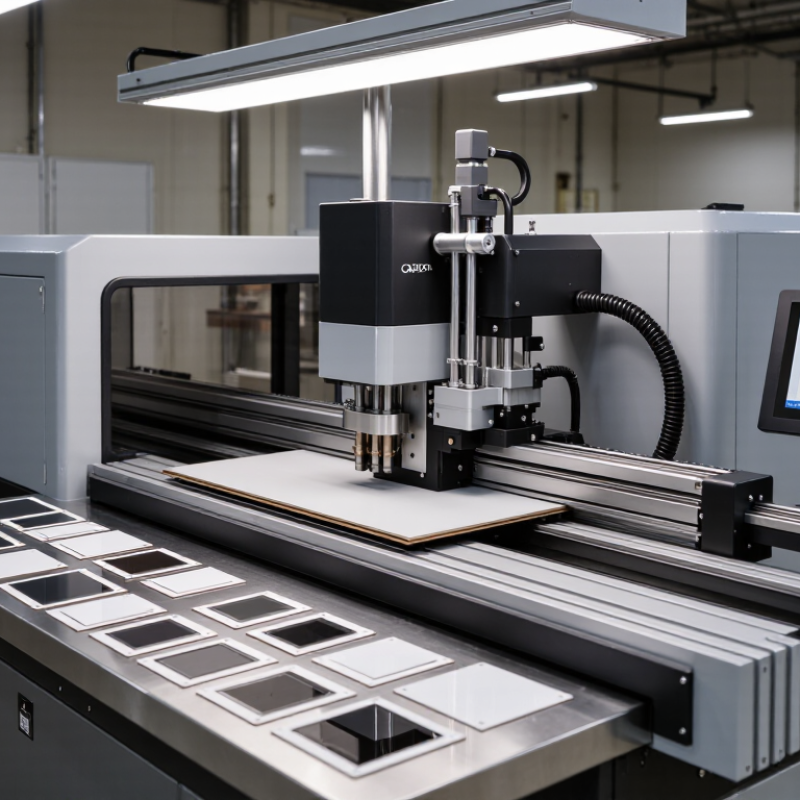
A stiffener bonding machine joins a reinforcing layer to a flexible circuit, often using heat-activated adhesive. The head applies pressure while heat softens the adhesive and helps it wet the surfaces. Too little heat can leave weak areas; too much may damage the film or squeeze adhesive beyond the bond line. The exact process depends on adhesive type, material thickness, and machine design. There is no universal recipe.
Dwell time is the period the heated head remains in contact. Short cycles can produce incomplete bonds, while excessive dwell may distort thin flex material. Alignment matters just as much. Registration pins, vision systems, or carefully prepared fixtures keep the stiffener’s edges and openings in position. A small offset near a connector can cause real assembly trouble. Even a stable recipe can drift as tools wear or materials change, so results need regular checks.
Tips: Test settings on the actual material stack. Check alignment before each run, and inspect edges for lifting or adhesive squeeze-out. Record heat, pressure, and dwell time. A tidy first sample is encouraging, but not proof of a consistent process.
Typical Machine Benchmarks: ±0.05–0.10 mm Alignment and 0–300 °C Control
For 2026 machine comparisons, treat ±0.05–0.10 mm alignment and 0–300 °C control as screening benchmarks, not guaranteed production results. IPC-6013E defines qualification and performance requirements for flexible printed boards, but it does not prescribe universal stiffener-bonder accuracy. That distinction matters. A machine may hit its displayed coordinate while adhesive flow, panel warp, or camera calibration shifts the actual placement.
Ask suppliers for repeatability data across multiple cycles, not a single best-case reading. Check whether alignment figures include vision correction and whether temperature is measured at the bonding tool or only at the heater. NIST Technical Note 1297 provides a framework for reporting measurement uncertainty; use the same discipline when comparing machine test results. A ±0.05 mm claim is less useful if the measurement method and sample size are missing.
Tips: Verify the real process. Run a trial with your stiffener, adhesive, and panel stack. Measure placement after bonding, and record tool-face temperature during the cycle. Small gaps in the data matter. Admittedly, even a well-controlled machine can need recipe tuning when materials or panel thickness change.
Top FPC Stiffener Bonding Machine Manufacturers in 2026? - Typical Machine Benchmarks: ±0.05–0.10 mm Alignment and 0–300 °C Control
| Evaluation dimension | Indicative benchmark | What to verify |
|---|---|---|
| Alignment accuracy | ±0.05–0.10 mm | Ask whether the figure is repeatability or absolute accuracy, and test with the actual FPC and stiffener geometry. |
| Temperature control range | 0–300 °C controller range | Confirm the usable process range at the bonding interface, not only the controller’s displayed range. |
| Temperature stability and uniformity | Common evaluation targets: about ±2–5 °C stability; verify platen uniformity across the working area | Request measurement conditions, sensor location, warm-up time, and a temperature map under representative loading. |
| Bonding pressure | Application-dependent; evaluate controllable force and pressure distribution rather than relying on a single nominal value | Check the force range, adjustment resolution, parallelism, and pressure uniformity with the intended tooling. |
| Dwell-time control | Recipe-controlled; set according to adhesive and material process requirements | Verify timer resolution, repeatability, and whether timing starts at contact, target temperature, or applied force. |
| Cycle time | Varies substantially with heating, dwell, cooling, handling, and part size | Compare a complete, repeatable cycle using the same part, recipe, and loading method—not press time alone. |
| Workpiece and tooling format | Configuration-specific; commonly offered as custom nests or replaceable fixtures | Confirm maximum workpiece size, fixture changeover, access for loading, and support for thin or flexible circuits. |
| Process compatibility | Must be matched to the specified stiffener, adhesive, FPC stack-up, and thermal limits | Run sample trials and inspect alignment, bond strength, bubbles, warpage, and damage after bonding. |
| Recipe management and traceability | Recipe storage and process records are useful production-evaluation criteria | Check user access controls, recipe recall, alarms, and availability of temperature, force, and cycle records. |
| Acceptance testing | Define measurable criteria before purchase | Specify sample quantity, alignment measurement method, bond-quality criteria, repeatability, and operating conditions. |
2026 Manufacturer Comparison: Automation, Throughput, and Equipment Specialties
Top FPC Stiffener Bonding Machine Manufacturers in 2026?
2026 Manufacturer Comparison: Automation, Throughput, and Equipment Specialties
When comparing FPC stiffener bonding equipment, look beyond the advertised cycle time. The International Federation of Robotics reported 541,302 industrial robots installed worldwide in 2023. That figure reflects wider factory automation, not bonding-machine output. Ask manufacturers for verified good-panel throughput, including loading, alignment, and inspection. A fast press can still create a slow production cell.
Automation varies from manual placement to vision-guided alignment, robotic loading, and recipe-controlled heating. Compare temperature uniformity, pressure repeatability, changeover time, and traceability. For throughput, request a trial using your panel dimensions, adhesive, and stiffener materials. Check for bubbles, edge lift, and adhesive squeeze-out after bonding. Equipment specialties matter: some systems suit small, varied batches; others prioritize continuous feeding or larger panels. Not every line is comparable. Published cycle times may exclude rework and operator handling.
Tips: Bring real production panels to acceptance testing. Record good units per hour, alignment tolerance, and defect rate across repeated runs. Ask how the machine handles thin polyimide, metal stiffeners, or frequent recipe changes. A neat demo is useful, but it is not a production shift.
How to Select a Machine: Verify Repeatability, Yield, and Process Qualification
Top FPC Stiffener Bonding Machine Manufacturers in 2026?
When evaluating an FPC stiffener bonding machine, look beyond its advertised cycle time. Repeatability shows whether it can place and bond parts consistently across shifts, operators, and material lots. Ask for placement and bond-strength data, not just a demonstration on one carefully prepared sample. Small shifts matter.
Run repeated trials using your actual FPCs, stiffeners, adhesive, and carrier setup. Measure alignment at several points, then inspect bond coverage and edge lift under consistent lighting. Record the results across multiple runs. A machine that performs well for ten pieces may behave differently after hundreds; that gap deserves investigation.
Yield figures are meaningful only when the inspection method and sample size are clear. Request the process settings, acceptance criteria, and test records used to support any quoted rate. Qualification should include documented trials with realistic operating conditions, such as material variation and planned changeovers. Check whether operators can reproduce the approved recipe without relying on undocumented adjustments. No test removes every uncertainty. Leave time for a pilot run, review the outliers, and confirm that maintenance and calibration records are practical to keep.