

- 713.590.1312
- sale@pandbtools.com
2026 Top Food Packaging Machine Manufacturers Worldwide
Choosing a food packaging machine is rarely just a matter of comparing speed figures. A line may need to handle soft pouches, rigid trays, or glass jars without damaging the product. It must also fit the available floor space, changeover routine, and cleaning requirements. Small details matter. A sealing jaw that leaves a weak edge can create waste; a poorly placed control panel can slow an operator during a busy shift.
This overview of the 2026 Top Food Packaging Machine Manufacturers Worldwide considers more than polished brochures. It looks at equipment range, automation options, support, customization, and the practical demands of different food categories. A Food Packaging Machine Manufacturer should be assessed against the buyer’s actual product and production conditions—not a headline capacity alone. A machine’s quoted speed may not reflect frequent format changes or delicate ingredients. That distinction is easy to miss.
Food-packaging scholar Gordon L. Robertson provides a useful lens through his work on packaging principles. The following is an editorial paraphrase, not a verbatim quotation: “Good packaging protects the food while serving the needs of production and distribution.” That balance is the point. No ranking can replace a factory trial, a careful review of sanitation access, or a direct conversation about service response. And some comparisons remain imperfect. Manufacturers describe performance differently, while plant conditions vary. The aim here is a grounded starting point for evaluating global suppliers, asking sharper questions, and finding equipment that works beyond the showroom.
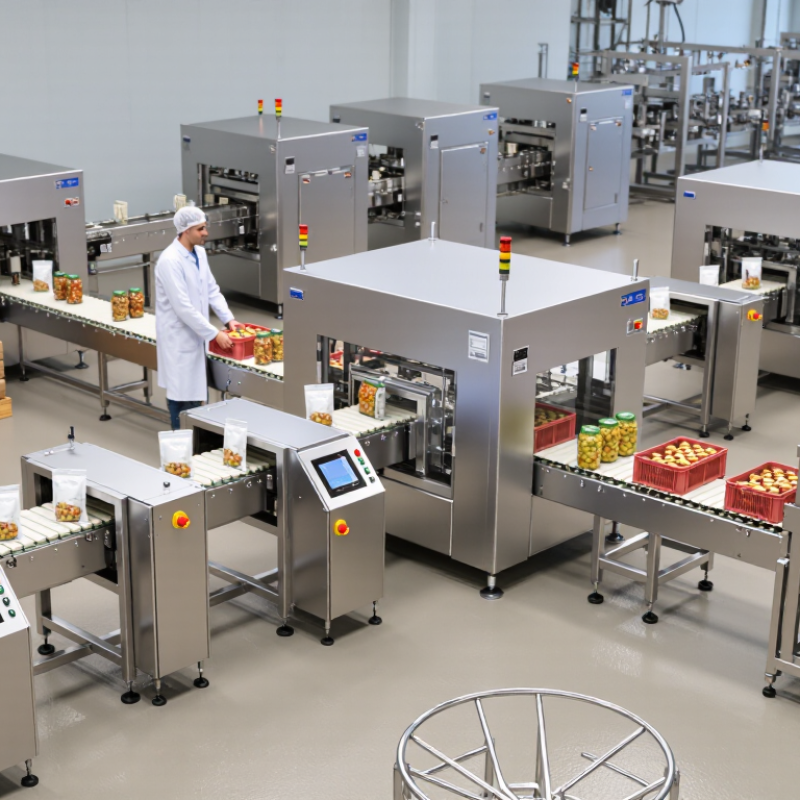
Food Packaging Machinery: Scope, Applications, and Market Structure
Food packaging machinery covers equipment that prepares packages, fills them, seals them, labels them, and moves finished packs into cases. A typical line may combine a stainless-steel filler, a date coder, a metal detector, and a case packer. Applications range from dairy cartons and snack pouches to frozen-food trays and bulk sacks. Product viscosity, fragility, temperature, and target output all affect machine choice. Small details matter.
Market boundaries are less tidy than they appear. Grand View Research’s Packaging Machinery Market report valued the global market at roughly US$46 billion in 2023, but its estimate covers multiple end-use sectors, not food alone. That distinction matters when comparing supplier claims. Food-focused demand also spans primary packaging, such as sealing a pouch, and secondary packaging, such as grouping cartons for shipment.
The market structure includes equipment manufacturers, component suppliers, line integrators, and service providers. Buyers often need several of these working together, especially when an existing line must handle new pack formats. Demand is shaped by labor availability, changeover time, cleaning needs, and production volume. A fast machine can still be a poor fit if frequent format changes create long stoppages. Published market totals rarely show that operational trade-off clearly.

Major Types of Food Packaging Machines and Their Functions
Form-fill-seal machines create bags or pouches from a roll of film, fill them with food, and seal each pack. They suit products such as snacks, frozen vegetables, and powders. Horizontal flow wrappers enclose items in a continuous film sleeve, making them useful for bars, biscuits, and other solid foods. Small details matter.
Vacuum packaging machines remove air before sealing, helping protect foods that need reduced oxygen exposure. Tray sealers place film over preformed trays and seal around the rim. Some models can replace air inside the tray with a selected gas mixture, so settings must match the food and package. Incorrect settings can affect seal quality. They are not a cure for poor handling.
Cartoning machines erect cartons and load wrapped or sealed products into them. Labeling and coding units add product information and traceability details to the finished pack. These machines may connect to weighing, inspection, and conveying equipment, but a faster line is not always a better fit. Operators should check changeover time, cleaning access, package material compatibility, and seal consistency during real production runs. That practical check is easy to overlook.
Criteria for Evaluating Food Packaging Machine Manufacturers
2026 Top Food Packaging Machine Manufacturers Worldwide
Criteria for Evaluating Food Packaging Machine Manufacturers
A useful evaluation starts with the product, not the machine brochure. Ask manufacturers to test your actual food, packaging material, and target pack size. A pouch that seals cleanly with dry snacks may wrinkle when filled with warm, oily food. Request sample packs and check seal strength, fill accuracy, and appearance after transport.
Measure performance during changeovers, not just steady production. How long does it take to switch from one pack size to another? Watch operators clean contact surfaces, remove trapped crumbs, and restart the line. These details reveal whether a design suits daily use. Short demonstrations can hide awkward access points. They do.
Check that quoted output rates match your product and staffing conditions. Ask how rejects, downtime, and routine maintenance affect real throughput. Numbers need context. Review documentation for operating limits, cleaning steps, and recommended spare parts. Clear records make training and troubleshooting easier, though no manual replaces hands-on instruction.
Service matters after installation. Confirm response arrangements, technician availability, and access to commonly replaced components. Ask for references from facilities with similar products and production volumes. A lower purchase price can be tempting, but energy use, changeover labor, and spare-part costs shape ownership expenses. No machine fits every line perfectly; note the compromises before comparing proposals.
2026 Top Food Packaging Machine Manufacturers Worldwide
Criteria for Evaluating Food Packaging Machine Manufacturers
Suggested buyer-assigned evaluation weights, totaling 100%. They are a procurement framework, not manufacturer rankings or results from a market survey. Confirm applicable food-safety regulations and machine performance requirements for your product and region.
Leading Food Packaging Machine Manufacturers Worldwide in 2026
Leading food packaging machine manufacturers worldwide in 2026 are judged by more than advertised speed. Their systems must handle different package formats, product textures, and daily production demands. A dependable machine forms consistent seals, feeds film smoothly, and keeps product changeovers manageable. Small details matter: operators notice a difficult-to-clean hopper or a sealing jaw that needs frequent adjustment.
Manufacturers with strong engineering capabilities typically offer flexible filling, wrapping, sealing, and inspection options. Buyers should check how equipment connects with existing conveyors and coding systems, and whether spare parts and technical support are available locally. Ask for performance data using the intended product and packaging material. A machine tested only with an easy-flowing sample may behave differently with sticky sauce or uneven pieces. Realistic trials help.
There is no single worldwide leader for every factory. The best fit depends on output targets, available floor space, sanitation needs, and workforce skills. Rankings can be imperfect; published specifications rarely reveal every maintenance delay. A practical assessment includes changeover time, cleaning access, service response, and total operating costs—not just purchase price. Even a polished demonstration has limits. That is worth remembering.
Global Trends Shaping the Food Packaging Machinery Industry
Food packaging machinery in 2026 is being shaped by three practical demands: less waste, tighter product consistency, and flexible production. A line may switch between pouch sizes during one shift, while operators monitor fill weights, seals, and product codes. Small details matter. UNEP’s Food Waste Index Report 2024 estimates that 1.05 billion tonnes of food were wasted in 2022, across households, food service, and retail. Packaging cannot solve food waste alone, but reliable portioning and sealing can help protect products through distribution.
Automation is also moving beyond simple speed. Vision systems can flag weak seals, while sensors track temperature and machine performance. PMMI’s 2024 State of the Industry report valued U.S. packaging machinery shipments at $10.9 billion in 2023, indicating continued investment in equipment. Energy use and material efficiency are becoming design considerations, too. Yet lighter packaging is not automatically better if it damages easily or complicates recycling. The trade-off remains. Manufacturers should test machines with real products, varied formats, and actual cleaning routines—not only ideal factory samples. That step is easy to overlook.
2026 Top Food Packaging Machine Manufacturers Worldwide - Global Trends Shaping the Food Packaging Machinery Industry
| Trend or market factor | Relevant equipment | 2026 data point or status | Implication for equipment design and purchasing | Reference |
|---|---|---|---|---|
| Packaging regulation transition in the European Union | Form-fill-seal lines, carton equipment, case packers, labeling and inspection systems | Regulation (EU) 2025/40 generally applies from 12 August 2026. Some requirements have separate transition dates. | Buyers may need equipment that can handle packaging redesigns and material changes; verify requirements and timelines for each application. | EU Regulation 2025/40 |
| Recyclability and material efficiency | Flexible-packaging machines, thermoformers, tray sealers and material-dosing systems | The EU Packaging and Packaging Waste Regulation establishes packaging-related requirements, with implementation dates that vary by provision. | Assess seal performance, material compatibility, changeover needs and the ability to control film or substrate use during production. | EU Regulation 2025/40 |
| Food-contact material compliance | Filling, sealing, coating, conveying and product-contact components | In the EU, Regulation (EC) No 1935/2004 sets the general framework for food-contact materials; Regulation (EC) No 2023/2006 addresses good manufacturing practice. | Confirm material declarations, hygienic design, cleaning procedures and documentation for parts that may contact food. | Regulation 1935/2004 · Regulation 2023/2006 |
| Food-safety management integration | Washdown-rated machinery, filling systems, clean-in-place equipment and line controls | ISO 22000:2018 specifies requirements for a food-safety management system for organizations in the food chain. | Equipment specifications should support documented hazard controls, sanitation, traceability and routine verification. | ISO 22000:2018 |
| Machinery safety requirements and transition planning | Complete packaging lines, robotic cells, guarding and safety-control systems | EU Machinery Regulation (EU) 2023/1230 applies from 20 January 2027. | For equipment intended for the EU, include the applicable market-placement date in design reviews, documentation checks and procurement schedules. | EU Regulation 2023/1230 |
| Automation and labor-efficient operation | Robotic pick-and-place, case packing, palletizing and automatic product handling | Automation can reduce manual handling and support repeatable packaging operations; results depend on product, line layout and operating conditions. | Compare changeover time, safety integration, operator training needs and performance across the full line rather than evaluating a single machine. | Application-dependent operating considerations |
| Inspection, traceability and connected production | Checkweighers, metal detectors, vision systems, code readers and line-monitoring software | These systems can be integrated to record inspection results, product codes and production events; available functions vary by system configuration. | Define data ownership, record retention, alarm handling and interfaces with plant systems before selecting connected equipment. | Verify capabilities against the specific line and customer requirements |
| Flexible production and faster changeovers | Multi-format fillers, pouch machines, tray sealers and modular conveying systems | Format flexibility is a machine capability, not a universal industry performance figure; the supported range depends on tooling and product characteristics. | Request documented format ranges, changeover procedures, required tooling and validation runs for the intended products. | Confirm limits with equipment specifications and acceptance testing |
Note: This table summarizes regulatory dates and general equipment considerations. Applicability depends on the destination market, packaging format, food type and specific machine configuration.