

- 713.590.1312
- sale@pandbtools.com
Top 10 EV Resistor Manufacturers for Global Buyers
Electric vehicle production is reshaping the global demand for reliable power electronics. The International Energy Agency reported that electric car sales exceeded 13 million units worldwide in 2023, representing about 18% of total car sales. Its Global EV Outlook 2024 also projected stronger growth in 2024, supported by expanding charging networks and lower battery costs.
Resistors are small, but their responsibilities are substantial. An Ev Resistor can manage pre-charge current, discharge high-voltage circuits, control regenerative braking energy, or protect sensitive battery components. In a real vehicle, it may operate near hot battery packs, rapid switching devices, and severe vibration. A weak component can create thermal, safety, and maintenance concerns.
This guide reviews the top 10 EV resistor manufacturers for global buyers. The comparison considers product range, high-voltage capability, thermal design, automotive quality systems, customization, production capacity, and regional support. Sources include the IEA Global EV Outlook, OICA vehicle production statistics, and publicly available manufacturer data. Resistor suppliers rarely publish identical performance data, so direct comparisons require care.
No ranking is perfectly neutral. Some supplier information remains private. That is a weakness. Buyers should verify pulse energy, resistance tolerance, insulation strength, cooling method, endurance testing, and traceability before selecting a supplier. Standards such as IATF 16949 and AEC-oriented qualification practices can strengthen confidence, but certification alone does not guarantee application success. A practical evaluation should match each manufacturer’s evidence with the vehicle’s voltage, current, duty cycle, packaging space, and expected service life. Small details matter here. Particularly under heat.
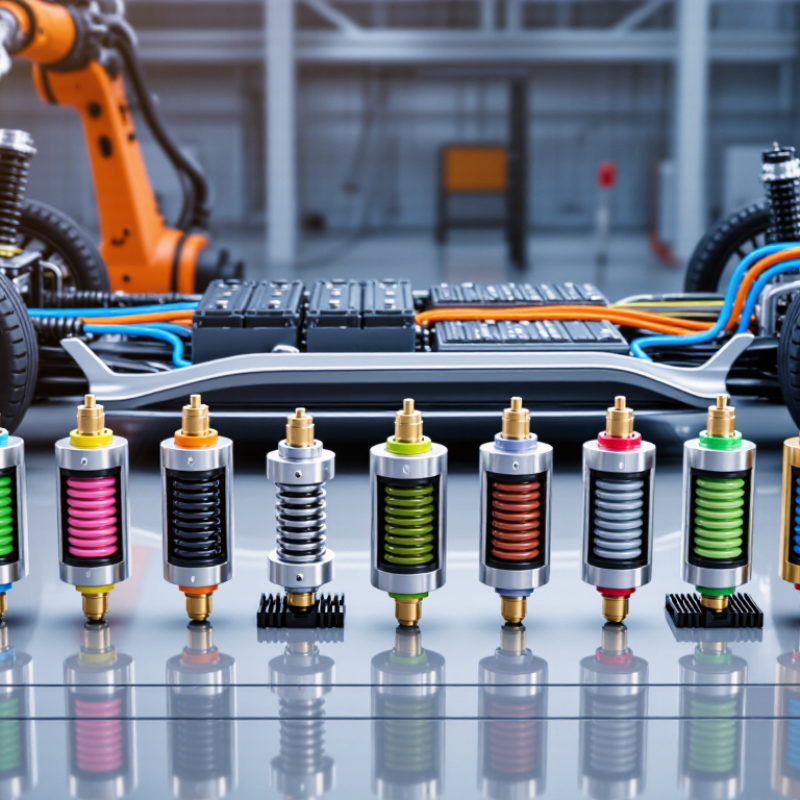
What Are EV Resistors and Why Do They Matter?
Electric vehicle resistors control current when the battery, inverter, and motor interact. They support pre-charging, regenerative braking, voltage discharge, and cabin heating. During pre-charge, a resistor limits the initial current entering capacitors. Without that control, electrical contacts may face damaging surges. Small component, serious job.
The International Energy Agency reported more than 17 million electric cars were sold globally in 2024. Electric models represented over 20% of new car sales. This growth increases demand for resistors that tolerate heat, vibration, moisture, and repeated power pulses. A resistor rated only by room-temperature wattage can mislead engineers. Real vehicles operate differently. Under-hood temperatures can rise sharply, while braking energy arrives in short, intense bursts.
Resistor selection therefore involves resistance value, pulse capacity, insulation, cooling, and service life. The U.S. Department of Energy’s vehicle technology research emphasizes efficiency, thermal control, and reliability as connected design targets. A component that loses energy as heat still protects higher-value systems. That trade-off deserves attention. Engineers and global buyers should examine test conditions, not only catalog ratings. Datasheets may show ideal performance, while roads add dust, shock, humidity, and imperfect cooling. Better evaluation includes thermal cycling, overload testing, and application-specific validation. Safety depends on the whole assembly, not the resistor alone.

How the Top 10 EV Resistor Manufacturers Are Evaluated
Top 10 EV Resistor Manufacturers for Global Buyers
How the Top 10 EV Resistor Manufacturers Are Evaluated
A serious evaluation begins with electrical performance, not marketing claims. Engineers compare resistance tolerance, power ratings, pulse handling, and temperature coefficients. A resistor may pass a room-temperature test yet fail after repeated acceleration cycles. That detail matters.
Testing should reflect real vehicle conditions. Evaluation teams inspect samples after thermal cycling from -40°C to 150°C. They also check vibration, humidity, salt exposure, and short overload pulses. Infrared cameras can reveal hot spots near terminals. Experienced buyers request test reports, production dates, and batch traceability. Independent laboratory results carry more weight than polished brochures.
Manufacturing consistency is equally important. Reviewers examine process controls, inspection records, failure analysis, and incoming material checks. They assess delivery stability, technical support, customization ability, and warranty handling. Compliance documentation must match the destination market and the product’s actual construction. A supplier with strong samples but weak documentation deserves caution.
Ranking the top ten is not perfectly objective. Public data can be incomplete, and factory audits may capture only one production period. Some suppliers communicate clearly but provide limited long-term field evidence. Others offer excellent reliability yet explain it poorly. That weakness should remain visible in the evaluation. Buyers should compare tested evidence, not impressive language. Small details often separate a dependable resistor from an expensive replacement.
Profiles of Leading EV Resistor Manufacturers Worldwide
The global EV resistor market is expanding with vehicle electrification. The IEA’s Global EV Outlook 2025 reports more than 17 million electric cars sold in 2024. Over 20% of new car sales were electric. This growth is increasing demand for pre-charge, discharge, braking, and battery protection resistors.
Leading manufacturers worldwide usually specialize by application and region. European suppliers often emphasize high-voltage safety and thermal endurance. East Asian producers commonly offer compact ceramic and wirewound designs at scale. North American manufacturers frequently focus on custom engineering and harsh-environment validation. Strong suppliers provide IATF 16949 systems, PPAP documentation, AEC-Q200 testing, and traceable production records. These details matter more than a polished catalog. The IDTechEx electric vehicle research also highlights rising battery voltage levels, making insulation distance and heat dissipation critical selection factors. No supplier is perfect. Some published ratings still need independent verification under real duty cycles.
Tips: Request pulse-load curves, not only resistance values. Check cooling conditions, mounting torque, vibration data, and failure analysis records. Compare samples from at least three manufacturers. A resistor that survives laboratory tests may still drift inside a hot, tightly packed battery enclosure. I would also question unusually low prices; this is not always proof of poor quality, but it deserves investigation. Supplier audits, production samples, and field-return data create a more reliable profile than marketing claims alone.
Top 10 EV Resistor Manufacturers for Global Buyers
Global electric car sales growth provides market context for demand for EV power, braking, pre-charge, and thermal-management resistors.
Global electric car sales: approximately 3.0 million in 2020, 6.6 million in 2021, 10.5 million in 2022, 14.0 million in 2023, and 17.0 million in 2024. Source: International Energy Agency, Global EV Outlook reports.
Comparing EV Resistor Technologies, Quality, and Applications
Top 10 EV Resistor Manufacturers for Global Buyers
Comparing EV Resistor Technologies, Quality, and Applications
Electric vehicle sales exceeded 14 million units in 2023, reaching about 18% of global car sales, according to the IEA Global EV Outlook 2024. This growth increases demand for reliable high-voltage resistors in battery systems, inverters, chargers, and braking circuits.
Wirewound resistors suit repeated pulse loads, such as pre-charge and regenerative braking. Thick-film designs offer compact dimensions and flexible resistance values. Aluminum-housed resistors manage heat through a metal case, while water-cooled versions support sustained high power. Shunt resistors measure current with very low resistance. They require careful thermal control and accurate calibration.
A higher wattage rating is not automatically safer. Pulse duration, mounting pressure, airflow, and insulation distance also affect real performance. During validation, engineers should examine overload curves, thermal cycling, vibration resistance, and moisture protection. AEC-Q200 qualification can support component screening, but it does not replace vehicle-level testing.
BloombergNEF reported that average lithium-ion battery pack prices fell to 115 dollars per kWh in 2024. Lower pack costs may encourage more compact power electronics, making resistor heat density harder to control. This point is sometimes underestimated. IEC 60115 testing and ISO 16750 environmental evaluations provide useful references for electrical and mechanical reliability. However, laboratory results may not represent every road condition. Buyers should request pulse-energy data, insulation-test records, traceability documents, and application-specific failure analysis before comparing the top ten manufacturers.
Top 10 EV Resistor Manufacturers for Global Buyers - Comparing EV Resistor Technologies, Quality, and Applications
| Rank | Anonymous Supplier Profile | Primary EV Resistor Technology | Typical Resistance Range | Power Capability | Tolerance | TCR | Operating Temperature | Quality and Compliance Focus | Typical EV Applications | Key Purchasing Advantage |
|---|---|---|---|---|---|---|---|---|---|---|
| 01 | Profile A | Aluminum-housed wirewound braking resistor | 0.01 Ω–100 Ω | 100 W–10 kW | ±1% to ±5% | Typically ±100 ppm/°C | −55°C to +200°C | AEC-Q200-oriented design controls, PPAP support, thermal-cycle testing | Regenerative braking, DC-link discharge, onboard charger protection | High pulse-energy handling and flexible mounting formats |
| 02 | Profile B | Thick-film power resistor on ceramic substrate | 0.05 Ω–1 MΩ | 1 W–500 W | ±1% to ±10% | Typically ±100–300 ppm/°C | −55°C to +175°C | Automotive traceability, salt-spray and vibration evaluation | Battery management systems, inverter sensing, pre-charge circuits | Compact size and cost-effective high-volume production |
| 03 | Profile C | Metal-element current-sense resistor | 0.0005 Ω–0.1 Ω | 1 W–15 W continuous; higher pulse ratings | ±0.5% to ±5% | Typically ±15–100 ppm/°C | −65°C to +170°C | Low-inductance construction, resistance drift and overload testing | Traction inverters, battery current monitoring, fast-charging modules | Very low resistance and accurate current measurement |
| 04 | Profile D | Cement-coated wirewound resistor | 0.1 Ω–100 kΩ | 5 W–1.5 kW | ±2% to ±10% | Typically ±200–400 ppm/°C | −55°C to +250°C surface rating varies by design | Flame-retardant coating, overload and insulation-strength testing | High-voltage discharge, auxiliary power units, charger input protection | Strong overload durability and economical custom sizing |
| 05 | Profile E | Liquid-cooled high-power resistor assembly | 0.01 Ω–10 kΩ | 1 kW–50 kW system rating | ±1% to ±5% | Typically ±100–300 ppm/°C | −40°C to +150°C coolant-dependent | Coolant-leak testing, dielectric withstand, pressure and thermal validation | High-voltage battery discharge, fuel-cell vehicles, commercial EVs | High continuous power density with controlled thermal performance |
| 06 | Profile F | Pulse-rated metal-oxide resistor | 1 Ω–1 MΩ | 2 W–10 kW pulse capability | ±1% to ±10% | Typically ±200–500 ppm/°C | −55°C to +250°C | Surge, pulse-energy, flame-retardancy and insulation testing | DC-link discharge, surge suppression, pre-charge and snubber circuits | Reliable short-duration energy absorption |
| 07 | Profile G | Wirewound resistor with ceramic or metal enclosure | 0.02 Ω–50 kΩ | 25 W–5 kW | ±1% to ±10% | Typically ±100–400 ppm/°C | −55°C to +200°C | Vibration, humidity, thermal-shock and endurance testing | Electric buses, industrial EV platforms, motor controllers | Broad resistance and power options for industrial integration |
| 08 | Profile H | Thick-film high-voltage resistor network | 10 kΩ–100 MΩ | 0.25 W–100 W per network | ±0.5% to ±5% | Typically ±100–300 ppm/°C | −55°C to +155°C | High-voltage insulation, creepage and partial-discharge evaluation | Voltage measurement, isolation monitoring and battery diagnostics | Integrated networks reduce PCB area and assembly count |
| 09 | Profile I | Low-inductance shunt resistor | 0.0002 Ω–0.05 Ω | 1 W–20 W continuous | ±0.5% to ±3% | Typically ±15–75 ppm/°C | −55°C to +170°C | Kelvin-terminal layouts, thermal EMF control and current-cycling tests | Onboard chargers, DC-DC converters and inverter phase-current sensing | High measurement precision with low parasitic inductance |
| 10 | Profile J | Ceramic wirewound resistor for harsh environments | 0.1 Ω–20 kΩ | 10 W–3 kW | ±1% to ±10% | Typically ±200–500 ppm/°C | −55°C to +250°C | Moisture resistance, vibration endurance and thermal-aging validation | Charging stations, auxiliary systems and off-highway electric vehicles | Robust operation in vibration, humidity and elevated-temperature conditions |
How Global Buyers Can Select the Right EV Resistor Supplier
Top 10 EV Resistor Manufacturers for Global Buyers
How Global Buyers Can Select the Right EV Resistor Supplier
Choosing among ten EV resistor manufacturers requires more than comparing unit prices. Start with the vehicle’s real electrical profile, including continuous current, pulse duration, braking cycles, and installation temperature. A resistor rated for 20 kW may fail quickly if airflow is restricted or pulse energy exceeds its tested limits. Measure the real load.
Experienced buyers should request thermal cycling data, insulation ratings, surge performance, and vibration test results. Ask whether production samples match the published datasheet. Check material traceability, process controls, inspection records, and corrective-action procedures. Reliable suppliers can explain how they control resistance drift after repeated heating. Technical answers matter more than polished brochures.
Global sourcing also depends on communication and manufacturing consistency. Review sample approval methods, production capacity, lead times, packaging, and after-sales engineering support. Confirm that the supplier can provide documentation for applicable regional safety and quality requirements. A factory visit or independent audit can reveal details hidden in quotations, such as weak crimping or uneven coating. Paperwork is not performance.
I have seen teams select a low-cost resistor, then discover unstable readings during cold-start testing. That mistake is avoidable, but not every evaluation method is perfect. Define acceptance criteria before requesting quotations, and compare suppliers using the same test conditions. Keep a small production sample under actual operating conditions before approving long-term supply.