
Top 10 EMT Waterproof Connectors for Global Buyers
Selecting the right Emt Waterproof Connectors can protect an installation from moisture, loose fittings, and avoidable maintenance. For global buyers, the choice involves more than price or a product photograph. A connector must match the EMT conduit size and the enclosure entry, while its sealing parts must suit the actual installation. Small details matter.
This guide compares ten options using practical purchasing criteria: construction material, fitting dimensions, sealing design, installation method, and available technical documentation. A gasket that looks substantial may still be unsuitable for a particular enclosure or exposure. Check the manufacturer’s stated ingress protection and test conditions rather than assuming every “waterproof” label means the same thing. Not every job is alike.
Buyers should also review corrosion resistance, temperature limits, and the tools required for installation. A rooftop junction box, for example, faces different conditions from an indoor equipment cabinet. Regional certification requirements can vary, so confirm that documentation applies to the destination market and intended use. Where product details are incomplete, treat that as a reason to ask questions—not as proof of performance. This comparison is a useful starting point, not a substitute for checking specifications or testing the finished assembly in its real environment. Even a well-ranked connector can fail when compatibility or installation is overlooked.
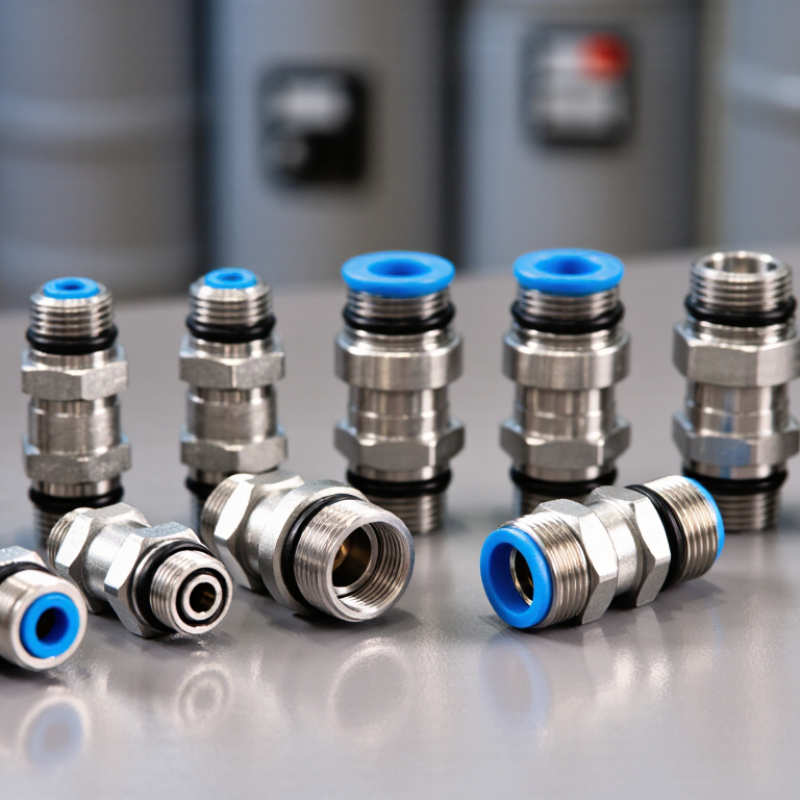
Understanding EMT Waterproof Connectors and Their Core Functions
An EMT waterproof connector joins electrical metallic tubing to a box or enclosure while helping limit water and dust entry. It must also hold the conduit securely and, where the design requires it, maintain electrical continuity. “Waterproof” is not a universal rating: check the connector’s listed use, the enclosure’s protection level, and the installation conditions. IEC 60529 defines IP ratings, which describe protection against solid objects and water. A suitable rating still depends on correct assembly, including compatible seals and properly tightened fittings.
Small details matter. A gasket can twist during installation, and a connector may be unsuitable for direct exposure even if it looks robust. NFPA’s analysis of U.S. home-fire data from 2012–2016 estimated 34,000 fires annually involving electrical distribution or lighting equipment, with 470 civilian deaths and $1.4 billion in direct property damage. These figures do not identify waterproof connectors as a cause, but they underline why sound electrical installation matters. Before specifying a connector, confirm the EMT size, enclosure entry, exposure, and manufacturer’s installation instructions. Field conditions can be messy; a quick visual check is useful, but it is not a substitute for verifying the product’s rating.
Top 10 EMT Waterproof Connectors for Global Buyers - Understanding EMT Waterproof Connectors and Their Core Functions
This comparison covers common EMT connector configurations. “Waterproof” is not a blanket property: suitability for wet or outdoor locations depends on the complete fitting’s applicable listing, markings, installation, and enclosure details.
| # | Connector Type | Typical Construction | Common EMT Trade Sizes | Core Function | Wet-Location Considerations | Typical Buying Application |
|---|---|---|---|---|---|---|
| 1 | Raintight compression connector | Zinc alloy or steel body with compression ring and sealing components, depending on the model | Often 1/2–4 in; availability varies by product line | Secures EMT to an enclosure while forming a tight mechanical connection | Choose a model specifically listed or marked for raintight use; not automatically submersible | Outdoor conduit entries and exposed installations where the applicable code permits the fitting |
| 2 | Heavy-duty compression connector | Typically a robust metal body with a compression mechanism; material and finish vary | Commonly 1/2–4 in, depending on manufacturer and listing | Provides a firm EMT-to-box connection for demanding commercial or industrial installations | Use outdoors only when the exact model is identified for the required wet-location conditions | Installations needing added mechanical strength or a durable fitting body |
| 3 | Insulated-throat compression connector | Metal connector with a smooth insulating throat or insert | Often 1/2–4 in; check the product’s size range | Connects EMT to an enclosure and helps protect conductor insulation at the entry | The insulated throat alone does not make a connector raintight; verify the fitting’s location rating separately | Panel, cabinet, and box entries where conductor protection is desired |
| 4 | 90-degree compression connector | Angled metal body with a compression connection; some versions include an insulated throat | Commonly offered in smaller trade sizes; exact range is model-specific | Turns EMT into an enclosure where a straight entry is impractical | For wet locations, confirm the 90-degree model itself carries the required raintight marking or listing | Tight spaces, shallow enclosures, and conduit routes requiring a compact turn |
| 5 | Grounding or bonding compression connector | Compression-style EMT fitting with a grounding or bonding provision, depending on design | Size range varies; match the fitting to the EMT trade size and grounding method | Supports the required electrical bonding or grounding arrangement at a connection point | A grounding feature does not establish a wet-location rating; check both electrical and environmental markings | Systems where the design or applicable code requires a dedicated bonding or grounding connection |
| 6 | Gasketed raintight set-screw connector | Set-screw body with a gasket or other sealing feature in models intended for raintight service | Commonly available in standard EMT sizes; confirm the specific range | Attaches EMT to an enclosure using one or more set screws | Set-screw construction alone is not raintight; use only a model explicitly identified for the intended location | Projects seeking a set-screw connection while requiring a verified raintight fitting |
| 7 | Standard set-screw connector | Typically zinc alloy or steel body secured to EMT with set screws | Often 1/2–4 in, depending on the product | Provides a straightforward mechanical connection between EMT and an enclosure | Generally intended for dry-location use unless the specific product is marked otherwise | Indoor installations where a basic, economical EMT termination is suitable |
| 8 | Insulated-throat set-screw connector | Set-screw connector with an insulating throat or insert | Common sizes vary by product family | Secures EMT at an enclosure and helps reduce abrasion at the conductor entry | An insulating insert is not a moisture seal; confirm any separate raintight or wet-location qualification | Indoor distribution panels, junction boxes, and equipment cabinets |
| 9 | Expansion connector for EMT | Multi-part fitting designed to accommodate movement; construction and sealing details vary | Available sizes depend on the product and movement requirements | Allows controlled longitudinal movement in a conduit run where the fitting is designed for that purpose | Verify that the exact expansion fitting is approved for the location and installation; do not assume it is raintight | Long runs or building transitions where thermal or structural movement must be considered |
| 10 | Corrosion-resistant compression connector | Corrosion-resistant metal or protective finish, as specified for the product | Size availability is product-specific | Terminates EMT while offering a material or finish selected for a more corrosive environment | Corrosion resistance and raintight performance are separate properties; verify both for the intended exposure | Coastal, industrial, or other environments where the specified material and listing are appropriate |
Buyer note: EMT is a conduit system commonly specified using North American trade sizes. Confirm the applicable local code, conduit and fitting compatibility, material and finish, required listing or certification, and wet-location marking before purchase. Raintight does not mean suitable for immersion or every pressure-washing condition.