

- 713.590.1312
- sale@pandbtools.com
Top Cereal Bar Cutting Machines for Sale
Choosing a Cereal Bar Cutting Machine is not just a matter of comparing prices. The right equipment can shape product consistency, production speed, and the amount of usable material left behind. A clean cut helps bars hold their form, whether they contain oats, nuts, dried fruit, or a sticky syrup blend. Small details matter. Blade design, cutting width, feed method, and adjustment range can all affect the finished bar.
This guide explores top cereal bar cutting machines for sale and the features buyers should examine before making a decision. It considers production needs, from small batches to continuous lines, while keeping operation and maintenance in view. A machine that looks impressive in a listing may not suit a dense recipe or a narrow workspace. That deserves a closer look. Buyers should ask about compatible product dimensions, cleaning access, operator controls, and available service support. Where possible, request a demonstration using a recipe similar to your own. Real product tests reveal more than polished specifications alone.
There is no perfect machine for every bakery or snack producer. A faster cutter may require more floor space, while a compact model may need frequent manual handling. Even careful planning can miss something. Reviewing these trade-offs helps narrow the options and supports a more informed purchase.
What Cereal Bar Cutting Machines Do and How They Work
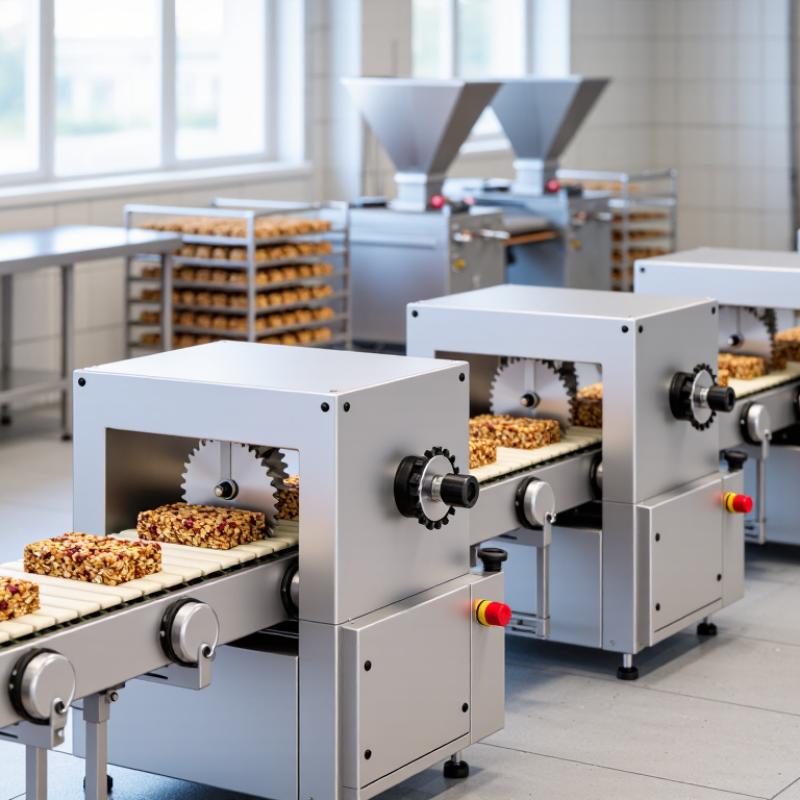
Cereal bar cutting machines turn a cooled, compacted slab into evenly sized pieces. The slab moves along a food-grade conveyor beneath a cutting head. Depending on the product, the machine may use a reciprocating guillotine blade or a set of rotary knives. Operators adjust lane spacing, cutting speed, and blade timing to suit the bar’s thickness and texture. A crisp bar can fracture; a sticky one may drag or deform. Small details matter. Blade sharpness and slab temperature both affect clean edges and portion consistency. In practice, cutting is less forgiving than it looks.
The FAO’s December 2023 Cereal Supply and Demand Brief estimated global cereal production at about 2.84 billion tonnes in 2023. That figure describes the wider grain supply, not demand for cutting equipment, but it shows the scale of cereal ingredients entering food production. For a buyer, useful checks include cut-size consistency across the full conveyor width, tool-free access for cleaning, and how quickly settings can be changed between recipes. Ask for a trial using your actual slab; samples with nuts or dried fruit may behave differently from plain mixes. A machine’s stated speed is only part of the story. Waste, edge quality, and operator adjustments deserve attention too.

Main Types of Cereal Bar Cutting Machines
Cereal bar cutting machines vary according to product texture, output needs, and line layout. Guillotine cutters use a descending blade to divide a continuous slab into bars. They suit firm, even mixtures and can produce clean, repeatable portions. Blade sharpness matters: a dull edge may compress soft cereal or drag fruit pieces through the cut. Operators should also check bar thickness and slab temperature before adjusting cutting speed.
Rotary cutters use rotating blades for continuous production, while wire cutters can handle delicate mixtures with less crushing. Ultrasonic cutters vibrate a blade at high frequency, helping it pass through sticky ingredients such as syrup, chocolate, or dried fruit. They often leave smoother edges, but require careful setup and maintenance. Small trial cuts help reveal whether a machine suits a particular recipe. The messiest test can be the most useful.
When comparing machines for sale, consider adjustable cut sizes, cleaning access, guarding, and how quickly operators can change settings. A fast cutter is not always the best fit. If bars vary in density, even a well-calibrated machine may produce uneven edges, so regular checks remain important.
Key Features and Cutting Methods to Compare
Choosing a cereal bar cutting machine starts with the product, not the advertised speed. A soft bar with sticky syrup behaves differently from a firm, nut-heavy slab. Compare cutting accuracy, adjustable stroke length, line speed, and how quickly operators can change settings. A clean, stable conveyor matters too; even a sharp blade can produce uneven portions if the slab shifts.
Guillotine cutters suit many recipes and can handle varied bar widths, but sticky mixtures may cling to the blade. Rotary cutters support continuous production and consistent sizing, though delicate bars can deform under pressure. Ultrasonic knives vibrate at high frequency, helping reduce smearing on tacky products. They may need specialist servicing and careful setup. No method fits every recipe.
Ask suppliers for a product trial using your own mixture. Check the cut faces, crumbs, weight variation, and cleanup time—not just bars per minute. Inspect guards, emergency stops, and tool access, then confirm that routine cleaning is practical for your team. Small details count. I would also test after a short production run, when residue has built up; a machine that performs well on a fresh start may tell a different story later.
How to Choose a Machine for Your Production Needs
Choosing a cereal bar cutting machine starts with the product, not the advertised speed. Measure bar width, height, temperature, and stickiness after cooling. A dense bar with nuts may compress under a wire cutter, while a soft, syrup-rich recipe can smear across blades. Ask suppliers to run your actual recipe. Watch the cut edges, crumbs, and bar weight—not just bars per minute. Small details matter.
PMMI’s 2023 State of the Industry report estimated U.S. packaging machinery shipments at about $10.9 billion in 2022, reflecting a substantial market for production equipment. That figure is context, not proof that a faster cutter suits your line. Calculate required output from good bars per shift, allowing for cleaning, changeovers, and stoppages. Check whether the machine handles your sheet width and whether operators can adjust blade spacing without lengthy downtime. Inspect guarding, washdown access, and tool-free removal of food-contact parts. Ask for changeover times in writing.
Then test the awkward cases. Try a warm batch, a brittle batch, and one with large inclusions. Measure waste and cutting consistency across several runs. A demo can look perfect. Production is less tidy. If the supplier cannot provide repeatable test results or clear maintenance intervals, treat its capacity claim cautiously. A modest machine that fits your recipe may outperform a faster unit that creates uneven edges and rework.
Top Cereal Bar Cutting Machines for Sale: Choosing by Production Needs
Compare example production-throughput targets to help identify the capacity range to discuss with equipment suppliers.
How to use this chart: These are planning targets, not guaranteed machine ratings. Actual output depends on bar dimensions, product texture, cutting method, and line speed. Confirm tested throughput and changeover requirements with the supplier before selecting a machine.
What to Check When Buying a Cereal Bar Cutting Machine for Sale
When comparing cereal bar cutting machines for sale, start with the product itself. Measure the slab’s width, thickness, and temperature at cutting; sticky or crumbly mixtures behave differently. Ask whether the machine handles your recipe without crushing inclusions such as nuts or dried fruit. A sample run is useful. Watch the cut edges, bar dimensions, and product buildup on the blades.
Check the adjustment range and how operators change settings between batches. A clear scale for slice width can reduce guesswork, while guarded blades and accessible emergency stops support safer operation. Ask what cleaning requires, how long changeovers typically take, and whether common wear parts are easy to replace. Inspect the frame and conveyor, too: residue trapped around rollers can complicate sanitation. Small details matter.
Capacity claims need context. Ask how output was measured and whether the figure includes loading, trimming, and routine stops. Confirm the machine’s electrical requirements, footprint, and compatibility with your upstream forming equipment. Request operating and maintenance instructions before purchase, not after delivery. I would also check service response times in writing. It is easy to focus on speed and miss the space needed to clean or maintain the cutter. That oversight can become an expensive one.