Who Are the Top Button Cell Battery Suppliers in China?
Who are the top Button Cell Battery suppliers in China? The answer depends on chemistry, capacity, certification, and application. A supplier serving a watch manufacturer may not suit a medical sensor or automotive key fob. This distinction is often missed.
Industry forecasts show why the category deserves closer attention. Grand View Research identifies rising demand for compact primary and rechargeable batteries in wearables, healthcare devices, and smart electronics. Fortune Business Insights also projects continued growth in the global button cell battery market, supported by miniature consumer technology and connected devices. These reports offer useful direction, but their market boundaries differ. Comparisons should therefore be treated carefully.
China remains a major battery manufacturing base, with strong export capability and extensive component networks. Companies such as EVE Energy, Great Power, HCB Battery, and Shenzhen Grepow are frequently considered by international buyers. Their strengths are not identical. EVE emphasizes large-scale lithium battery production. Grepow is better known for specialized rechargeable formats. HCB focuses on coin and cylindrical battery solutions for portable electronics.
Production scale is only one measure. Buyers should examine IEC testing, UN transportation documentation, ISO systems, leakage resistance, cycle life, and batch consistency. Supplier audits matter too. A clear factory address and traceable quality records are reassuring details.
Public information remains uneven. Some supplier claims are difficult to verify independently. That is a weakness in this market. This guide compares Chinese suppliers through practical evidence, including product range, certifications, manufacturing experience, export support, minimum order quantities, and customization ability. The goal is not to declare one universal winner, but to identify the best-fit partner for each application.
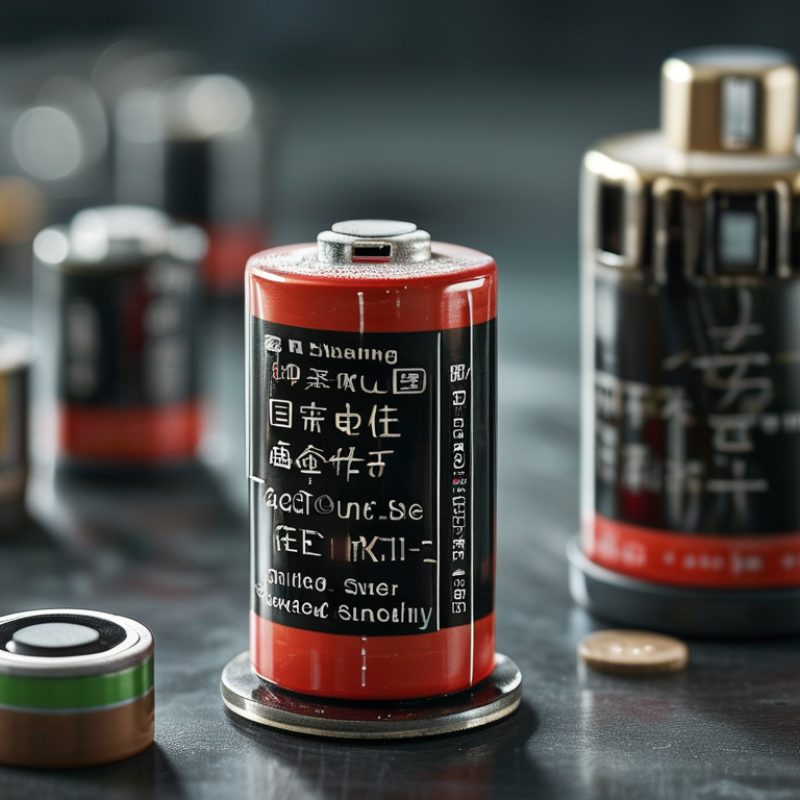
China’s Button Cell Battery Industry: Types, Uses, and Market Scope
China’s button cell battery industry covers lithium, silver oxide, alkaline, zinc-air, and rechargeable coin cells. Lithium cells support watches, key fobs, sensors, and small medical devices. Silver oxide cells offer stable voltage for precision instruments. Zinc-air cells remain important in hearing devices. Rechargeable versions serve wearables and compact electronics, although cycle life varies by design.
Market demand is broadening beyond traditional watches. Grand View Research reports that the global coin cell battery market is expected to grow at roughly 5% annually through 2030. Fortune Business Insights also identifies consumer electronics, healthcare, and connected devices as major demand areas. China remains a major production base because its suppliers combine electrode processing, automated assembly, testing, and export logistics. The strongest suppliers usually provide batch traceability, capacity reports, leakage testing, and safety documentation. “Top” should mean reliable performance, not only the lowest quotation.
Tips: Ask for IEC test records, discharge curves, storage data, and samples from several production batches. Check whether the stated capacity matches real operating conditions. A cell may perform differently in cold rooms, high-drain devices, or long storage. This is often overlooked. Supplier evaluations should also review recycling practices and transport compliance. Public market reports use different product definitions, so their figures are not perfectly comparable. That limitation deserves attention.
China’s Button Cell Battery Industry: Common Chemistries and Applications
Button cells manufactured and supplied in China commonly use alkaline, silver oxide, zinc-air, lithium manganese dioxide, and nickel-metal hydride chemistries. Nominal voltage varies by chemistry: lithium primary cells provide higher voltage for compact electronics, while silver oxide and alkaline cells are widely used in watches, calculators, toys, medical devices, and small household equipment. Zinc-air cells are mainly designed for hearing aids because they are activated by exposure to air.
Data shown are standard nominal voltage values for common button-cell chemistries; the chart does not represent company sales or market share.
Leading Chinese Button Cell Battery Suppliers and Their Strengths
China’s leading button cell battery suppliers usually compete through manufacturing depth, not advertising. Their strengths include automated sealing, stable cathode mixing, and flexible order volumes. These capabilities support watches, medical monitors, calculators, toys, and compact sensors.
A 2024 Mordor Intelligence market review projects steady global button cell growth through 2029, at roughly 5% annually. Asia-Pacific remains the main production and consumption region. Chinese suppliers benefit from dense component networks, shorter lead times, and competitive tooling costs. Strong factories can provide common lithium, alkaline, silver-oxide, and rechargeable formats. They also offer custom tabs, packaging, and discharge profiles. Small details matter. A poorly aligned seal can cause leakage months later.
Supplier evaluation should include more than a sample test. Ask for capacity records, batch traceability, safety data, and independent test results. IEC 60086-related testing can help verify dimensions, discharge behavior, and storage performance. For rechargeable coin cells, IEC 61960 testing offers useful capacity references. A 2023 report from the China Battery Industry Association highlighted continuing investment in automated battery production and quality control, but factory capability still varies widely.
My practical concern is consistency. A strong first shipment proves little. Buyers should compare three production batches, test low-temperature output, and inspect packaging after transport. Price rankings can mislead. The cheapest quotation may hide weaker separators, limited inspection, or higher replacement risk. No supplier wins every application. Product fit still matters most.
How Chinese Suppliers Manage Quality, Safety, and Compliance
China’s leading button cell suppliers compete on controlled production, not only price. Industry data from the China Battery Industry Association shows China remains a major global battery manufacturing base, supported by extensive testing and export infrastructure. Reliable suppliers usually trace every cell through batch codes, electrolyte records, and sealing inspections. Some factories also use automated vision systems to detect dents, uneven rims, and printing defects.
Safety checks follow standards such as IEC 60086-4 for primary lithium cells and IEC 60086-3 for watch batteries. Suppliers commonly test leakage, discharge capacity, internal resistance, short-circuit behavior, and heat exposure.
For exported lithium cells, UN 38.3 transport testing is a practical requirement. The International Air Transport Association’s 2024 guidance highlights packaging, labeling, and state-of-charge controls. Small cells still demand serious control.
Compliance reaches beyond the factory floor. Suppliers may provide certificates, safety data sheets, traceability files, and third-party laboratory reports for buyers. In the United States, UL 4200A addresses products containing button or coin batteries, while European buyers often check applicable battery, chemical, and product-safety rules. The U.S. Consumer Product Safety Commission has repeatedly reported thousands of battery-ingestion incidents involving children. Packaging design matters. Child-resistant compartments, clear warnings, and secure battery doors reduce avoidable risks.
Yet paperwork can hide weak execution. A certificate may represent one tested sample, not every shipment. Buyers should audit production records, repeat sampling, and inspect warehouse humidity control. Quality is never perfectly static.
How to Select the Right Button Cell Battery Supplier in China
Who Are the Top Button Cell Battery Suppliers in China?
How to Select the Right Button Cell Battery Supplier in China
Choosing a button cell battery supplier requires more than comparing unit prices. The supplier must match your device’s voltage, discharge profile, size, and operating temperature. A battery may show high capacity on paper but perform poorly under continuous load. Ask for capacity curves, self-discharge results, leakage testing, and batch inspection records. The IEC 60086 series provides important requirements for primary batteries, including dimensions and performance. Use it as a technical reference, not as a replacement for product testing.
Industry forecasts also support careful supplier selection. Mordor Intelligence’s 2024 battery market assessment indicates continued growth in compact battery demand, driven by medical devices, wearables, and smart electronics. However, market growth does not guarantee stable quality. During supplier audits, check production traceability, incoming-material controls, aging tests, and corrective-action records. A polished sample can still hide inconsistent production. This is where many buyers underestimate risk.
Tips: Request samples from at least three suppliers. Test them in your actual device, not only with a laboratory meter. Compare voltage recovery, operating life, leakage resistance, packaging quality, and delivery consistency. Verify declarations against applicable IEC requirements and destination-market rules. Ask whether test reports belong to the current cell model and production batch. Small details matter. Also review communication speed and technical honesty; a supplier that admits limitations may be more reliable than one promising perfect performance.