

- 713.590.1312
- sale@pandbtools.com
What Are the Top ATS Switch Types in 2026?
In 2026, choosing a Switch Ats means matching transfer behavior to the load, acceptable interruption, and maintenance plan. Uptime Institute’s 2024 Global Data Center Survey found that 55% of respondents had experienced an outage within three years. About one in five described their latest outage as serious or severe. That risk makes transfer design more than a procurement detail. Small timing differences can determine whether critical equipment rides through a transfer or resets. On a plant floor, milliseconds matter.
This guide compares open-transition, delayed-transition, closed-transition, bypass-isolation ATS, and static transfer switches. Each handles continuity, switching, and maintenance differently. IEC 60947-6-1 sets technical requirements for transfer switching equipment, giving buyers a useful reference point. Still, a standards-compliant device is not automatically right for every installation. Check load type, transfer-time limits, fault-current rating, neutral switching, and service access. A hospital, a data room, and a pump station do not share the same priorities. No single winner. A ranking can simplify the choice, but it can also hide important site conditions. Treat the comparisons as a starting point, then verify specifications with the equipment manufacturer and a qualified electrical professional.
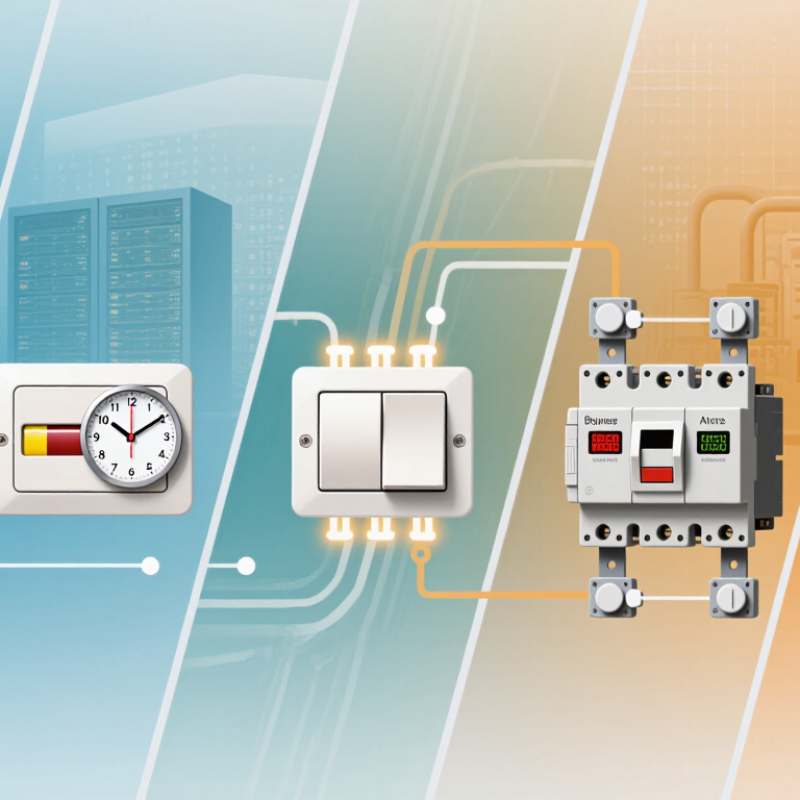
What an Automatic Transfer Switch Is and How It Works
What Are the Top ATS Switch Types in 2026?
An automatic transfer switch (ATS) monitors the normal power supply and connects a load to a backup source when voltage or frequency moves outside set limits. If utility power fails, the ATS can signal a generator to start, check that its output is ready, then transfer the load. When normal power returns and remains stable, it can switch back. The sequence sounds simple. Settings and timing still matter.
Most installations use open-transition switching: the first source disconnects before the second connects. This avoids paralleling sources, but creates a brief interruption. Closed-transition equipment overlaps sources briefly, where system design and operating requirements permit, reducing that interruption. Delayed-transition designs pause between disconnection and reconnection, which can help with certain motor loads.
Uptime Institute’s 2024 Annual Outage Analysis reported that 54% of surveyed organizations said their most recent significant outage cost more than $100,000. That figure is not specific to ATS failures, but it shows why transfer reliability deserves attention.
In practice, a poorly chosen delay or neglected battery can undermine an otherwise sound setup. I would check load behavior, generator capacity, and maintenance records before choosing a switch type. A label alone tells little.

How ATS Switches Are Classified by Transfer Method
What Are the Top ATS Switch Types in 2026?
How ATS Switches Are Classified by Transfer Method
Automatic transfer switches are often classified by how they move a load between normal and backup power. The key distinction is whether the sources overlap during transfer. IEC 60947-6-1:2021 covers transfer switching equipment, including automatic transfer switching equipment.
Open-transition switches break the connection to one source before connecting the other. This “break-before-make” action creates a brief interruption, usually acceptable for lighting and many general loads. Delayed-transition designs add a pause between sources, helping some motors shed residual voltage before reconnection. Small details matter.
Closed-transition switches connect to the incoming source before disconnecting from the outgoing one. This can avoid a noticeable interruption, but the sources must be synchronized and the installation designed for temporary paralleling. Uptime Institute’s 2024 Annual Outage Analysis reports that 54% of significant outages cost more than $100,000. The figure does not prove one transfer method prevents outages; it does show why transfer behavior deserves careful review. I would not treat any one method as a universal recipe. Check the load, generator response, and acceptable interruption time against the site’s actual operating conditions.
The Top ATS Switch Types in 2026
In 2026, the main ATS switch types are best understood by how they transfer a load between utility power and a standby source. Open-transition units break one connection before making the next. That brief gap is simple and dependable. This type suits many pumps, lighting panels, and general building loads, though sensitive equipment may reset if the interruption exceeds its tolerance. Delayed-transition units add a pause, allowing motor voltage to decay before reconnection. This can reduce electrical and mechanical stress on large motors. The pause needs careful adjustment; too long, and operations may suffer.
Closed-transition ATS units overlap sources briefly, reducing interruption for loads that cannot tolerate a break. They require coordinated controls and suitable system design, so they are not a universal upgrade. Not always. Bypass-isolation ATS designs provide a separate path that lets trained technicians isolate the switching mechanism while the load remains supplied. This can simplify maintenance in critical facilities, but it adds cost, space, and operating steps. Details matter. Before specifying a type, confirm generator capacity, load profile, fault ratings, transfer-time limits, and the site maintenance plan with a qualified electrical professional. A fast transfer can still be wrong for a motor or a poorly coordinated system.
What Are the Top ATS Switch Types in 2026?
A feature comparison of three common automatic transfer switch (ATS) transition types.
The chart shows whether each transition type has a break-before-make sequence, an intentional delay in the neutral position, or momentary source overlap. “Yes” indicates the characteristic is present. Closed-transition operation requires suitably synchronized sources and may require utility approval; actual configurations vary by equipment and installation.
Where Each ATS Switch Type Is Commonly Used
Open-transition ATS units are common in offices, retail buildings, and small industrial sites. They disconnect one source before connecting the other, creating a brief power interruption. This suits lighting, ventilation fans, and many pumps that can tolerate a short pause. A brief gap is normal. Sensitive controls may still reset, so check their ride-through requirements before selecting this type.
Closed-transition switches are often considered for hospitals, data centers, and process lines where even a short interruption can disrupt operations. They connect the incoming source before disconnecting the outgoing one, usually creating a momentary overlap. That overlap requires compatible protection and utility coordination; it is not automatically suitable for every site. Installation details matter.
Delayed-transition ATS units commonly serve installations with large motors, transformers, or other inductive loads. The switch waits briefly between sources, allowing residual voltage to decay and reducing the risk of electrical stress during transfer. This can suit pumping stations, manufacturing plants, and buildings with substantial HVAC equipment. Still, the delay must fit the load: a process that cannot pause may need another design. Actual site conditions sometimes make the neat categories less clear. Load testing and a qualified electrical review help confirm the choice.
How to Choose an ATS Switch for Your Power System
Choosing an automatic transfer switch starts with the loads it must protect. A clinic, pump station, and small office have different outage risks. The switch’s current rating must match the load, while its voltage and frequency ratings must suit both power sources. Common ATS switch types include open-transition, delayed-transition, closed-transition, and bypass-isolation models. Open transition briefly disconnects the load during transfer. That pause is usually acceptable for general equipment. Closed transition overlaps sources briefly, so it requires compatible supplies and careful engineering. Not every system needs it.
Check the generator’s starting capacity, available fault current, and the number of conductors that need switching. A three-phase installation may need a different pole arrangement than a single-phase system. Confirm the ATS withstand and closing ratings against the installation’s protective devices. Small details matter. Control features matter too: adjustable transfer delays can prevent nuisance switching during brief voltage dips. For critical loads, ask how the switch handles failed starts, source recovery, and manual operation. A feature list alone is not enough.
Plan for inspection and safe servicing before selecting an enclosure or installation location. Bypass-isolation designs can allow maintenance while keeping a load energized, but they add complexity and cost. I would not choose one by habit. Review the one-line diagram, load profile, generator data, and site conditions with a qualified electrical professional. Then verify the selected switch’s ratings and operating sequence against the actual system. Paper specifications can look tidy; real-world starting loads sometimes tell a less tidy story.
What Are the Top ATS Switch Types in 2026? — How to Choose an ATS Switch for Your Power System
| ATS Type | How Transfer Works | Typical Applications | Key Advantages | Selection Considerations |
|---|---|---|---|---|
| Open-transition ATS (break-before-make) | Disconnects the active source before connecting the alternate source. The load experiences an interruption during transfer. | Commercial buildings, standby generators, and general loads that can tolerate a brief outage. | Simple, widely used operating sequence; prevents the two sources from being connected in parallel during transfer. | Check whether sensitive equipment needs UPS support or another ride-through solution. Transfer time depends on the equipment and source availability. |
| Delayed-transition ATS | Uses an intentional neutral or open interval between disconnecting one source and connecting the other. | Loads with motors or other inductive equipment where residual voltage should decay before reconnection. | Provides time for residual voltage to diminish and can help reduce electrical or mechanical stress during transfer. | Confirm that the load can tolerate the added interruption and that the delay settings suit the equipment and operating sequence. |
| Closed-transition ATS (make-before-break) | Connects the alternate source before disconnecting the preferred source, briefly paralleling them during transfer. | Facilities seeking a transfer with minimal interruption, where the power sources and utility arrangements support parallel operation. | Can transfer loads with little or no interruption when properly applied and the sources are suitable for paralleling. | Requires compatible source voltage, frequency, and phase conditions. Utility approval, protection, and interconnection requirements may apply. |
| Bypass-isolation ATS | Combines automatic transfer with a bypass path that can supply the load while the ATS is isolated for inspection or maintenance. | Critical facilities that need a means of maintaining load power during ATS servicing. | Supports maintenance or replacement of the transfer section without necessarily interrupting the load, depending on the design and procedure. | Review the bypass sequence, interlocks, maintenance procedure, available space, and whether the configuration meets the facility’s continuity requirements. |
| Static transfer switch (STS) | Uses power electronics to transfer a load between two sources rather than relying solely on mechanically operated contacts. | Critical electronic loads, such as certain data-processing or control systems, supplied by suitably coordinated sources. | Designed for rapid source transfer and frequent operation when the sources and load are compatible. | Check source synchronization limits, load characteristics, fault-current coordination, heat dissipation, and the manufacturer’s transfer specifications. |
| Service-entrance-rated ATS | A service-entrance rating describes the switch’s role and construction; its transfer sequence may be open, delayed, or another supported mode. | Installations where the transfer equipment is used at the service entrance, subject to applicable codes and listing requirements. | Can combine transfer functions with service-entrance provisions when specifically listed and configured for that use. | Verify the equipment’s listing, service disconnect and overcurrent-protection arrangement, system grounding, and local code requirements. |
Selection note: Transfer modes and equipment configurations are not all mutually exclusive. Confirm system voltage, phase, continuous and short-circuit ratings, load characteristics, source compatibility, required transfer behavior, applicable electrical codes, and local utility requirements with a qualified electrical professional. Ratings and features vary by equipment.