
China Top 10 Voltage Instrument Manufacturers

A reliable Voltage Instrument is more than a display with a steady reading. Utilities, factories, and renewable-energy projects need equipment that measures voltage accurately, withstands demanding conditions, and fits real maintenance routines. The International Energy Agency’s 2023 report, Electricity Grids and Secure Energy Transitions, estimates that annual grid investment must rise above $600 billion by 2030 to meet changing electricity needs. That figure describes grid investment, not instrument sales. Still, it signals why dependable measurement and testing equipment matters.

This guide introduces ten voltage instrument manufacturers in China and outlines practical factors buyers can compare. These include product range, measurement accuracy, calibration support, safety features, certifications, and export experience. A clear specification sheet is useful. So is a responsive service team. IEC 61557, for example, sets requirements for electrical safety testing and measurement equipment used in low-voltage distribution systems; buyers should verify which standards apply to each product and application. Product claims alone are not enough.

A shortlist is only a starting point. A manufacturer suited to a laboratory may not suit a production floor or field crew. Check the model’s measurement range, operating environment, documentation, and after-sales support before requesting a quotation. One limitation remains: supplier information can change, and rankings cannot replace independent testing. That deserves a closer look.
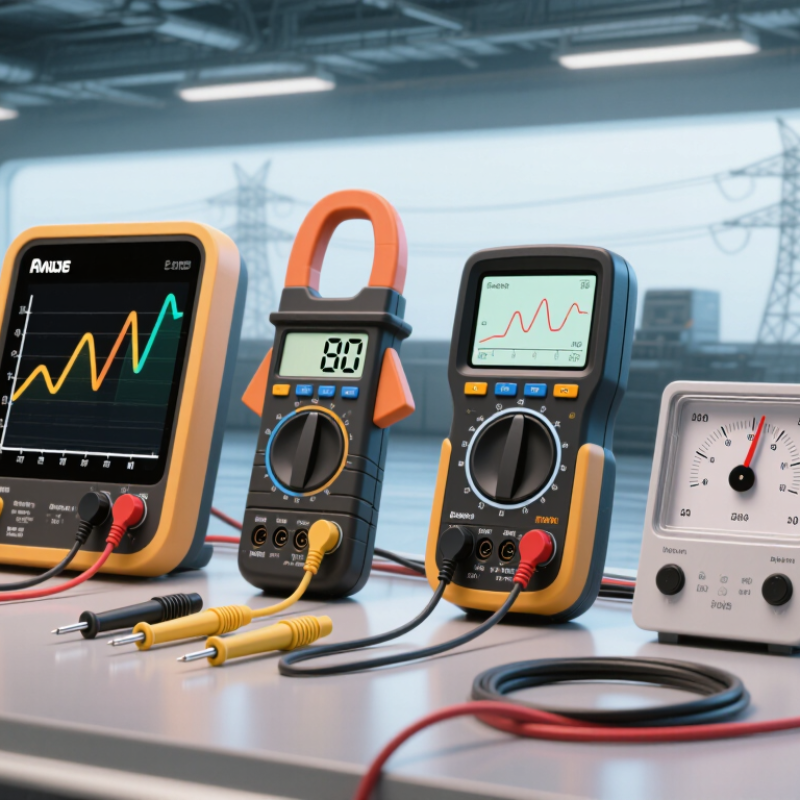
China Top 10 Voltage Instrument Manufacturers

Voltage Instruments and Their Role in Electrical Measurement

Voltage instruments convert an electrical potential difference into a reading technicians can use to assess circuits, equipment, and power quality. A digital multimeter can check voltage at a terminal; a power-quality analyzer can reveal dips, surges, and waveform distortion over time. The choice depends on the task. Small details matter. Probe placement, instrument range, and the circuit’s impedance can all affect a reading. An incorrect range may hide a fault or create a safety risk, so users should check the instrument’s measurement category and follow its operating instructions.

Reliable readings also depend on calibration and method. A meter may display several decimal places without being accurate to that level. For routine comparisons, technicians should record the measurement conditions and use instruments suited to the expected AC or DC signal. The International Energy Agency’s Electricity 2025 report says global electricity demand grew 4.3% in 2024. That growth makes dependable measurement increasingly relevant in generation, buildings, and industrial systems. Still, a reading is only a snapshot. Loose connections, temperature changes, or a poorly positioned probe can distort the result, and field checks do not replace a complete diagnosis.


Voltage Instruments and Their Role in Electrical Measurement

This chart compares typical nominal AC supply voltages: single-phase values for Japan, the United States, China, and Europe, and line-to-line three-phase values for China and Europe. Voltage instruments measure these levels to support electrical testing, monitoring, and safety checks.

Values are nominal RMS voltages; actual supply voltage can vary. Reference: IEC 60038 and commonly specified national supply voltages.

China’s Voltage Instrument Manufacturing Industry

China’s voltage-instrument industry serves power equipment, factories, laboratories, and renewable-energy projects. The National Energy Administration reported that China’s installed power-generation capacity reached about 2.92 billion kilowatts in 2023, up 13.9% year on year. More grid connections mean more work checking voltage, insulation, and power quality. On a switchboard, that may mean measuring voltage across several phases before equipment is energized. Small errors matter.

The National Bureau of Statistics reported 6.8% growth in value added by equipment manufacturing in 2023. This is useful industrial context, not a growth figure for voltage instruments specifically. Manufacturers compete on measurement accuracy, stable calibration, safety, and resistance to electrical noise. Buyers should also examine test conditions and calibration records, not just the display resolution. Standards still matter. A published accuracy claim is less useful if its range or temperature conditions are unclear. Some product specifications remain hard to compare across suppliers; that is a real weakness in the market. As power systems add distributed generation and more complex loads, instruments must handle changing conditions without sacrificing traceability.

Profiles of 10 Notable Chinese Voltage Instrument Manufacturers

These ten profiles compare practical capability types found among Chinese voltage instrument manufacturers; they are not an audited ranking. One maker may focus on handheld digital meters, with clear displays and compact cases for field checks. Another may build bench instruments for stable readings at a repair station. A third may specialize in high-voltage probes, where insulation design and stated measurement limits deserve close review. A fourth may supply panel meters for equipment cabinets. A fifth may develop data-logging instruments that record voltage changes over time. Details matter.

The remaining profiles cover makers of portable power-quality analyzers, programmable test supplies with voltage readback, calibration-oriented reference instruments, educational lab meters, and customized monitoring systems. Their strengths can differ sharply. Some offer broad product ranges; others concentrate on a narrow measurement task. A careful buyer should compare accuracy specifications, input protection, calibration documentation, interface options, and service support. Requesting a sample report or checking readings against a trusted reference can reveal gaps that a polished catalog may hide. Even a well-built instrument can disappoint when its range does not fit the actual test. That part is easy to overlook.

Key Products, Technologies, and Industry Standards

China’s voltage-instrument suppliers compete across handheld multimeters, panel voltmeters, voltage transducers, high-voltage dividers, and power-quality analyzers. Product selection should start with the measurement task: a factory control cabinet needs stable panel readings, while substation diagnostics may require isolated inputs and transient capture. True-RMS conversion, sampling rate, input impedance, temperature drift, and calibration traceability separate useful specifications from brochure claims. Small details matter. Buyers should request uncertainty data and test conditions, not just display resolution.

Standards provide a practical screening framework. IEC 61010-1 addresses measurement-equipment safety, IEC 61326-1 covers electromagnetic compatibility, and IEC 61557-12 applies to power metering and monitoring devices. These standards are not interchangeable; claimed compliance should match the instrument’s intended use. China’s National Energy Administration reported 9.22 trillion kWh of electricity consumption in 2023, up 6.7% year on year. The IEA’s 2023 report, Electricity Grids and Secure Energy Transitions, says annual grid investment must exceed $600 billion by 2030. That growth raises demand for reliable voltage monitoring, but it does not excuse weak calibration records. Some suppliers may still leave documentation gaps. Verify certificates, environmental limits, and recalibration terms.

How to Evaluate and Select a Voltage Instrument Manufacturer

When comparing China’s voltage instrument manufacturers, judge evidence, not polished catalog pages. Ask for the specified range, resolution, accuracy, and operating conditions behind every performance claim. Request a sample calibration certificate and check whether its uncertainty matches your application. NIST Technical Note 1297 explains that expanded uncertainty is calculated as U = k × uc; with k = 2, coverage is approximately 95% under stated assumptions. That figure is not a guarantee of instrument accuracy. Read the conditions carefully.

Check whether the manufacturer’s calibration system is traceable and whether its ISO/IEC 17025 accreditation covers the relevant measurement. For safety, review applicable IEC 61010 requirements and ask for test evidence—not a logo alone. Then examine practical details: probe insulation, input protection, display stability, and performance after repeated use. Request a clear warranty, repair process, and spare-parts timeline. Small details matter. A factory visit or video audit can reveal how calibration records are controlled and how failed units are handled. I would still test a production sample; documentation can look excellent while a display flickers under workshop lighting. Compare quotations only after aligning specifications, accessories, calibration, and service terms.

China Top 10 Voltage Instrument Manufacturers - How to Evaluate and Select a Voltage Instrument Manufacturer

No. Evaluation Dimension What to Verify Useful Evidence to Request
1 Measurement range and function Confirm that the instrument covers the required AC and/or DC voltage range and supports the measurement modes needed for the application, such as true-RMS AC measurement where applicable. Product datasheet, operating manual, and a written confirmation of the required ranges and measurement modes.
2 Accuracy and uncertainty Compare the stated accuracy across the actual operating range. Check whether specifications include terms such as percentage of reading, percentage of full scale, or digit counts, and review stated temperature conditions. Published accuracy specifications, test conditions, and calibration information for the proposed model.
3 Input characteristics Check input impedance, input capacitance where relevant, and loading effects. These characteristics can affect measurements in high-impedance or sensitive circuits. Datasheet values for input impedance and capacitance, plus application guidance for the intended circuit.
4 Frequency response For AC measurements, verify the specified frequency range and accuracy over that range. Confirm that bandwidth suits the waveform and signal frequencies in the intended application. Frequency-response specifications and, where needed, test results at representative frequencies and waveforms.
5 Electrical safety rating Match the measurement category and voltage rating to the installation and measurement location. Check the instrument, test leads, probes, and accessories as a complete measurement setup. Product markings and safety documentation. IEC 61010-1 and IEC 61010-2-030 are relevant standards for electrical measuring equipment and measuring circuits.
6 Calibration and traceability Determine whether calibration is available, how it is performed, and whether the calibration results are traceable to recognized measurement standards. Sample calibration certificate, calibration procedure, and details of the calibration laboratory. For accredited calibration, check the laboratory’s ISO/IEC 17025 accreditation scope.
7 Quality management Review the manufacturer’s quality controls for design, production, inspection, and handling of nonconforming products. Confirm that any claimed certification applies to the relevant site and scope. Current quality-management certificate and its scope, together with an outline of production inspection and final-test procedures.
8 EMC performance Ask how the instrument performs in its intended electromagnetic environment and whether applicable immunity and emissions requirements have been assessed. Relevant test reports or declarations. IEC 61326-1 provides EMC requirements for electrical equipment for measurement, control, and laboratory use.
9 Production consistency Assess whether incoming components, assembly, firmware, and final testing are controlled consistently, especially for repeat orders or customized configurations. Documented inspection and final-test records, sample test reports, and a description of lot identification and change-control practices.
10 Technical support and lifecycle Confirm access to manuals, software or firmware updates where relevant, spare parts, repair services, warranty terms, and technical assistance for the expected product lifecycle. Written warranty and service terms, support contact details, spare-parts policy, and stated availability of manuals and updates.

REQUEST A QUOTE

Menu
[all-fields]