

- 713.590.1312
- sale@pandbtools.com
China Top 10 Valve Cover Seals Suppliers
Choosing reliable Valve Cover Seals suppliers requires more than comparing prices or catalog size. These small components sit above hot cylinder heads, where oil, vibration, pressure, and repeated heat cycles create demanding conditions. A seal may look perfect on a warehouse shelf. It can still fail after several thousand kilometers.
ASE-certified technician Eric Cook, known online as EricTheCarGuy, offers a practical lesson often repeated in his repair guidance: “A gasket is only as good as the surfaces and the installation around it.” This principle matters when evaluating manufacturers. Strong suppliers should demonstrate material control, accurate molding, stable compression, and compatibility with specific engine designs. Their records should also show dimensional inspection, leakage testing, traceable batches, and consistent packaging.
This China Top 10 Valve Cover Seals Suppliers overview examines those details. It considers factory experience, production capacity, OEM or aftermarket coverage, export performance, and technical support. Some suppliers may excel at high-volume orders. Others may provide better custom tooling or faster engineering feedback. Neither advantage guarantees universal quality.
Fitment remains critical.
A low-cost seal with poor bolt-hole alignment can distort during installation. Incorrect rubber hardness may cause early seepage around corners and half-moon sections. Supplier websites can also exaggerate capabilities. That weakness deserves attention, not polite acceptance.
The companies discussed here are therefore viewed through a practical purchasing lens. Their strengths, limitations, certifications, and service claims should be checked before any final decision. No ranking can replace sample testing, installation trials, and direct communication with the factory. That is the uncomfortable part. Reliable sourcing still requires careful judgment.
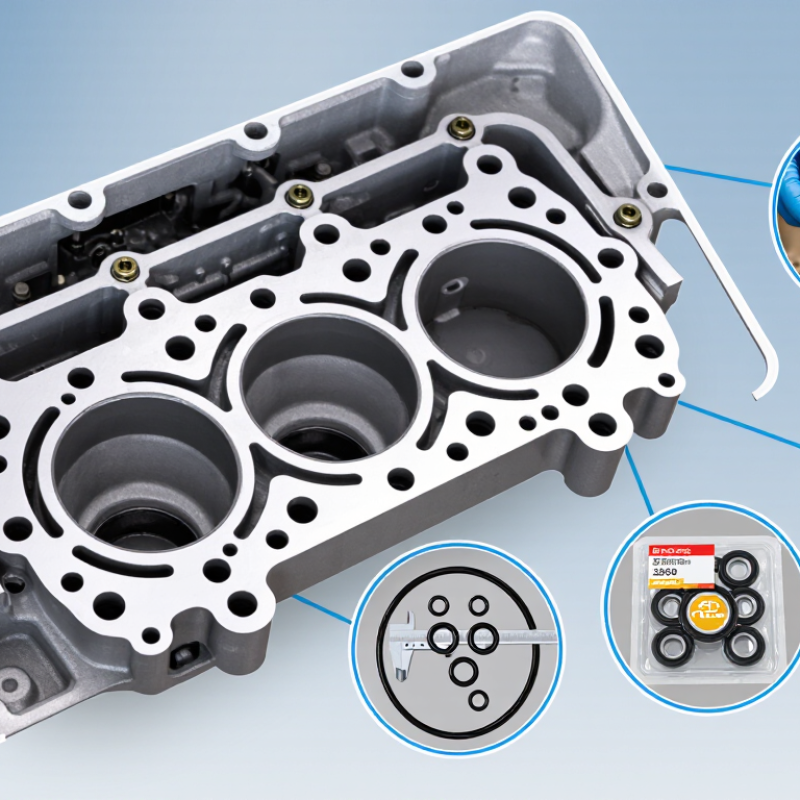
What Is a Valve Cover Seal and Why Does It Matter?
A valve cover seal, often called a gasket, sits between the valve cover and the cylinder head. It creates a tight barrier around the engine’s upper section. This barrier keeps lubricating oil inside while blocking dust and moisture outside. Small part, serious job.
During routine engine inspections, technicians often find early warning signs around this seal. A hardened gasket may leave a thin oil trail along the cover edge. Oil inside spark plug wells can cause misfiring, rough starting, or damaged ignition components. A burning-oil smell near the engine should not be ignored. Heat, vibration, and repeated temperature changes gradually reduce sealing performance.
Material choice matters. Rubber compounds must tolerate engine heat, oil exposure, and compression without becoming brittle. A dependable supplier should provide clear dimensions, material information, compression data, and inspection records. The correct fit matters as much as the material. Over-tightening cover bolts can crush the seal, while loose bolts may create uneven gaps. One honest warning: a new seal can still leak when the cover is warped or the sealing surface is dirty. In practice, careful cleaning and even bolt tightening often prevent problems that people wrongly blame on the gasket itself.
How to Evaluate Valve Cover Seal Suppliers in China
China produced 31.28 million vehicles in 2024, according to the China Association of Automobile Manufacturers. This scale creates many valve cover seal suppliers, but capacity alone proves little. Evaluate material control, mold accuracy, and production stability. Ask for compound specifications, hardness records, compression-set results, and batch traceability. ASTM D395 testing can reveal whether rubber remains resilient after heat exposure. For engine applications, FKM, silicone, and ACM may perform differently. A suitable supplier should explain the choice clearly, not simply offer the cheapest compound.
ISO’s 2023 Survey places China among the world’s largest bases for ISO 9001 certification. Certification helps, but it is not a complete quality judgment. Check whether the certificate covers the actual factory. Request IATF 16949 evidence when automotive production is involved. Review first-article reports, leak-test methods, control plans, and corrective-action records. A polished factory tour can still hide weak process discipline. One perfect sample is not enough. I would request samples from several production batches and inspect sealing lips, flash, warpage, and bolt-hole alignment.
Tips: Compare at least three suppliers using the same technical drawing and test requirements. Visit the molding, trimming, inspection, and storage areas. Check whether materials carry batch codes and certificates. Ask how rejected seals are isolated. Also confirm tool ownership, replacement timing, annual capacity, and export packaging. Small details matter. Do not ignore communication quality; unclear answers today may become costly delays later.
China’s Top 10 Valve Cover Seal Suppliers
China’s Top 10 Valve Cover Seal Suppliers are often judged by material control, molding accuracy, and delivery consistency. A reliable supplier should explain why it selects NBR, ACM, silicone, or FKM for each engine environment. Material choice affects oil resistance, temperature stability, and compression recovery.
In practical sourcing work, the strongest suppliers usually provide clear drawings, dimensional reports, and batch traceability. Their production lines should control flash, sealing lips, and bolt-hole alignment. Ask for compression-set data after heat and oil exposure. Request samples from regular production, not specially prepared pieces. That detail matters.
Several capable Chinese suppliers support private-label production, prototype tooling, and export packaging. They may also provide inspection records, process approval documents, and independent laboratory results. However, a polished sample can still hide unstable mass production. I have seen minor mold wear create uneven sealing around one corner. No supplier is perfect. Buyers should inspect first-article samples, review corrective-action records, and confirm realistic lead times. The best supplier is not always the cheapest. It is the one that communicates limits clearly and maintains consistent seals across repeated orders.
China Top 10 Valve Cover Seal Suppliers
Material performance benchmark for valve cover seal sourcing in China. The chart compares typical maximum continuous service temperatures of commonly used sealing materials; values are general industry ranges and are not company-specific data.
Comparing Supplier Quality, Pricing, Customization, and Support
China Top 10 Valve Cover Seals Suppliers
Comparing the top valve cover seal suppliers requires more than checking catalog prices. Quality depends on rubber compound, dimensional control, compression set, and resistance to heat, oil, and vibration. Reliable suppliers should provide material certificates, inspection records, and batch traceability. Ask for test data under realistic engine temperatures. A polished sample proves little without stable production control.
Pricing also needs careful review. Unit cost may exclude tooling, packaging, mold maintenance, and shipping. Minimum order quantities can change the real budget quickly. Customization is valuable when your cover has unusual grooves, bolt patterns, or sealing pressures. Suppliers with in-house tooling can usually adjust drawings faster. Still, customization may extend sampling time. That trade-off is easy to underestimate. Supplier support matters after delivery, too. Clear engineering communication, fast corrective action, and replacement policies reduce production risk.
Tips: Request two samples from different batches. Measure thickness, hardness, and groove fit before approval. Compare written quotations line by line. Check whether testing is performed internally or by an independent laboratory. A low price can be useful, but only when leakage performance remains consistent. One practical weakness is that buyers sometimes trust first samples too much. Repeat testing is less exciting, yet it reveals process variation. Ask suppliers to explain their inspection frequency, defect limits, and response time for quality issues.
| Rank | Supplier Profile | Typical Seal Materials | Indicative Volume Price (USD / piece) | Typical MOQ (pieces) | Standard Lead Time | OEM / Customization Capability | Quality Documentation | Quality Score (10) | Customization Score (10) | Pricing Score (10) | Support Score (10) | Best Fit |
|---|---|---|---|---|---|---|---|---|---|---|---|---|
| 1 | Supplier Profile A | FKM, NBR, silicone | $0.75–$2.80 | 500 | 15–25 days | Custom tooling, drawings, hardness, color, and packaging | Material certificate, dimensional report, batch traceability | 9.2 | 9.4 | 8.0 | 9.0 | Automotive aftermarket and demanding OEM programs |
| 2 | Supplier Profile B | NBR, HNBR, FKM | $0.55–$2.35 | 1,000 | 18–28 days | Standard and non-standard profiles; tooling support available | Inspection report, material data sheet, sampling records | 9.0 | 8.8 | 8.4 | 8.7 | High-volume replacement parts |
| 3 | Supplier Profile C | Silicone, EPDM, NBR | $0.48–$1.95 | 300 | 12–22 days | Small-batch prototyping, logo-free private packaging, profile changes | Dimensional inspection, hardness testing, production sample approval | 8.7 | 9.1 | 8.6 | 8.5 | Low-volume custom development |
| 4 | Supplier Profile D | NBR, FKM, ACM | $0.42–$1.75 | 1,000 | 20–30 days | OEM dimensions, compression molding, controlled material substitutions | Batch inspection report and basic material declaration | 8.6 | 8.2 | 8.9 | 8.2 | Cost-sensitive distributors |
| 5 | Supplier Profile E | FKM, HNBR, silicone | $0.85–$3.10 | 500 | 20–32 days | High-temperature compounds, precision tooling, surface treatments | Material certificate, first-article report, capability data | 9.1 | 8.9 | 7.6 | 8.8 | High-temperature and severe-duty applications |
| 6 | Supplier Profile F | NBR, EPDM, silicone | $0.36–$1.45 | 2,000 | 18–26 days | Standard profiles, color matching, bulk packing, repeat-order tooling | Basic dimensional and hardness inspection | 8.1 | 7.7 | 9.2 | 7.9 | Large-volume standard replacement seals |
| 7 | Supplier Profile G | FKM, NBR, ACM | $0.68–$2.60 | 500 | 22–35 days | Complex geometries, metal insert options, prototype validation | Dimensional report, compound data, production traceability | 8.8 | 9.0 | 7.8 | 8.4 | Specialized engine platforms |
| 8 | Supplier Profile H | NBR, HNBR, EPDM | $0.40–$1.68 | 1,000 | 16–27 days | Standard customization, labeling, carton configuration, sample revisions | Pre-shipment inspection and batch records upon request | 8.3 | 8.0 | 8.8 | 8.1 | Importers seeking balanced cost and lead time |
| 9 | Supplier Profile I | Silicone, FKM, EPDM | $0.62–$2.25 | 300 | 14–24 days | Prototype tooling, color options, low-volume engineering changes | Hardness, dimensional, and visual inspection records | 8.4 | 8.6 | 8.2 | 8.3 | Private-label and sample-driven projects |
| 10 | Supplier Profile J | NBR, FKM, silicone | $0.50–$2.05 | 800 | 20–30 days | Drawing-based production, packaging customization, replacement profiles | Certificate of conformity and final inspection report | 8.2 | 7.9 | 8.5 | 8.0 | General industrial and automotive replacement use |
| Comparison basis: indicative China-market ranges for valve cover seals supplied in volume orders. Actual pricing, MOQ, lead time, material selection, testing, and documentation vary by dimensions, compound, tooling requirements, order quantity, Incoterms, and validation standards. Scores use a 10-point comparative scale based on the capabilities listed above and should be confirmed directly before procurement. | ||||||||||||
How to Choose the Right Valve Cover Seal Supplier
Choosing a valve cover seal supplier in China requires more than comparing catalog prices. A reliable supplier should understand engine temperature, oil exposure, vibration, and tightening pressure. Ask about material options, such as silicone, rubber, or composite blends, and request technical data sheets. A capable factory can explain compression limits and sealing performance clearly.
My practical check starts with samples. Fit the seal on the actual cover, then inspect corners, bolt holes, and the inner lip. Small wrinkles can cause leaks later. Review production records, inspection methods, and batch traceability. Suppliers with mold-making experience often control dimensions better, but this is not guaranteed. I have seen attractive samples fail after repeated heat cycles. That mistake changed how I assess suppliers.
Tips:
Request at least two samples from different production batches. Confirm hardness, dimensions, and temperature resistance with written records. Ask whether the supplier performs compression, aging, and leak tests. Check packaging before shipment; crushed seals may lose their shape. Discuss minimum order quantities, tooling ownership, lead times, and replacement procedures. A lower quote may hide weak inspection or unstable material quality. Video audits help, but they cannot replace independent testing. Choose a supplier that answers technical questions directly, documents changes, and accepts reasonable corrective actions.