China Top 10 MCCB Circuit Breaker Manufacturers for Global Buyers
Global buyers need more than a familiar logo when choosing an MCCB Circuit Breaker. The device must match the installation, protect conductors, and interrupt fault current safely. A compact frame can look reassuring on a catalog page. The specification tells a fuller story. Details matter.
Engineer and author Henry Petroski wrote, “Science is about knowing; engineering is about doing.” That idea fits breaker selection: compare verified ratings with the real demands of the system, not just sales claims.
This guide introduces ten manufacturers serving international buyers. It is a practical shortlist, not a universal ranking. Company capability, product range, and local support can vary by region. Buyers should check rated current, pole configuration, breaking capacity, trip characteristics, and operating conditions. They should also confirm applicable certifications and request current technical documents. A product brochure alone is not enough.
MCCBs are used in commercial, industrial, and infrastructure applications, but no single model suits every panel. A breaker selected for a workshop may not fit a high-fault-current installation. Even experienced teams can overlook coordination details. That deserves a second look.
The profiles ahead help readers compare manufacturers, product strengths, and purchasing considerations. Use them to build a shortlist, then verify each model against project requirements with a qualified electrical professional. Good sourcing starts with evidence. Not brand names alone.
What Is an MCCB and How Does It Protect Electrical Systems?
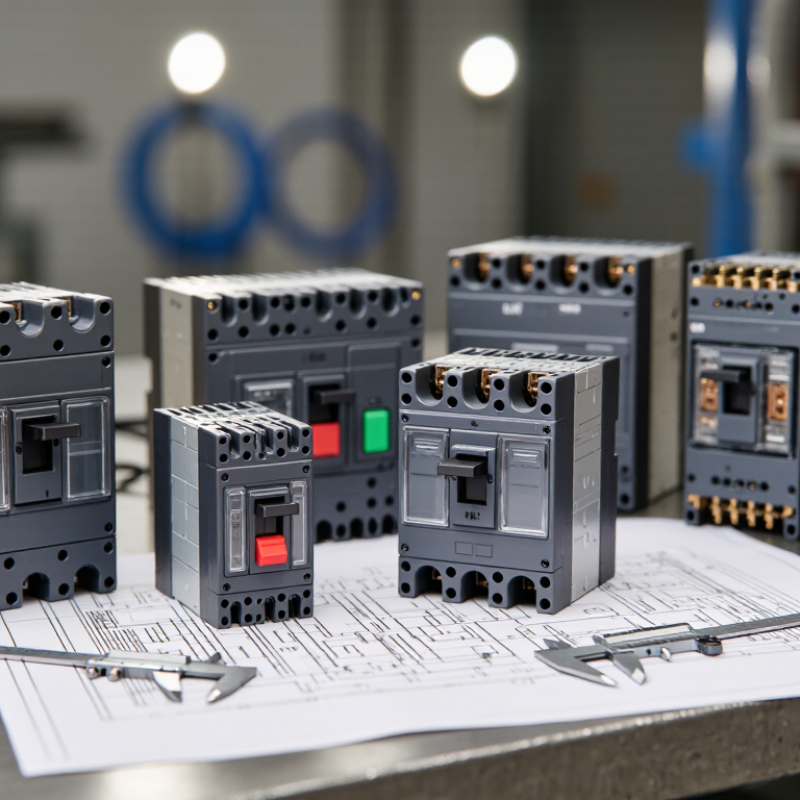
A molded case circuit breaker (MCCB) is a resettable device that protects electrical circuits from excessive current. Its insulated housing contains contacts and a trip mechanism. During an overload, heat from sustained current can trigger a thermal release. If a short circuit causes a sudden surge, a magnetic or electronic trip can open the contacts rapidly. The circuit is interrupted. This helps limit damage to cables, motors, and connected equipment, while reducing fire risk. An MCCB does not prevent every electrical hazard, and it cannot replace sound wiring or safe work practices.
Choosing one requires more than matching the current rating. Check the system voltage, expected fault current, and the breaker’s interrupting capacity. A unit must be able to safely stop the fault current available at its installation point. Trip settings also matter: settings that are too high may leave cables exposed, while settings that are too low can cause unwanted trips. In a distribution panel, coordination with upstream and downstream protection helps isolate a fault without shutting down unrelated circuits. Not automatic. A qualified professional should verify the selection, installation, and settings against equipment data and site conditions. Dust, heat, and loose connections can affect performance over time, so inspection and testing deserve attention. Even a well-chosen breaker needs care.
MCCBs: Common Rated Current Options for Global Buyers
Examples of commonly available molded case circuit breaker (MCCB) rated currents. Availability varies by product range and region; check the specific product datasheet.
An MCCB helps protect electrical systems from overloads and short circuits. Rated current (In) indicates the current the breaker is designed to carry under specified conditions; actual trip behavior depends on the breaker’s trip unit and settings.
How China’s MCCB Manufacturing Industry Serves Global Markets
China’s MCCB manufacturing sector supports global buyers through production scale, configurable specifications, and export-oriented supply chains. The International Energy Agency’s Electricity 2024 report says global electricity demand grew 2.2% in 2023 and projects average annual growth of 3.4% from 2024 to 2026. This is an electricity-demand outlook, not an MCCB sales forecast, but it points to continued investment in distribution equipment. That matters.
For buyers, practical service means more than a competitive quotation. A manufacturer may need to provide suitable rated current and breaking-capacity options, clear wiring diagrams, test records, and packaging suited to long-distance transport. MCCBs are covered by IEC 60947-2, so buyers should check that product documentation and testing align with the stated requirements. Small details matter. Still, scale is not the same as consistency; documentation quality and response times can vary between suppliers. A delayed drawing or unclear test record can hold up installation, even when the breaker itself is suitable. Buyers comparing Chinese suppliers should therefore assess sample quality, technical support, lead-time commitments, and after-sales communication alongside price.
Criteria for Evaluating Chinese MCCB Manufacturers
Evaluating Chinese MCCB manufacturers means checking evidence, not just comparing catalogue prices. Ask for test reports covering rated current, short-circuit breaking capacity, trip characteristics, and mechanical and electrical endurance. Confirm the tested model matches the supplied unit, including its accessories. A certificate alone may not show how a breaker performs in a hot, crowded panel. Details matter.
Demand is rising. The International Energy Agency’s Electricity 2024 report projected global electricity demand growth of about 3.4% annually from 2024 to 2026. Ember’s Global Electricity Review 2025 reported a 4% rise in global electricity demand in 2024. These figures make consistent protection and production capacity worth checking. Ask how the manufacturer controls component sourcing, batch traceability, and routine testing. Request sample inspection records, not just a polished brochure.
Check compliance with IEC 60947-2 where it applies, and verify certification scope with the issuing body. Also assess factory quality controls, warranty terms, spare-part availability, and response times for technical questions. A fast reply helps. It is not proof. One procurement trap is treating the lowest quote as the lowest risk; I would compare test evidence and service commitments before deciding. Even strong documents have limits, so inspect a sample breaker and confirm its terminals, markings, and operating feel match the project specification.
Profiles of 10 Chinese MCCB Manufacturers for Global Buyers
China’s MCCB supplier landscape spans large electrical-equipment groups, specialist breaker makers, export-focused factories, and regional producers. A useful profile of ten manufacturers should compare more than catalogue breadth. Buyers need to examine rated current, breaking capacity, trip-unit options, accessories, and documented test results. Small details matter: terminal layout, label clarity, and whether replacement accessories remain available.
The International Energy Agency’s Electricity 2024 report projects global electricity demand growth averaging about 3.4% annually from 2024 to 2026. That outlook supports continued investment in distribution equipment, but it does not guarantee that every supplier is ready for a specific project. Compare production capacity, quality-control records, sample lead times, and technical support. Check how each maker tests products against IEC 60947-2 requirements, and request reports tied to the exact model. A polished catalogue is not proof.
Among ten supplier profiles, look for distinct strengths: high-volume production, compact designs, adjustable protection, custom enclosure options, or responsive export documentation. Ask for temperature-rise and short-circuit test evidence, plus clear tolerance and warranty terms. Then compare delivered samples with drawings. It can be tedious. Yet one overlooked terminal dimension can delay an entire panel build. Some public profiles also leave gaps; verify claims directly rather than treating a website as an audit.
How to Assess Suppliers, Certifications, and Export Support
When comparing China’s top ten MCCB manufacturers, look beyond catalogue ratings. Ask for test data matching the exact frame size, rated current, and breaking capacity you plan to buy. A sample can reveal practical details: terminal clearance, label readability, and whether the handle moves cleanly. Details matter. A polished brochure can still leave gaps.
Check whether certificates and test reports name the same product model and factory. For many markets, IEC 60947-2 is a useful reference, but confirm local requirements independently. Request reports from the issuing laboratory and verify their scope and validity. Also ask how production batches are inspected and how serial numbers trace back to factory records. This takes time, and paperwork can be confusing.
Export support deserves equal attention. Confirm lead times, packaging for humid or long-distance transit, spare-part availability, and response times for technical questions. Ask for manuals and wiring diagrams in the languages your installers need. Clarify shipping terms and who handles export documents before placing an order. If a supplier answers quickly but vaguely, pause and ask for a specific example. Communication is part of product quality, though it is easy to overlook.