
7 Tips for Choosing a Hair Color Tube Supplier
Choosing a Hair Color Tube supplier is not a simple price comparison. The tube must protect formulas, support clean application, and represent your brand on a crowded shelf. A weak supplier may offer attractive samples, yet struggle with color consistency, cap fit, or delivery schedules.
Packaging engineer Dr. Elena Marquez once said, “A tube is not merely a container; it is part of the product’s quality promise.” That observation deserves attention. A professional supplier should understand material compatibility, pigment staining, shoulder sealing, printing accuracy, and squeeze performance. You should ask for production samples, batch records, and clear quality procedures. Test the tube with your actual hair color formula, not only with water. Small differences can appear after several weeks.
This guide presents seven practical tips for choosing a Hair Color Tube supplier. It examines material selection, manufacturing experience, customization, minimum order quantities, quality control, communication, and delivery reliability. Look closely at the details. Does the cap close firmly after repeated use? Does the printed logo remain sharp near the folded edge? Can the supplier explain how defective units are handled?
No supplier is perfect. Your evaluation may still miss something. That is why a small trial order can reveal more than a polished presentation. A dependable partner should welcome questions, provide measurable answers, and admit limitations when they exist. The right supplier will not merely sell tubes. They will help protect product performance, customer trust, and your long-term production plans.
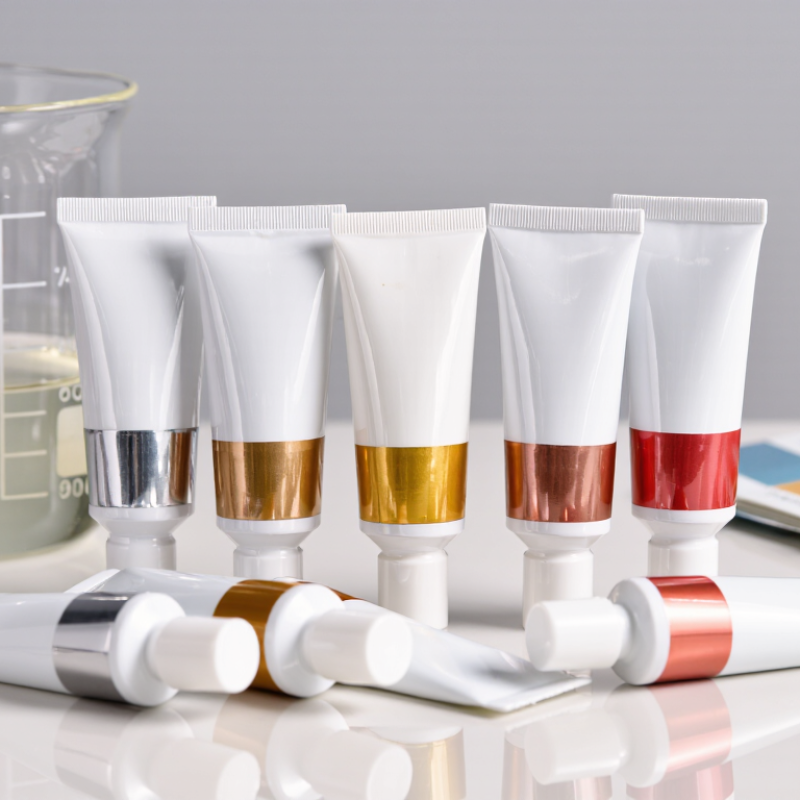
Define Your Hair Color Tube Requirements and Product Specifications
Before choosing a hair color tube supplier, define the product requirements in measurable terms. Specify the colorant formula, fill volume, tube diameter, wall thickness, and preferred material. Some formulas contain strong pigments or oxidizing ingredients. They may need stronger barrier protection and chemical resistance. Decide whether the tube requires aluminum, plastic, or a multilayer structure. Check compatibility through stability testing, not assumptions.
The dispensing system also affects customer experience. Describe the nozzle opening, shoulder shape, cap type, and sealing method. A narrow nozzle can improve application control. However, it may clog with thicker creams. Request samples filled with your actual formula. Examine leakage, odor transfer, print adhesion, squeezing force, and cap performance after heat and cold exposure. Small details matter.
Ask the supplier for technical data, inspection standards, batch records, and material declarations. Confirm production tolerances for weight, dimensions, and fill accuracy. A reliable supplier should explain testing methods clearly. I once overlooked cap torque during a packaging review. The tubes looked excellent, but several caps loosened during transport. That mistake changed my checklist. Set acceptable defect limits, delivery expectations, minimum order quantities, and sample approval procedures in writing. Leave room for improvement. Specifications can be precise, yet real production may reveal weaknesses.
7 Tips for Choosing a Hair Color Tube Supplier - Define Your Hair Color Tube Requirements and Product Specifications
| Tip | Requirement Dimension | Recommended Product Specification | Why It Matters | Supplier Evidence to Request | Priority |
|---|---|---|---|---|---|
| 1 | Tube Material and Barrier Protection | Select aluminum, plastic, or multilayer laminate tubes according to formula compatibility. For oxidation-sensitive formulas, specify a high-barrier structure and an internal protective coating. | Hair color creams may contain dyes, alkalizing agents, oils, and oxidizing ingredients that can interact with packaging materials or reduce product stability. | Material declaration, coating information, compatibility test results, barrier-performance data, and samples filled with the actual formula. | Critical |
| 2 | Fill Volume and Tube Dimensions | Define the nominal fill volume, tube diameter, total length, shoulder shape, and usable product capacity. Common retail sizes include approximately 50–150 mL, depending on the product format. | Correct dimensions improve dosing accuracy, shelf presentation, carton fit, and compatibility with filling and sealing equipment. | Dimensional drawings, tolerance ranges, capacity tests, fill-weight verification, and a production sample approved against a signed specification. | High |
| 3 | Closure, Nozzle, and Seal Design | Choose a flip-top, screw, or other suitable closure. Specify nozzle opening, cap fit, tamper evidence, induction or foil seal requirements, and leak-resistance criteria. | The closure controls dispensing, helps prevent leakage and contamination, and influences consumer perception of quality and safety. | Torque or fit specifications, leak and pressure test results, seal-integrity records, closure compatibility samples, and transit-test performance. | High |
| 4 | Printing and Decoration Requirements | Define the print process, number of colors, artwork dimensions, finish, text legibility, barcode area, batch-code zone, and required abrasion resistance. | Hair color packaging often requires detailed shade names, usage instructions, warnings, ingredients, and regulatory information in a limited print area. | Color proof, print-registration tolerance, rub-resistance test, barcode verification, ink compliance documentation, and approved pre-production samples. | High |
| 5 | Formula Compatibility and Product Safety | Require compatibility screening with the finished hair color formula, including storage at normal and elevated temperatures, visual inspection, odor evaluation, leakage checks, and weight or viscosity monitoring. | Packaging can affect formula appearance, odor, stability, and dispensing performance over the intended shelf life. | Written test protocol, stability-study summary, migration or extractables information where applicable, product-safety documents, and corrective-action records. | Critical |
| 6 | Quality Control and Manufacturing Consistency | Set measurable limits for dimensions, wall thickness, color, print position, closure fit, seal quality, cleanliness, and cosmetic defects. Use statistically defined inspection levels where appropriate. | Consistent production reduces filling-line interruptions, customer complaints, rejected shipments, and variation between batches. | Quality manual, inspection checklist, certificate of analysis or conformity, batch traceability, defect classification, and sample inspection reports. | High |
| 7 | Sustainability, Compliance, and Supply Capability | Define recycled-content targets, recyclability requirements, applicable packaging regulations, minimum order quantity, lead time, annual capacity, and contingency planning. | A suitable supplier must support legal compliance, environmental objectives, reliable replenishment, and scalable production without compromising specifications. | Material compliance statement, recycled-content evidence, packaging sustainability data, capacity plan, lead-time commitment, business-continuity plan, and audit access. | Medium–High |