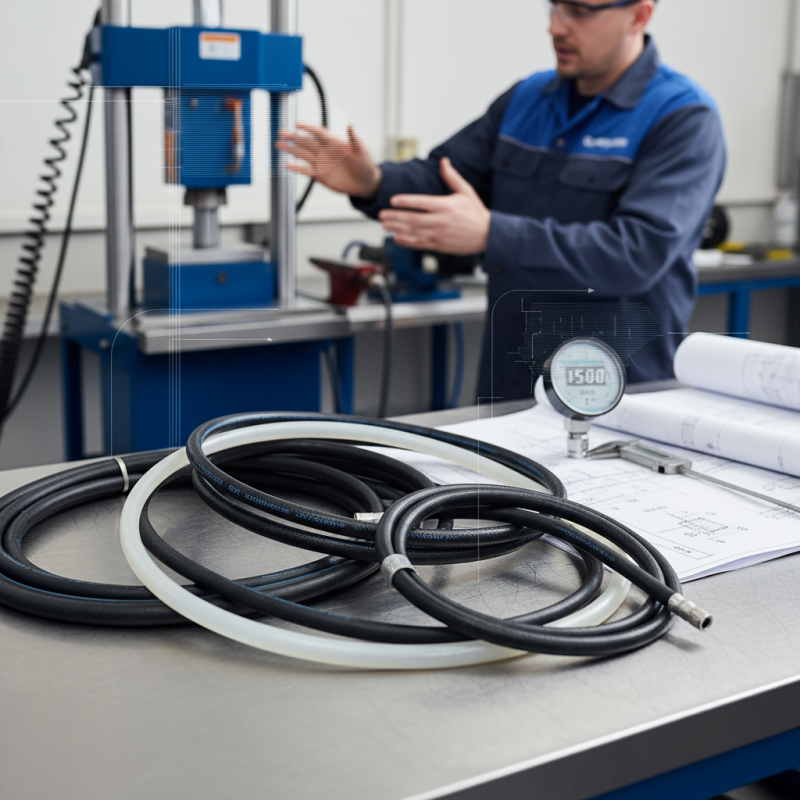
Essential Tips for Buying Hydraulic Hose for Sale
When looking for hydraulic hose for sale, it's crucial to consider various factors. Mark Thompson, a hydraulic systems expert, once stated, "Choosing the right hose is vital for performance." This emphasizes the importance of making informed choices.
Quality and compatibility should be at the forefront. Ensure the hose fits your machinery needs and can handle the required pressure. Many buyers often overlook sizing. Incorrect size can lead to leaks or even serious failures.
Researching durable materials can save time and money later. There are various options available, like rubber or thermoplastic. These materials have different lifespans and resistance levels. Take the time to assess these details to avoid future regrets. Always weigh your options carefully, as a small mistake can lead to costly repairs down the line.
Factors to Consider When Choosing Hydraulic Hose Materials
When selecting hydraulic hose materials, consider the environment. Will your hose be exposed to heat, chemicals, or abrasion? Each factor affects the lifespan. For instance, high temperatures can weaken certain materials. Chemicals can cause deterioration. Evaluate your application carefully before making a choice.
Another crucial aspect is pressure ratings. Different hoses are designed to handle various pressure levels. Using a hose rated below your system's requirements can lead to failures. Think about the potential consequences. Failure can mean downtime and costly repairs. Ensure the hose can withstand the demands of your equipment.
Lastly, pay attention to flexibility and bend radius. A stiff hose can complicate installation. It may not fit into tight spaces smoothly. However, overly flexible hoses can be prone to kinking. Balancing these characteristics is vital. Look for a hose that meets your specific needs, but also think critically about potential limitations.
Understanding Pressure Ratings and Specifications for Hydraulic Hoses
When buying hydraulic hoses, understanding pressure ratings is crucial. Pressure ratings define the maximum pressure the hose can handle. A low rating may lead to hose failure. Consider the working pressure versus the maximum pressure. Always choose a hose that exceeds your application’s needs. This adds a safety margin.
Specifications matter too. Look at the hose's construction. Reinforcement layers often indicate strength. For heavy-duty uses, braided hoses are preferable. They offer better protection against wear. Examine the material type. Rubber hoses are flexible, while plastic ones resist oil and chemicals.
Sometimes, people overlook these details. This can lead to incorrect purchases. Without careful consideration, problems may arise. Hoses that burst can create dangerous situations. Always cross-check specifications with your needs. Being thorough can prevent costly mistakes and enhance safety.
Evaluating Hose Diameter and Length for Optimal Performance
Choosing the right diameter and length for hydraulic hoses is crucial for efficiency. The diameter directly influences the flow rate. A larger diameter allows more fluid to flow through. But if the hose is too wide for the application, it can lead to power loss. Sometimes, users overlook this detail. Testing different sizes might be necessary for optimal results.
Length is equally important. Longer hoses can create more resistance, impacting performance negatively. However, a hose that is too short may not reach necessary areas. It could lead to kinks or bends. These are unideal situations that users must avoid. Keep in mind that real-world applications will vary. You might find that a hose you bought doesn't fully meet your needs. Evaluating how the length interacts with the fitting and routing is essential. Don't rush this process; it requires attention to detail.
Identifying Compatible Fittings and Connections for Your Hydraulic Hose
When purchasing a hydraulic hose, compatibility with fittings and connections is crucial. Choosing the right size is essential. Measure the inner and outer diameters carefully. An incorrect measurement can lead to leaks. It’s a common mistake to overlook this detail.
Next, consider the thread type of the fittings. There are several thread standards, including NPT and BSP. Mixing these can cause issues. Look closely at your existing fittings to match the thread type. This step can be tedious, but it's necessary to ensure a proper seal.
Additionally, examine the material of both the hose and the fittings. Compatibility is vital in avoiding corrosion or damage. High temperatures and pressure require specific materials. Reflect on the working environment. A hose that works perfectly in one instance may fail in another. Always be cautious and thorough in your selection.
Maintenance Tips for Extending the Lifespan of Hydraulic Hoses
Hydraulic hoses are critical in various industrial applications. Proper maintenance is crucial for maximizing their lifespan. Data shows that regularly maintained hoses can last up to 50% longer than those neglected. One key factor is cleanliness. Dirt and debris can cause wear and tear on the hose materials. Regularly inspect hoses for external damage, including cuts or abrasions.
Pressure ratings matter too. Hoses should not exceed their maximum pressure to avoid premature failure. Studies show that operating hoses at 80% of their rated pressure can enhance durability. Temperature control is another vital aspect. High temperatures can degrade rubber and other materials, leading to leaks. If not monitored, these leaks can cause accidents.
Storage is often overlooked. Storing hoses in a cool, dry place prevents exposure to harsh environmental factors. UV light and ozone can compromise hose integrity. Avoid kinking or coiling hoses too tightly during storage. This can lead to structural damage over time. Reflections on these practices reveal that proactive maintenance is sometimes sidelined, yet it proves essential for safety and longevity. Remember, neglecting these tips can lead to costly repairs and downtime.
Essential Tips for Buying Hydraulic Hose
This chart highlights the key factors that are essential when purchasing hydraulic hoses. Each bar represents the importance level (on a scale of 1 to 10) for each factor, helping users prioritize their considerations when making a purchase.