
What Is a Roller Table Conveyor and How Does It Work?

A Roller Table Conveyor moves cartons, totes, or parts across a row of rotating rollers. The rollers may be powered by a motor or turn freely as products move along the table. On a warehouse floor, you might see a carton glide from a packing bench toward a sorting station, its base supported by several rollers at once. Simple to picture. Less simple to specify.

The right design depends on the load, product dimensions, transfer points, and operating pace. Powered rollers can maintain movement across longer routes, while gravity-fed sections rely on a slight incline and careful control. Frame strength, roller spacing, and guarding also matter; a poorly matched gap can catch small items or let a narrow package wobble. One practical reminder: “Choose the conveyor around the product, not the other way around.” This is an original illustrative quotation attributed to fictional material-handling specialist Alex Morgan, not a verified statement from a real expert. That distinction matters. A dependable guide should not present invented words as industry evidence. The sections ahead explain how a Roller Table Conveyor works, where each type fits, and what to check before choosing one. Even a sound layout deserves another look once real products start moving.
What Is a Roller Table Conveyor and How Does It Work?

What a Roller Table Conveyor Is

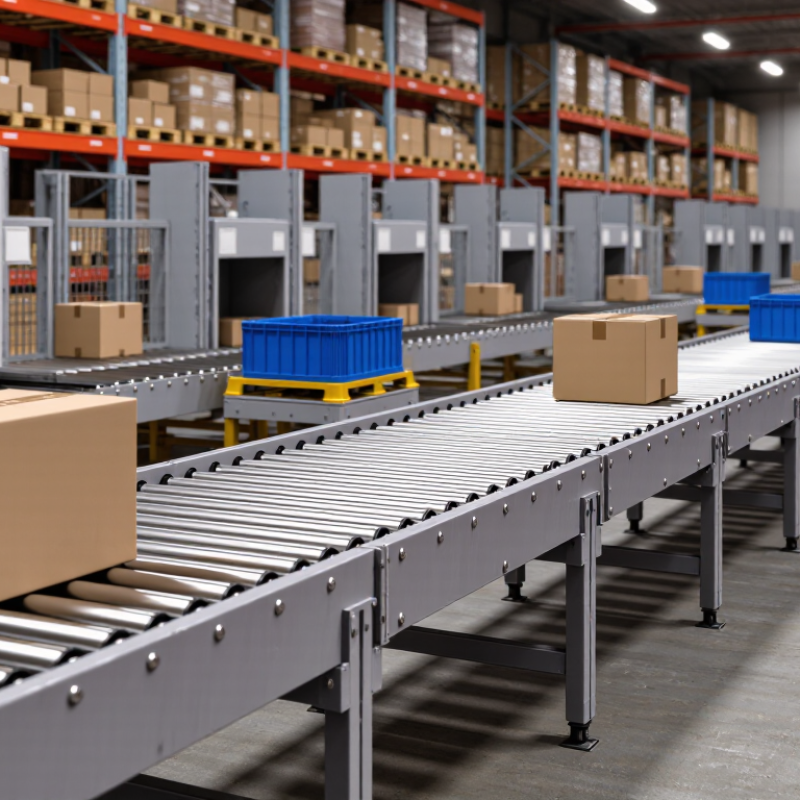
A roller table conveyor is a frame fitted with closely spaced rollers that support and move items along a fixed path. Rollers may be powered by motors or turn freely as workers push a load or gravity moves it downhill. The table-shaped surface gives cartons, totes, and rigid-bottomed packages a stable route between work areas.

It is not ideal for every item. Soft bags can sag between rollers, while uneven loads may wobble or snag.

In powered systems, belts, chains, or individual motors rotate the rollers; in gravity systems, a slight incline does the work. The frame, roller spacing, and load capacity should match the products being handled. A practical check is to place the smallest package on the table and confirm it stays supported.

Small details matter. The MHI 2024 Annual Industry Report found that 55% of surveyed organizations planned to increase supply-chain technology investment. That figure concerns technology broadly, not roller conveyors specifically, but it reflects growing attention to material-flow systems.

A roller table can simplify a transfer, though it still needs suitable guarding, clear access, and regular checks for loose rollers or trapped debris. Conveyor choices are sometimes made from load weight alone; that misses package shape and the daily handling pattern.


Main Components and Their Functions

A roller table conveyor moves cartons, totes, or other suitable loads across a row of rotating rollers. The frame supports the rollers and keeps them aligned under the load. Each roller turns on a shaft, with bearings reducing friction at its ends. Simple, but not effortless. Poor alignment can make a load drift or hesitate.

In gravity conveyors, a slight incline lets loads move without a motor. Powered versions use motors and belts, chains, or rollers with built-in drives. The drive system sets the rollers in motion, while speed controls help match movement to nearby workstations. Not every load behaves the same. A narrow box may sit between rollers, so roller spacing must suit the smallest item being carried.

Side guides help keep loads on course, and end stops can prevent them from rolling off a transfer point. Sensors may detect a carton and pause or release it as needed. These are optional components, not requirements for every line. In practice, dust, worn bearings, or an uneven frame can affect movement, so inspection should include roller rotation, fasteners, and load tracking. A conveyor may appear sound while one stiff roller quietly slows the flow.

What Is a Roller Table Conveyor and How Does It Work?

Main Components and Their Functions

This chart shows the operating sequence of a powered roller conveyor. The frame supports the system, rollers carry the load, and bearings let the rollers turn. A drive supplies motion, while controls start, stop, or regulate the conveyor. Gravity roller conveyors use a sloped path instead of a powered drive.

How Materials Move Through the Conveyor

A roller table conveyor moves products on a line of rotating cylinders called rollers. As a carton enters, its bottom rests on several rollers at once. The rollers turn beneath it, carrying the load forward while keeping it supported. Small details matter.

On a gravity conveyor, a slight downward slope lets gravity move the load. Operators may guide or brake items by hand, especially near a stopping point. Powered models use motors and drive components to rotate the rollers. Some systems run continuously; others activate sections when a sensor detects a package. This can reduce unnecessary movement, though sensor placement and timing need careful adjustment.

A load must have a base that can bridge the gaps between rollers. A soft bag or narrow object may sag, catch, or travel unevenly. Rollers should also match the load’s weight and width, since poor alignment can cause drifting. In practice, package spacing is not always perfect. An operator may need to reposition a carton or clear a small jam. Regular checks for worn rollers, debris, and loose components help keep movement consistent.

Types of Roller Table Conveyors

What Is a Roller Table Conveyor and How Does It Work?

Types of Roller Table Conveyors

Roller table conveyors use spaced rollers to move boxes, totes, or other stable-bottom loads. Gravity models rely on a slight slope or a worker’s push. They need no drive motor, but the slope must suit the load; too much incline can make cartons travel unpredictably. Simple, but not foolproof. Powered roller conveyors use motors to turn rollers, often through belts or chains. They suit level routes and steady movement between workstations.

Accumulation conveyors let loads wait temporarily without stopping the entire line. Some designs separate packages into zones, reducing contact between queued items. This helps when packing or inspection takes uneven amounts of time. Curved roller sections use tapered rollers to guide loads around bends. They require compatible load sizes and careful alignment. A roller table may look straightforward, yet small gaps or uneven cartons can cause snags.

Tips: Match roller spacing to the smallest load surface, and check weight limits before installation. Keep rollers clean and inspect bearings for noise or resistance. Test with actual loads. A sample carton may behave differently when full, worn, or slightly crushed.

Common Uses and Key Selection Factors

A roller table conveyor moves cartons, totes, and other flat-bottomed loads over parallel rollers. Gravity models use a slight slope; powered models turn rollers with motors. They suit packing benches, order staging, and short transfers between work areas. A worker may slide a carton across a gravity section, while powered rollers keep a steady flow. That matters. MHI’s 2024 Annual Industry Report says 55% of surveyed companies planned to invest more than $1 million in supply-chain innovation over the following two years. This signals wider interest in operational upgrades, though it does not measure roller-conveyor demand specifically.

Selection starts with the load. Check its maximum weight, base dimensions, and how often it arrives. Roller spacing should support the carton’s underside; too much gap can cause tipping or snagging. Match conveyor width and length to the available floor space and desired throughput. Powered systems may help with heavier loads or frequent movement, but need power and controls. Consider dust, moisture, noise, and access for cleaning or maintenance. A small mismatch can become a daily nuisance.

Tips: Test the smallest and heaviest items on a short sample section. Check that cartons roll smoothly without catching at joints. Leave clear access around pinch points, and confirm the chosen capacity includes the load’s real operating conditions—not just its average weight.

REQUEST A QUOTE

Menu
[all-fields]