What is a Powder Mixer and How Does It Work?
In the world of industrial mixing, a "Powder Mixer" plays a crucial role. These machines blend dry powders, ensuring a uniform consistency and enhancing product quality. Dr. Emily Harrison, a renowned expert in powder processing, states, "An effective powder mixer can significantly influence product outcomes." This emphasizes the importance of choosing the right mixer.
Understanding how a powder mixer works involves exploring its various components. These devices utilize different mechanisms, including gravity, shear, and convection. They can vary in size and design, catering to different production scales. However, not all powder mixers perform equally. Some may struggle with specific materials or achieve inconsistent results, highlighting the need for careful selection.
Investing in a reliable powder mixer is essential. It can make or break a product's success. Companies must analyze their unique requirements and choose accordingly. A poor choice could lead to wasted resources and subpar products. Therefore, exploring the intricacies of powder mixers is paramount for anyone in the industry.
What is a Powder Mixer: Definition and Purpose
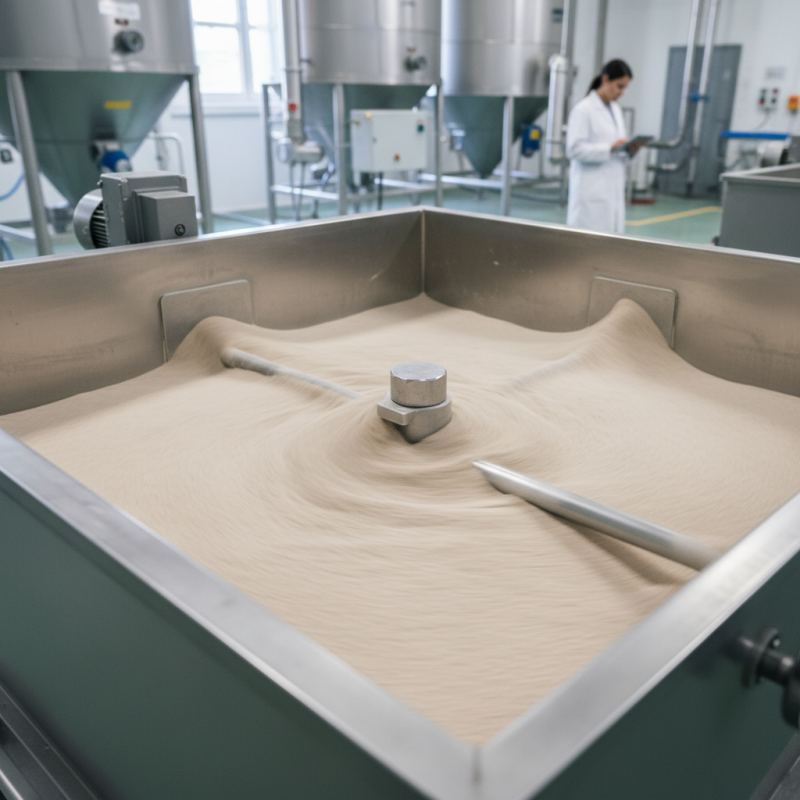
A powder mixer is a crucial piece of equipment widely used in various industries. Its primary purpose is to blend dry powders uniformly. This is important for ensuring consistency in the final product. In food production, pharmaceutical manufacturing, and cosmetic formulation, a homogeneous mixture is vital.
The operation of a powder mixer typically involves placing raw powders into the mixing chamber. The mixer then employs various designed blades to facilitate blending. Some mixers use a gentle tumbling action, while others incorporate high-shear blades for effective mixing. Various factors affect the process, such as the flow characteristics of the powders and their densities. Sometimes, achieving uniformity can be challenging due to the different particle sizes.
In practice, users might encounter issues like segregation or uneven mixing. This can lead to quality control problems. It's essential to recognize that not all mixers are suitable for every application. Understanding the specific needs of your material is critical. Choosing the right equipment requires careful consideration and expertise to minimize mixing errors. Ultimately, a powder mixer serves as a foundational tool, enabling industries to produce reliable products consistently.
The Different Types of Powder Mixers Available in the Market
When exploring the world of powder mixers, it's essential to understand the different types available. Each mixer type serves a unique purpose, catering to various industries. Batch mixers are commonly used for small quantities. They can efficiently blend powders with varying densities, ensuring homogeneity. These mixers often employ gravity and mechanical force to achieve desired consistency.
On the other hand, continuous mixers are ideal for large-scale operations. They process materials continuously, providing a steady output. This type is beneficial for industries that require a consistent production rate. Another important type is the paddle mixer, which utilizes mixing blades to agitate powders. This design allows for effective blending of dry materials, but it may require careful monitoring to prevent clumping.
While each type has its advantages, challenges exist. For example, the efficiency of a batch mixer may diminish with larger volumes. Continuous mixers, while efficient, may struggle with ingredient variability. The paddle mixer may not mix certain powders evenly, leading to inconsistent results. Knowing the strengths and weaknesses of each type is crucial for making informed choices.
How Powder Mixers Operate: Key Mechanisms and Processes
Powder mixers play a crucial role in various industries, such as pharmaceuticals and food processing. They use different mixing mechanisms to achieve uniformity in powder blends, which is essential for product quality. The most common mechanisms include tumble mixing, convective mixing, and vortex mixing. Each one has its advantages and limitations, which impact efficiency and effectiveness.
Tumble mixers rely on gravity and rotation. They are simple and cost-effective. However, they may not achieve the desired homogeneity with fine powders. On the other hand, convective mixers use mechanical agitation and can provide better particle distribution. According to a recent industry report, approximately 65% of manufacturers find convective mixers more efficient for fine powders. However, they can be more complex and require more maintenance.
Vortex mixers, while increasingly popular, demonstrate mixed performance across different applications. They create a swirling action that can effectively blend powders but may not suit all materials. Industry data indicates that 20% of users experience struggles with certain powder characteristics, which requires ongoing adjustments. Understanding these mechanisms not only helps select the right mixer but also helps improve the production process's reliability and outcome.
Applications of Powder Mixers in Various Industries
Powder mixers play a crucial role across various industries. In food production, they ensure uniform distribution of flavors and nutrients. According to a market research report, the demand for efficient mixing solutions in the food sector is projected to grow by 6% annually. This growth underscores the significance of reliability in powder processing.
In pharmaceuticals, powder mixers are vital for creating consistent formulations. Drug efficacy can hinge on the thorough blending of ingredients. A study indicated that inconsistent mixing can lead to variations in drug potency, impacting patient safety. The pharmaceutical industry requires precision to ensure quality in every batch, making reliable powder mixers essential.
The construction industry also relies on powder mixing technology. Properly mixed compounds ensure structural integrity. Reports highlight that improper mixing can lead to up to 20% waste of materials. This casts a spotlight on the crucial need for effective mixing solutions. Industries are now exploring innovative mixer designs to combat these challenges and enhance their operational efficiency.
Benefits of Using Powder Mixers for Material Blending
Powder mixers are essential tools in various industries. They efficiently blend different materials, ensuring uniformity in consistency and quality. Using a powder mixer can significantly enhance your production process. The benefits largely stem from the ability to achieve consistent blends quickly, thus saving both time and labor.
One major advantage is the reduction of human error. Manual mixing can leave behind clumps or uneven distributions of ingredients. A powder mixer minimizes these issues, leading to better quality control. In industries where precision matters, this is crucial. Moreover, it increases the efficiency of your operations, allowing for larger batches to be produced in less time.
Tips: Select a mixer that fits your material type. Different powders have unique properties. Some may require gentle blending, while others need more vigorous action. Always perform small test blends to ensure compatibility before scaling up. Regular maintenance of the mixer will also prevent unexpected downtimes, contributing to continuous productivity. Balancing speed and thoroughness is key; too fast may lead to inadequate blending. It's a fine line, but getting it right will yield better results.
Powder Mixer Usage Statistics
This bar chart illustrates the frequency of usage of powder mixers across different industries. The pharmaceuticals sector leads the usage, highlighting the importance of powder mixing in various applications.