
Top Vehicle Fire Suppression System Manufacturers?
Choosing among top vehicle fire suppression system manufacturers is not just a matter of comparing product names. A Vehicle Fire Suppression System must suit the vehicle, fire risks, operating conditions, and available installation space. A system designed for an engine compartment may not fit the needs of a bus, commercial truck, or off-road machine. The details matter: sensor placement, nozzle coverage, agent type, activation method, and maintenance access can all affect practical performance. Small details matter.
This guide introduces manufacturers and the factors buyers can use to assess them. It considers product range, application experience, technical documentation, installation support, and access to inspection and replacement parts. Readers should verify that a system’s approvals and specifications apply to their vehicle and intended market. Ask how the manufacturer validates coverage, trains installers, and supports the system after installation. Clear answers are useful; broad claims alone are not enough. Evidence matters.
No single manufacturer is the right choice for every fleet. Some specifications may look impressive on paper yet prove difficult to service in a cramped engine bay. That is worth questioning. A careful comparison should balance documented performance, compatibility, support, and total ownership needs. The aim is not to declare one universal winner, but to help readers identify credible options and ask better questions before making a safety-critical decision.
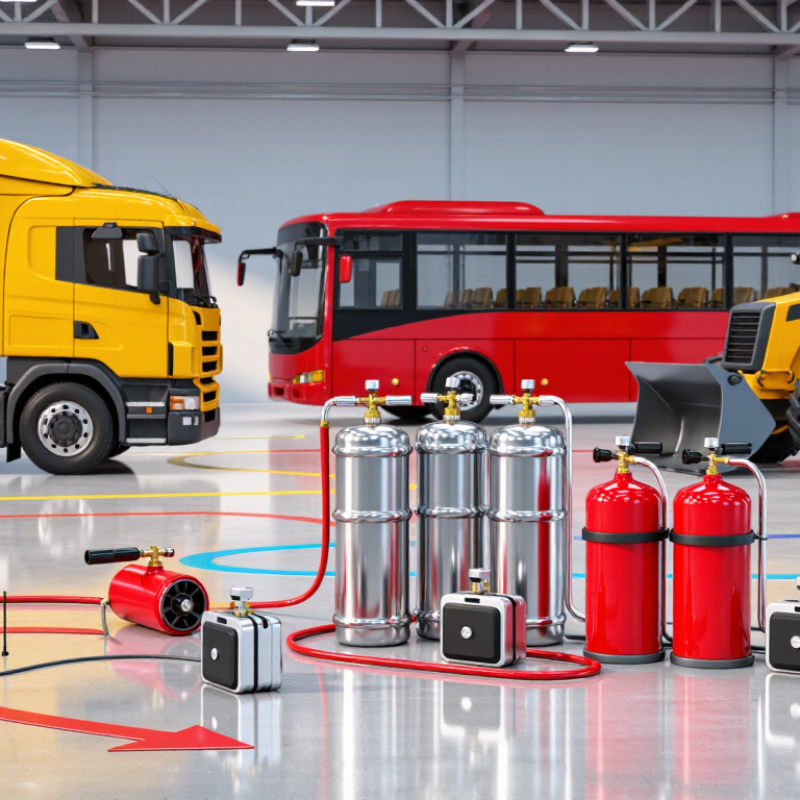
Vehicle Fire Suppression Systems: Core Components and Operation
Vehicle Fire Suppression Systems: Core Components and Operation
A vehicle fire suppression system combines detection, control, and discharge components in a compact package. Heat sensors or detection tubing monitor vulnerable areas, such as an engine bay, battery enclosure, or machinery compartment. When temperatures reach a set point, the system signals a control unit or activates through a mechanical arrangement. Some designs also provide a manual release near the operator. Placement matters. A sensor blocked by wiring or a nozzle aimed away from likely fuel sources can reduce coverage.
The agent is stored in a pressurized cylinder, then travels through pipes or flexible hoses to strategically positioned nozzles. Depending on system design, it may cool surfaces, interrupt combustion, or limit oxygen around the fire. An alarm can alert the driver, while shutdown functions may stop selected equipment if the vehicle is configured for them. Details vary by vehicle and hazard. During inspection, technicians check cylinder pressure, seals, sensor condition, hose routing, and nozzle openings. A small obstruction can matter. Systems also need suitable agent selection and professionally verified installation; suppression can control flames, but it does not guarantee that reignition is impossible. That part deserves more attention than it often gets.
Top Vehicle Fire Suppression System Manufacturers? — Vehicle Fire Suppression Systems: Core Components and Operation
| System Component or Design Factor | Typical Configuration | How It Works | Vehicle Applications and Considerations |
|---|---|---|---|
| Fire detection | May use linear heat-detection tubing or cable, discrete heat detectors, or other system-specific sensors. | Detects heat or a specified temperature condition in a protected area and initiates an alarm or suppression sequence, depending on the system design. | Detection lines are commonly routed through high-risk areas such as engine compartments. Placement must account for heat sources, vibration, and the protected-zone layout. |
| Control or actuation unit | Mechanical, pneumatic, electrical, or combined actuation, depending on system design. | Receives or responds to a detection event and releases the agent. Some systems also provide a driver warning or interface with vehicle controls. | Electrical systems may require suitable power and protected wiring. The release method and any vehicle shutdown functions should be specified for the vehicle and hazard. |
| Agent container | A pressure-rated cylinder or container holding the specified extinguishing agent and, where applicable, a propellant. | When actuated, the container releases agent into the connected distribution network. | Container location should allow secure mounting, inspection, and servicing while remaining protected from impact and excessive heat. |
| Extinguishing agent | Depending on the hazard and engineered system, options may include dry chemical, foam, water-based agents, or clean agents. | Agents control fire through mechanisms such as interrupting combustion, cooling, or suppressing flames. Their suitability depends on the materials and fire risks involved. | Agent selection should consider fuel, lubricants, electrical equipment, enclosed-space exposure, cleanup needs, and the system’s approved design. No single agent is suitable for every vehicle hazard. |
| Distribution piping or tubing | Fixed pipework or tubing connects the agent container to one or more discharge points. | Conveys the released agent to the intended protected zones. | Routing should be secured against vibration, abrasion, heat, and obstruction. Layout and component compatibility must follow the system design. |
| Discharge nozzles | Open or capped nozzles selected and positioned for the protected compartment and agent. | Direct and distribute the agent across designated hazard areas when the system discharges. | Nozzle location and orientation affect coverage. Nozzles should remain unobstructed and should not be treated as interchangeable between agents or system designs. |
| Manual release and warning devices | May include a manual release control, audible or visual alarms, and system-status indicators. | Manual controls can provide a means to initiate discharge; alarms can alert the operator to a detected fire or system activation. | Controls should be accessible to the operator but protected against accidental operation. Features vary among system configurations. |
| Protected zone and system sizing | Defined areas such as an engine compartment, auxiliary power unit area, or selected machinery enclosure. | The system is designed to deliver an appropriate agent quantity and distribution to the specified hazard area. | Vehicle type, compartment geometry, openings, fuel and lubricant sources, and airflow can affect design. A system intended for one zone does not automatically protect the entire vehicle. |
| Inspection and maintenance | Scheduled checks of the container, detection components, actuators, pipework, nozzles, alarms, and system status. | Inspection helps identify damage, obstruction, leakage, or other conditions that may impair readiness. | Follow the system manufacturer’s service instructions and applicable vehicle, workplace, and fire-safety requirements. Inspection intervals depend on the system and jurisdiction. |
Note: Vehicle fire suppression systems are engineered for specific hazards and protected zones. Component choices and operating sequences vary by system; installation, testing, and servicing should follow the system documentation and applicable requirements.