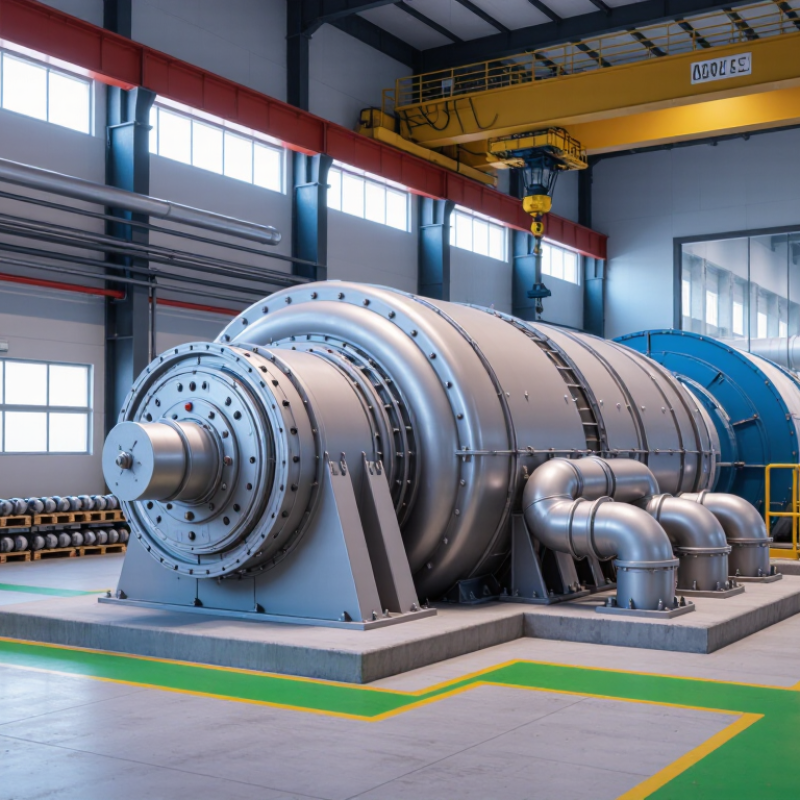
China Top Turbine Generator for WTE How to Choose?

Choosing a China-based Turbine Generator for waste-to-energy projects requires more than comparing catalogue prices. A suitable Turbine Generator For Wte must match the plant’s steam conditions, waste composition, operating hours, and grid requirements. Incineration plants often produce steam with unstable pressure and temperature. Flue gas contaminants can also increase corrosion risks. These details directly affect turbine life, efficiency, and maintenance costs.

Look beyond rated output. Review inlet pressure, exhaust pressure, rotational speed, generator insulation, cooling method, and control-system compatibility. Ask suppliers for performance curves under part-load conditions. A unit rated at 12 MW may perform differently when the plant operates at 70% capacity. Consider vibration monitoring, emergency shutdown logic, spare-parts availability, and service response time. Small technical gaps can become expensive outages.

Evidence matters. Request tested data, reference projects, inspection records, and clear warranty terms. If possible, visit a comparable facility and speak with its operators. Confirm whether the manufacturer follows applicable IEC, ISO, and local grid requirements. These standards do not replace proper engineering review. They support it.

A reliable supplier should explain limitations, not hide them. Some brochures appear overly optimistic. That deserves careful questioning. Independent inspection can verify materials, balancing, and factory testing before shipment. Site conditions may also expose weaknesses that factory tests cannot reveal. The best choice combines proven design, transparent documentation, responsive support, and realistic lifecycle calculations. The cheapest offer may not be the lowest-cost solution. In practice, dependable operation usually comes from disciplined evaluation rather than impressive specifications.

China Top Turbine Generator for WTE How to Choose?

What Is a Turbine Generator in a Waste-to-Energy Plant?

China Top Turbine Generator for WTE: How to Choose?

A turbine generator in a waste-to-energy plant converts steam energy into electricity. Waste burns in a controlled boiler, producing high-pressure steam. The steam expands through turbine blades and turns a shaft. That shaft drives an electrical generator. In simple terms, the turbine handles heat and pressure. The generator handles rotation and current.

The U.S. Environmental Protection Agency reports that a typical waste-to-energy facility can generate about 550 kilowatt-hours per ton of municipal solid waste. However, actual output depends on moisture, heating value, steam conditions, and operating hours. The World Bank’s What a Waste 2.0 report estimated 2.01 billion tonnes of municipal waste in 2016. It also projects 3.40 billion tonnes by 2050. This growth makes dependable conversion equipment increasingly important. A suitable turbine should match the boiler’s steam flow, pressure, temperature, and expected load profile. Corrosion resistance matters because waste combustion can create aggressive compounds. My early design assumption was that higher pressure always meant better efficiency. It was incomplete. Stable operation can matter more than peak ratings.

Tips: Check annual operating hours, steam quality, generator efficiency, grid requirements, and maintenance access. Ask for verified performance data under similar waste conditions. Leave practical margin, but avoid oversized equipment. It may run inefficiently at partial load.

How to Define Your WTE Turbine Generator Requirements

China Top Turbine Generator for WTE: How to Choose?

Defining requirements starts with waste, not the turbine catalogue. UNEP’s Global Waste Management Outlook 2024 estimates 2.3 billion tonnes of municipal waste were generated worldwide in 2023. By 2050, this could reach 3.8 billion tonnes. Your plant must therefore measure waste composition, moisture, lower heating value, and seasonal changes. A wet winter waste stream may reduce boiler output sharply. Do not rely on one laboratory sample.

Small details matter. Record planned throughput in tonnes per hour, annual operating hours, and required electricity export. Then define steam pressure, temperature, flow, extraction demand, and condenser conditions. Many grate-fired WTE systems use moderate steam conditions, often around 4–6 MPa and 380–450°C, to balance efficiency with corrosion risk. Higher parameters may improve output, but they can increase tube damage and maintenance costs. The attractive option is not always the dependable one.

The generator must match the grid connection, voltage, frequency, power factor, protection scheme, and islanding requirements. Request heat-rate curves, vibration limits, overspeed protection, start-up time, and guaranteed efficiency at partial load. The IEA’s World Energy Outlook 2023 highlights the growing importance of efficient energy systems and flexible generation. Still, projected performance can look better than field performance. Ask for independently verified references, maintenance records, and test procedures. A careful buyer should also model five-year availability, spare-part access, and outage losses. That is where many evaluations become incomplete.

China Top Turbine Generator for WTE: How to Choose? — How to Define Your WTE Turbine Generator Requirements

Requirement Dimension Key Data to Define Typical WTE Reference Range Why It Matters for Selection Recommended Specification Input
Waste Throughput Daily waste treatment capacity and annual operating hours 300–3,000 tonnes/day; 7,000–8,000 h/year Determines the available steam flow and the required turbine-generator capacity. State the normal, minimum, and maximum waste throughput, including planned maintenance periods.
Waste Heating Value Lower heating value of the municipal solid waste Approximately 6–12 MJ/kg Higher heating value generally produces more steam, while low heating value may require auxiliary firing or reduced load. Provide seasonal design values, including minimum, average, and maximum LHV based on a representative waste analysis.
Boiler Steam Production Steam flow rate supplied to the turbine Approximately 20–150 t/h per plant, depending on capacity The turbine must operate efficiently across the expected steam-flow range without excessive throttling losses. Specify continuous, maximum, and minimum steam flow, plus allowable flow fluctuation.
Main Steam Pressure Pressure at the turbine inlet, normally measured upstream of the stop valve Commonly 3.5–6.5 MPa(a) Inlet pressure affects turbine output, stage design, moisture formation, and plant efficiency. Define normal and design pressure, pressure tolerance, and the expected pressure drop between the boiler and turbine.
Main Steam Temperature Temperature at the turbine inlet Commonly 380–450°C Higher temperature can improve efficiency but requires suitable materials, sealing, lubrication, and control systems. Provide normal temperature, minimum allowable temperature, maximum temperature, and start-up limitations.
Exhaust Pressure Pressure at the turbine exhaust or condenser inlet Condensing service: approximately 5–15 kPa(a) Lower exhaust pressure usually increases power output but requires adequate cooling capacity and condenser performance. Specify design back pressure, seasonal cooling-water or air temperature, and allowable exhaust-pressure rise.
Turbine Configuration Condensing, extraction-condensing, back-pressure, or combined configuration Condensing and extraction-condensing are common for electricity-focused WTE plants The configuration must match the plant’s electricity, district-heating, process-steam, or flue-gas-treatment requirements. Identify whether the plant needs electricity only, controlled steam extraction, district heating, or process steam.
Rated Generator Output Continuous electrical output at the design steam condition Approximately 5–50 MW for many medium-sized WTE plants Generator size must match turbine output, auxiliary consumption, grid-export targets, and future operating margins. Define gross output, net export output, power factor, overload duration, and expected auxiliary power demand.
Electrical Frequency Grid frequency and generator rated speed 50 Hz or 60 Hz; typical synchronous speeds include 3,000/3,600 rpm or 1,500/1,800 rpm Frequency determines generator speed, pole number, synchronization requirements, and compatibility with the local grid. Provide grid frequency, voltage, allowable frequency variation, and the required generator speed.
Generator Voltage Rated terminal voltage and connection arrangement Common medium-voltage levels include 6.3 kV, 10.5 kV, or 11 kV Voltage must coordinate with the plant switchgear, step-up transformer, protection system, and grid interconnection point. Specify generator voltage, insulation level, neutral grounding method, short-circuit requirements, and transformer interface.
Grid Connection Export limit, synchronization method, protection, and dispatch requirements Project- and utility-specific Grid-code compliance affects excitation, governor response, voltage regulation, protection, and commissioning tests. Obtain the utility’s grid-connection code and list required functions such as under-frequency, over-voltage, and anti-islanding protection.
Cooling System Water-cooled or air-cooled condenser; cooling temperature and flow Selection depends on water availability, ambient conditions, and local environmental constraints Cooling conditions strongly influence exhaust pressure, annual energy production, condenser size, and operating stability. Provide design ambient temperature, cooling-water temperature or dry-bulb temperature, water quality, and seasonal conditions.
Steam Quality Steam dryness, carryover risk, chemistry, and cleanliness Dry saturated or superheated steam; moisture at final stages must be controlled Water droplets and contaminants can cause erosion, deposits, corrosion, and efficiency loss in turbine stages. Define steam purity limits, sodium and silica limits, conductivity, dissolved oxygen, and boiler carryover controls.
Operating Flexibility Minimum stable load, ramp rate, start-up frequency, and load-following capability Often designed for approximately 40–100% load operation, subject to the final design WTE plants experience variable waste quality and steam production, so flexible operation helps maintain reliable generation. Specify minimum load, ramp-up and ramp-down rates, hot and cold start times, and permitted daily starts.
Annual Availability Target operating availability and planned outage duration Typically targeted above 8,000 operating hours/year where site conditions permit Availability directly affects waste-treatment continuity, power revenue, and compliance with waste-disposal obligations. Define the annual availability target, planned outage window, critical spare parts, and service response requirements.
Steam Extraction Requirements Extraction pressure, temperature, flow, and control range Project-specific; commonly linked to district heating or process-steam demand Extraction changes the power output and must be coordinated with turbine stage design and control valves. List each extraction point, normal and maximum flow, pressure tolerance, temperature requirement, and priority of heat supply.
Control and Protection Digital turbine control, overspeed trip, emergency stop, vibration monitoring, and interlocks Designed according to applicable electrical, pressure-equipment, and machinery standards Independent protection and reliable control are essential for safe operation during steam, electrical, or cooling-system disturbances. Specify control-system architecture, overspeed protection, trip logic, vibration limits, bearing-temperature monitoring, and data interfaces.
Material and Corrosion Resistance Materials for steam-path components, casing, valves, condenser, and auxiliary systems Selected according to steam temperature, chemistry, chloride exposure, and operating environment WTE facilities can have challenging water chemistry and corrosive environments, making material selection important for service life. Request material grades, corrosion allowances, surface treatments, welding procedures, and inspection documentation.
Efficiency and Heat Rate Gross and net electrical efficiency or specific steam consumption Project-specific; net efficiency is commonly lower than gross efficiency because of plant auxiliaries Net efficiency provides a more realistic comparison because fans, pumps, flue-gas treatment, and waste handling consume power. Compare guaranteed net output and heat rate at design, average, minimum, and seasonal operating conditions.
Installation and Maintenance Foundation loads, equipment dimensions, lifting access, inspection access, and maintenance intervals Determined by turbine size, speed, casing arrangement, and site layout Installation constraints and maintenance access affect project cost, outage duration, and long-term availability. Provide available equipment-room dimensions, crane capacity, transport limits, foundation data, and maintenance philosophy.
Standards and Documentation Applicable design, testing, electrical, pressure, and quality-assurance standards May include relevant IEC, ISO, ASME, EN, and local utility requirements Clear standards prevent disputes over performance testing, safety requirements, manufacturing quality, and acceptance criteria. List mandatory local codes, factory-test requirements, performance-guarantee conditions, drawings, manuals, and certificates.

Which Technical Specifications Should You Compare?

China Top Turbine Generator for WTE: How to Choose?

Waste-to-energy projects need more than a high nameplate output. UNEP and ISWA’s Global Waste Management Outlook 2024 estimates 2.3 billion tonnes of municipal solid waste were generated in 2023. Variable waste moisture changes the boiler’s steam flow every day. Compare rated power against minimum and continuous operating loads. Then check steam inlet pressure, temperature, exhaust pressure, and allowable extraction flow.

Small differences matter. IEA Bioenergy Task 36 reports that electricity-only WTE plants commonly achieve about 15–30% net electrical efficiency. The exact result depends on steam conditions, plant integration, and internal consumption. Ask for guaranteed heat rate, generator efficiency, availability, and performance at partial load. A turbine designed for stable coal-like conditions may respond poorly to changing waste heat. Not every impressive datasheet reflects site reality.

Corrosion resistance also deserves close attention. The European Commission’s 2019 Best Available Techniques Reference Document for Waste Incineration emphasizes monitoring steam systems, flue-gas conditions, and operational stability. Compare turbine materials, blade protection, drainage design, vibration limits, and inspection intervals. Check whether the generator matches local grid frequency, voltage, protection requirements, and synchronization procedures. Request test data from similar waste compositions. A clean spreadsheet can still mislead. Include installation support, spare-part lead times, and training in the technical comparison.Winvalid

China Top Turbine Generator for WTE: Which Technical Specifications Should You Compare?

Representative benchmark for waste-to-energy turbine-generator configurations. Compare net electrical output, steam flow, inlet steam conditions, and electrical efficiency before selecting a unit.

Larger WTE units generally require higher steam flow and generator capacity. Steam inlet pressure and temperature affect efficiency and material requirements, while net electrical efficiency indicates how effectively the turbine converts available steam energy into exportable power.

How to Evaluate China’s Top Turbine Generator Manufacturers

China Top Turbine Generator for WTE: How to Choose?

Evaluating China’s top turbine generator manufacturers requires more than comparing price and rated output. Begin with WTE operating conditions. Waste-derived steam may contain chlorides, dust, and moisture. Ask whether the proposed turbine handles variable steam flow, frequent starts, and corrosive environments. Request performance data from comparable waste-to-energy plants, not only laboratory results. Real operating records matter.

Inspect the manufacturer’s engineering depth. Review the turbine heat balance, rotor material, sealing design, vibration limits, and generator cooling system. Check whether the supplier can match local grid requirements and provide complete control documentation. Factory acceptance testing should include overspeed protection, vibration checks, insulation tests, and load simulations. Visit the production site if possible. A clean workshop does not prove everything, but poor traceability is a warning.

Reliable support is equally important. Confirm spare-part availability, response times, remote diagnostics, and technician coverage during commissioning. Ask for references with at least twelve months of operating data. Review warranty exclusions carefully, especially those involving steam quality and operating cycles. One practical mistake is trusting efficiency figures without checking measurement conditions. I have seen attractive proposals become less convincing after comparing exhaust pressure and seasonal load changes. Some evaluations also overlook operator training, which can affect long-term performance. Good manufacturers explain limitations clearly, even when that weakens their sales case.

How to Verify Quality, Service, and Total Project Value

China Top Turbine Generator for WTE: How to Choose?

Waste-to-energy projects demand more than an attractive turbine price. The World Bank’s What a Waste 2.0 reports 2.01 billion tonnes of municipal waste were generated globally in 2016. It projects 3.40 billion tonnes by 2050. This growth increases demand, but waste composition remains unpredictable. A suitable turbine generator must tolerate changing steam flow, pressure, moisture, and corrosive compounds.

Verify quality through documented evidence, not factory promises. Request material certificates, rotor balancing records, welding qualifications, and IEC 60034 generator test reports. Use ASME PTC 6 procedures for acceptance testing where applicable. Check guaranteed output, heat rate, vibration limits, and emissions-related operating conditions. An independent inspector should witness factory testing. Small details matter. A missing calibration record can weaken an otherwise impressive proposal.

Service quality directly affects project value. Request a clear response time, commissioning plan, training schedule, and critical-spares list. Review operating references with similar waste characteristics, not only similar capacity. The World Bank estimates global waste-management costs could reach 375 billion dollars annually by 2050. Therefore, compare lifecycle cost over 15 to 25 years, including parasitic power, degradation, downtime, maintenance, and disposal of major components. A lower purchase price may hide higher operating losses.

We should admit one weakness: predicted availability is never guaranteed by equipment alone. Fuel preparation, operators, water quality, and maintenance discipline can change the result.

REQUEST A QUOTE

Menu
[all-fields]