

- 713.590.1312
- sale@pandbtools.com
How to Choose Aluminum Profile for Pergola?
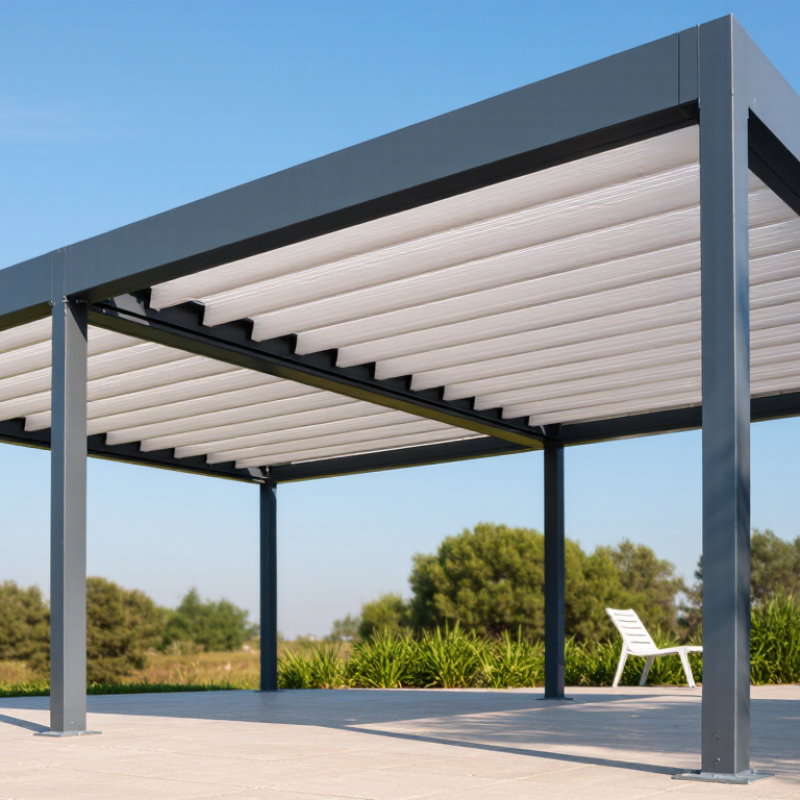
Choosing the right Aluminum Profile For Pergola is more than comparing wall thickness or surface finish. The profile must support the roof, resist wind, and remain stable through temperature changes. A beautiful pergola can still fail when its frame is undersized.
Experienced installers usually begin with the span, roof material, drainage design, and local climate. A coastal project may need stronger corrosion protection than a sheltered garden installation. In hot regions, thermal expansion deserves attention. Aluminum expands noticeably under direct sunlight. Allow movement where the design requires it. Small details matter. Check the alloy, temper, dimensions, load capacity, connection method, and manufacturer’s technical data before ordering. Do not rely on appearance alone. A thick-looking profile may have poor internal geometry, while a lighter profile may perform better with reinforced ribs. This is easy to overlook.
The surface finish also affects long-term satisfaction. Powder coating offers color flexibility, but preparation quality controls durability. Dark colors can absorb more heat and may reveal dust or scratches. A matte finish hides minor marks better. However, it may not suit every architectural style. Consider maintenance, fasteners, corner joints, and water outlets as one complete system. If the pergola carries glass, louvers, lighting, or retractable fabric, confirm every added load. Manufacturer guidance is valuable, but unusual spans should be reviewed by a qualified structural professional. There is no universal profile. The best choice balances safety, appearance, budget, installation skill, and expected service life. Mistakes happen. Careful checking reduces them.
Define the Structural Requirements of the Pergola
Choosing an aluminum profile for a pergola starts with its structural requirements, not its appearance. Record the span, bay spacing, roof weight, wind exposure, snow load, and connection method. ASCE 7-22 identifies wind, snow, seismic, and rain loads as key design actions. Local building rules may change the required values. A coastal site, for example, needs different assumptions from a sheltered garden.
Aluminum has a typical density of 2.70 g/cm³, according to The Aluminum Association’s Aluminum Standards and Data. This makes profiles much lighter than steel, but lighter does not mean automatically stronger. Check bending strength, deflection, buckling, and bolt-bearing capacity. A long, slim beam may carry the load yet visibly sag. I have seen drawings ignore drainage hardware and shade panels. Those small additions can change the load path. The first profile size chosen is often not the final one.
Tips: Measure the actual span. Mark the support points. Ask a structural engineer to verify local wind and snow values. Use a profile with enough section depth, rather than only increasing wall thickness. Review the 2024 International Building Code or the applicable local code before fabrication. Connections deserve equal attention. A strong beam can still fail at a weak base plate. Allow for thermal movement, corrosion exposure, and imperfect site alignment. Real installations are rarely as tidy as drawings.

Compare Aluminum Profile Shapes, Sizes, and Wall Thicknesses
Choosing an aluminum profile for a pergola starts with its shape, not its appearance alone. Rectangular hollow profiles suit main beams because their deeper side resists bending efficiently. Square profiles work well for posts and smaller braces. Round profiles create softer lines, but connecting them can require more complex brackets and careful drilling.
Size must match the pergola’s span, roof weight, and local wind or snow loads. A 100 × 50 mm beam may suit a small residential opening, while wider spans often need deeper sections or intermediate supports. Bigger is not always better. Oversized profiles add cost and visual heaviness without solving poor connection design. I once focused too much on beam size and overlooked post anchoring. That was a useful mistake.
Wall thickness affects stiffness, screw holding, and resistance to local dents. For many outdoor structures, 2–4 mm walls are common, but the correct value depends on alloy strength, span, fastener placement, and exposure. Thin walls may twist near brackets. Thick walls may increase weight and machining effort. Check whether the profile is reinforced at corners or internally hollow. It matters. Before ordering, compare supplier load tables with a qualified structural review, especially for coastal sites or large retractable roofs. Test-fit the joint details on paper first; elegant profiles can still fail at weak connections.
How to Choose Aluminum Profile for a Pergola?
Compare common hollow aluminum profile shapes, sizes, and wall thicknesses by their estimated linear weight. Larger sections and thicker walls generally provide greater stiffness and load capacity, but they also increase material use and structural weight.
Estimated mass is based on uniform hollow-section geometry and an aluminum density of approximately 2.70 kg/L. Actual extruded profiles may vary because of internal chambers, corner radii, grooves, and reinforcements. Final sizing should be checked for local wind, snow, span, and connection requirements.
Select an Alloy and Finish for Climate and Appearance
Choosing an aluminum profile for a pergola starts with the local climate, not appearance alone. The alloy affects strength, extrusion quality, and long-term stability. For many residential pergolas, 6063 aluminum offers clean lines and good forming performance. Its smooth surface also supports attractive architectural finishes. In areas with heavy wind or larger spans, a stronger alloy may be more suitable. However, strength alone does not guarantee a durable structure.
Climate should guide the finish selection. Near saltwater, choose a carefully prepared anodized or powder-coated surface. Proper pretreatment matters because salt can attack weak coating systems and exposed edges. Anodizing creates a hard, metallic-looking layer with consistent color variation. Powder coating provides more color choices and a softer visual effect. In very sunny climates, lighter colors usually absorb less heat than dark tones. Dark finishes can become uncomfortable beneath direct summer sun. I have seen beautiful black pergolas lose some visual appeal after fading begins.
Appearance also depends on surrounding materials. A matte finish can hide fingerprints and minor marks better than a high-gloss surface. Ask for coating specifications, including surface preparation and expected color performance. Inspect a physical sample outdoors, not only on a bright screen. Small differences become obvious beside stone, wood, or rendered walls. One practical detail deserves attention: use compatible fasteners to reduce galvanic corrosion. I would not treat any finish as maintenance-free. Even a well-selected profile needs periodic washing, especially in coastal or dusty locations.
Match Profile Capacity to Span, Load, and Connection Design
How to Choose Aluminum Profile for Pergola?
Match Profile Capacity to Span, Load, and Connection Design
A pergola profile must suit its clear span, applied loads, and connection method. A longer span increases bending and deflection quickly. Roof weight, wind pressure, rainwater, lighting, and climbing plants can add unexpected loads. Snow regions require careful assessment. Do not select a section by appearance alone. Check its moment of inertia, section modulus, wall thickness, alloy temper, and unsupported length against an engineer’s calculations.
Connections often decide whether the frame performs safely. A thick profile may still fail when screws tear through a thin wall. Bolted joints need adequate edge distance, washers, and bearing area. Corner brackets should transfer shear and uplift without crushing the aluminum. Hidden fasteners look clean, but they may be difficult to inspect or tighten. Keep that trade-off visible.
Hidden fasteners look clean, but they may be difficult to inspect or tighten. Keep that trade-off visible.
Field measurements matter. Record the actual span, post spacing, roof pitch, and attachment points before ordering material. Allow for thermal movement, especially on long sun-exposed beams. I have seen designs look generous on paper yet feel flexible after installation. That mistake is easy to make. It deserves a second calculation. A qualified structural professional should verify deflection, connection strength, anchorage, and local environmental loads before fabrication.
Verify Standards, Fabrication Needs, and Long-Term Maintenance
How to Choose Aluminum Profile for Pergola?
Choosing an aluminum profile starts with verification, not appearance. Check the structural standard required in your region. Confirm wind, snow, rain, and connection loads with a qualified engineer. Ask for alloy, temper, wall thickness, and coating documentation. A smooth finish proves little.
Fabrication needs can change the profile choice. Measure spans, corner joints, drainage paths, and fixing points before ordering. Deep profiles may resist deflection better, but they need suitable cutting and connection tools. Thin walls can deform around bolts. I have seen attractive frames fail because installers ignored screw spacing. Small details matter.
Also, confirm cutting tolerances and whether welding is permitted. Heat can weaken certain aluminum tempers. Mechanical joints are often easier to inspect and replace.
Long-term maintenance deserves equal attention. Select a finish suited to local exposure, especially near saltwater or industrial pollution. Rinse exposed surfaces with clean water several times yearly. Use mild soap and soft cloths, not abrasive pads. Inspect joints, caps, sealants, and drainage openings after severe weather.
White corrosion marks may signal trapped moisture or coating damage. Do not assume a premium coating eliminates maintenance. I once underestimated leaf buildup beneath a roof panel; the blocked drainage caused avoidable staining.
A maintenance schedule should include photographs, fastener checks, and early touch-up decisions. Inspect it before problems become expensive.