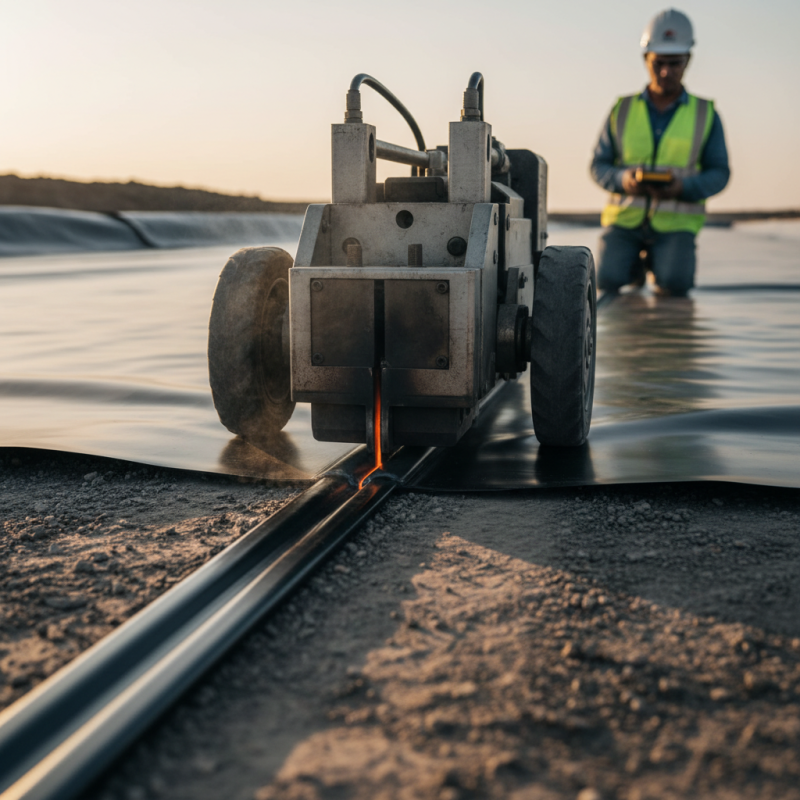
What is a geomembrane welding machine and how does it work?
The geomembrane welding machine plays a crucial role in various industries. This equipment is designed to join geomembranes effectively. These membranes are essential for environmental protection and containment applications.
A geomembrane welding machine uses heat to create strong bonds between plastic sheets. The process can vary, but it typically involves heating the edges until they melt. Once they cool, the connection is durable and watertight. The technology may seem simple, but achieving perfection in welding can be tricky.
Many factors affect the quality of the weld. Temperature control is critical. Too hot, and the material may burn; too cold, and it won't fuse. Operators must monitor these variables closely. Mistakes in this process can lead to leaks and failures. It's vital to understand both the equipment and the material. More training is often necessary to ensure optimal results.
What is a Geomembrane Welding Machine?
A geomembrane welding machine is an essential tool in construction and environmental projects. It is designed to join geomembranes made of materials like HDPE, PVC, or EPDM. These materials are often used in landfill liners, water containment systems, and tunneling projects. According to industry reports, the global geomembrane market is projected to reach $3.4 billion by 2026. This growth highlights the increasing reliance on effective sealing solutions.
The welding process involves the use of heat, cold, or chemical bonding methods. Many machines utilize hot air or extrusion welding methods. These techniques ensure that the seams are strong and durable. Operators must adjust temperature settings for different materials. Misalignment can lead to weak seams, resulting in leaks. Reports indicate that improper welding is a leading cause of geomembrane failures. Care must be taken during installation to avoid these pitfalls.
While geomembrane welding machines are vital, challenges remain. Many operators lack sufficient training. This can affect the quality of welds and overall project success. Additionally, not all projects have access to the latest technology. Older machines may struggle with precision. Addressing these shortcomings is crucial for improving installation outcomes. Investing in operator education can mitigate these risks.
Key Components of a Geomembrane Welding Machine
A geomembrane welding machine is essential in the construction and environmental sectors. It is designed to join geomembranes, materials used for waterproofing and containment. The key components of such machines determine their effectiveness and efficiency.
One vital component is the heating element. It melts the edges of geomembranes for seamless fusion. These machines often use hot air or extrusion welding methods. Data from industry reports show that well-executed welds can achieve lap shear strengths exceeding 70 psi. Another critical part is the pressure rollers. They ensure proper contact between the materials, promoting a uniform bond.
Tips: Regular maintenance of the heating element is crucial. Contamination can impact weld quality. Also, operators should be trained effectively. Poor technique can lead to weak joints, affecting project integrity.
Another essential component is the control system. It regulates temperature and speed during the welding process. An effective control system helps prevent overheating, which can cause deformation. Machine operators should monitor settings closely. Small adjustments can lead to significant differences in weld performance. Investing in robust training pays off. Properly trained operators can detect issues early, reducing waste and rework.
Working Principle of Geomembrane Welding Machines
A geomembrane welding machine primarily functions to create seals between geomembrane sheets. These machines utilize heat, hot air, or solvents to join materials. By applying pressure and temperature, the seams become airtight and waterproof.
The working principle involves heating the edges of two geomembrane sheets until they reach the welding temperature. Next, a pressure roller is often used to press the heated surfaces together. This method guarantees a strong bond. The temperature and pressure must be carefully controlled to avoid damage. If it's too hot, materials can melt away. If it's too cold, the bond may fail.
Precision is crucial. A slight error can lead to leaks later on. These machines often come with digital displays to monitor settings. However, operators must remain vigilant. Experience plays a significant role in achieving a perfect weld. Regular maintenance of the machine is necessary. Neglecting this can lead to inconsistent performance. Understanding the nuances of the welding process is vital for any project.
Comparison of Geomembrane Welding Machines by Machine Type
Types of Welding Techniques Used in Geomembrane Welding
Geomembrane welding is crucial for creating effective waterproof barriers in various applications, such as landfills and ponds. Several welding techniques are employed in this process, each with its unique advantages. Heat welding is the most popular, utilizing a heat tool to melt the edges of geomembranes together. This method is efficient and guarantees strong seams when performed correctly.
Another technique is extrusion welding. This process involves feeding molten plastic material directly into the joint area. It's particularly useful for repairing geomembranes or creating larger seams. A report by the Geosynthetic Research Institute states that extrusion welding can achieve seam strengths up to 90% of the base material.
Finally, there’s ultrasonic welding. This method uses high-frequency vibrations to create heat at the seam interface. It's fast and suitable for thinner geomembranes. However, it can be less effective on thicker materials. As noted in some industry analyses, careful consideration of the material type and environmental conditions is essential for optimal performance. Welding geomembranes is not flawless; often, operators encounter difficulties that require skill and experience to resolve.
What is a geomembrane welding machine and how does it work? - Types of Welding Techniques Used in Geomembrane Welding
| Welding Technique | Description | Common Applications | Advantages |
| Hot Air Welding | Uses heated air to melt the edges of geomembranes to create a bond. | Landfills, ponds, and basins. | Flexible, suitable for various thicknesses. |
| Extrusion Welding | Involves melting a filler material that is extruded into the joint of the geomembrane. | Repairing damaged areas, joining sheets. | Strong joints, effective for larger repairs. |
| Miller Welding | Uses a handheld device to weld geomembranes with high-frequency energy. | Water reservoirs, containment structures. | Fast welding speed, minimized thermal distortion. |
| Ultrasonic Welding | Utilizes high-frequency ultrasonic waves to melt plastic parts together. | Small-scale applications, seam sealing. | Highly precise, good for intricate designs. |
Applications of Geomembrane Welding in Various Industries
Geomembrane welding plays a crucial role in many industries. It's essential for containment and protection. These machines specialize in joining geomembranes, often made from polymer materials, ensuring watertight seals. They are widely used in landfills, water reservoirs, and even mining operations.
In environmental applications, geomembranes prevent leakage. This is vital for preserving groundwater quality. In the construction sector, these membranes support waterproofing and soil stabilization. Their application can vary significantly, depending on the specific project needs.
Tips: Always conduct a thorough site analysis. Understanding the environment helps choose the right materials. This foresight can save time and costs down the line. Remember that not all welding techniques are equal. Some may be more suited for specific conditions. Testing seams under various conditions is often neglected but essential.