What is a Compact Wheel Loader and How Does It Work?
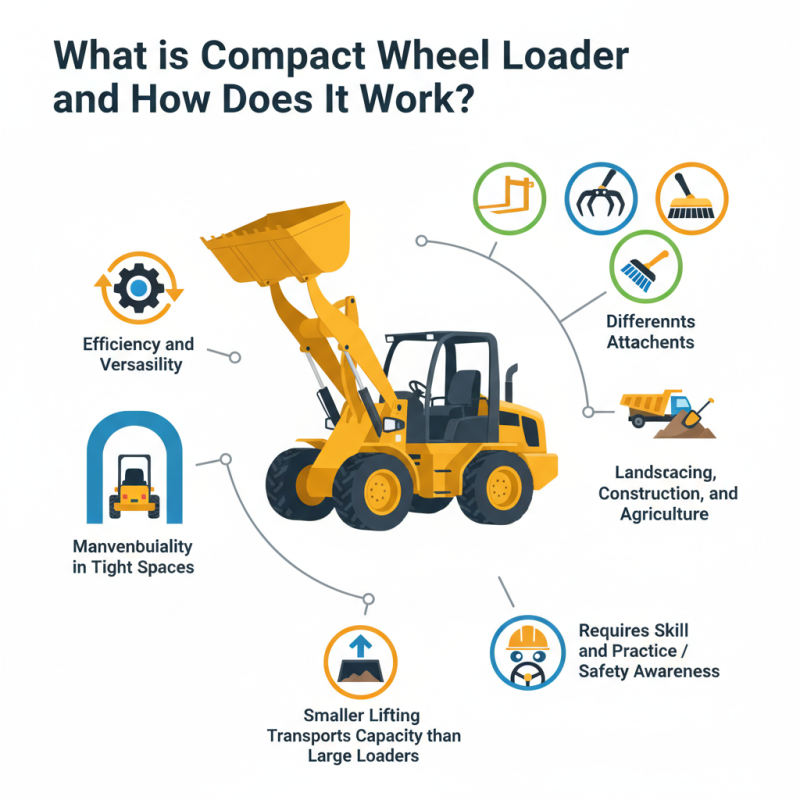
A Compact Wheel Loader is an essential piece of machinery in various industries. These machines are designed for versatility and efficiency. They are smaller than traditional loaders but pack a powerful punch. Their compact size allows them to maneuver easily in tight spaces.
Compact Wheel Loaders are equipped with a bucket at the front, which can lift and transport materials. Many models can also accommodate different attachments. This adaptability makes them suitable for landscaping, construction, and even agriculture. However, they may not have the same lifting capacity as larger loaders.
The operation of a Compact Wheel Loader requires skill and practice. Operators must be aware of their surroundings to avoid accidents. Improper use can lead to equipment damage or injury. Understanding how to effectively utilize this machine is crucial for optimal performance. Overall, while they present numerous advantages, there are challenges that come with operating a Compact Wheel Loader.
What Defines a Compact Wheel Loader?
A compact wheel loader is designed for efficiency in tight spaces. Its size can significantly enhance maneuverability, making it ideal for urban construction sites or landscaping projects. With a smaller wheelbase, these machines can easily navigate through narrow paths and doorways. The versatility is notable; they can lift, dig, and move materials with ease.
What truly defines a compact wheel loader is its strength relative to size. Despite being smaller, these loaders often boast powerful engines and hydraulic systems. Many models have a lifting capacity sufficient to handle hefty loads. The quick-attach feature for various attachments, like forks and buckets, enhances their functionality. However, some operators might find their limited reach challenging, especially in larger projects.
User experience can vary; not everyone is comfortable with handling compact machinery. Training and practice are crucial to master the controls. Some operators may initially struggle with visibility and positioning. Reflection on these challenges helps improve skill and confidence over time. A deeper understanding of the machinery's capabilities leads to better decision-making on the job.
Key Features and Advantages of Compact Wheel Loaders
Compact wheel loaders are versatile machines used in construction and landscaping. They are smaller than traditional loaders but pack a powerful punch. These machines excel in tight spaces where larger equipment cannot operate. Their ability to maneuver easily makes them ideal for urban environments or confined job sites.
Key features of compact wheel loaders include their powerful hydraulic systems. These systems allow for efficient lifting and movement of materials. Another notable aspect is their articulated steering, which enhances their maneuverability. Additionally, many compact wheel loaders come with various attachments. This flexibility enables them to perform multiple tasks, such as digging and hauling.
Tips: Always consider the load capacity before choosing a machine. Understand the specific needs of your project. Proper training on operating compact wheel loaders is crucial for safety. Take time to practice in diverse conditions, which can enhance your skills. This machine is a blend of power and efficiency, providing an edge in many applications.
How Compact Wheel Loaders Operate: Mechanisms and Functions
Compact wheel loaders are versatile machines used in various construction and landscaping projects. They feature a small size and powerful capabilities, which makes them ideal for tight spaces. These loaders are equipped with a bucket or attachment at the front, allowing operators to lift, move, and transport materials like dirt, gravel, and debris efficiently.
The operation of a compact wheel loader relies on hydraulic systems. When the operator controls the joystick, these systems raise or lower the bucket. The hydraulic cylinders push fluid to create the necessary force. This mechanism enables smooth and precise movements. Operators must learn to navigate the controls effectively. Sometimes, this takes time and practice to master.
The loader's maneuverability adds to its charm. It can turn easily in small areas, which is crucial on crowded job sites. However, inexperienced operators may struggle with sharp turns or uneven terrain. Mistakes can lead to accidents or damage to the loader. Therefore, understanding the machine’s limits is key to effective operation. It's a continuous learning experience that requires attention and adaptability.
Common Applications of Compact Wheel Loaders in Various Industries
Compact wheel loaders are versatile machines commonly used in various industries. They are especially valuable in construction, landscaping, and agriculture. In construction, these loaders move materials like dirt, gravel, and debris. Their ability to access tight spaces makes them ideal for small job sites. Many operators find that using a compact wheel loader speeds up material handling tasks significantly.
In landscaping, the use of compact wheel loaders allows for quick earthmoving and site preparation. They can load soil, mulch, and rocks efficiently. Operators often appreciate how easily these machines maneuver in residential areas. However, some may note that their smaller size limits lifting capacities compared to larger equipment. Awareness of these limitations is essential for effective use.
The agricultural industry benefits as well, using these loaders for tasks such as feeding livestock or managing grain. Their versatility allows farmers to switch attachments quickly. Yet, some operators might struggle with attachment compatibility across different tasks. This can lead to downtime, which is frustrating. Being mindful of these operational nuances is important for maximizing productivity.
Maintenance Tips for Optimal Performance of Compact Wheel Loaders
Compact wheel loaders are versatile machines that require regular maintenance for optimal performance. To keep them running smoothly, check the engine oil and hydraulic fluid levels frequently. Low fluid levels can lead to serious mechanical issues. Ensure all filters are clean and replace them as needed. This simple action can prevent larger breakdowns, which can be costly.
Tire maintenance is crucial, too. Inspect them for wear and proper pressure. Uneven tire wear can affect performance and safety. Don’t ignore the importance of greasing the pivot points and joints. This small task helps reduce wear and prolongs the life of the loader. Neglecting these areas, however, can lead to increased friction and maintenance issues.
Another aspect worth considering is the operator's cabin. Keep it clean and well-organized. Tools and loose items can become hazardous during operation. Create a routine for checking lights and signals, ensuring they function properly. A well-maintained loader not only performs better but also improves safety on the job site. Regular checks and attention to detail make a significant difference.