
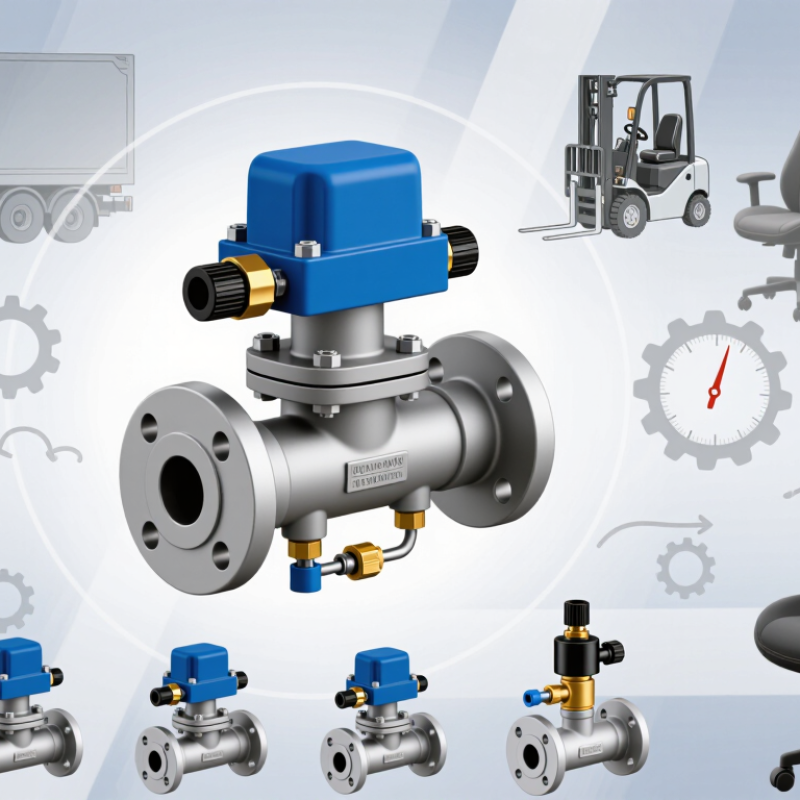
7 Tips for Choosing the Right Air Seat Control Valve?

Selecting the right Air Seat Control Valve is not a minor purchasing decision. It affects comfort, suspension response, maintenance, and operator safety. A valve may look suitable in a catalogue, yet perform poorly beside a vibrating compressor or a leaking air cushion.

Recent reports from Grand View Research and MarketsandMarkets show continued growth in pneumatic components and vehicle seating technologies. Their findings emphasize compact design, durability, control accuracy, and reduced maintenance. These trends matter in trucks, buses, forklifts, office chairs, and industrial seating systems. Still, broad market data cannot replace application testing.

Ergonomics researcher Dr. Alan Hedge is often associated with a useful reminder: “The best posture is the next posture.” The principle also applies to seat control. An operator needs smooth height adjustment, stable air pressure, and quick recovery after movement. Tiny details matter.

Check the working pressure first. Then examine port size, valve response, air consumption, material quality, and compatibility with the seat’s compressor. A 6-bar system should not receive a valve designed only for lower pressure. That sounds obvious. It is still frequently overlooked.

The following seven tips focus on practical selection. They consider real installation conditions, not only attractive specifications. ISO 4414 guidance on pneumatic safety can support the evaluation, while manufacturer test data should confirm performance. A perfect valve on paper may still feel wrong after eight hours of driving. That uncomfortable possibility deserves attention.

7 Tips for Choosing the Right Air Seat Control Valve?

Understand the Role of an Air Seat Control Valve

7 Tips for Choosing the Right Air Seat Control Valve

Understand the Role of an Air Seat Control Valve

An air seat control valve directs compressed air to open or close a process valve. It translates a control signal into physical movement. In a filling line, that movement can stop liquid within fractions of a second. A poor selection may cause seat leakage, water hammer, product contamination, or unstable flow.

The U.S. Department of Energy reports that compressed-air systems often lose 20% to 30% of their output through leaks and inefficient use. Therefore, valve sizing affects more than movement. Check operating pressure, air consumption, response time, and required flow coefficient. A valve with excessive capacity may cycle sharply. One with insufficient capacity may respond slowly. Neither condition is ideal.

Inspect the air quality requirements carefully. ISO 8573-1 classifies particles, water, and oil in compressed air. Moisture can corrode internal parts or freeze in cold conditions. Filtered, regulated air usually supports more reliable operation. Confirm the actuator’s fail-open or fail-closed position before installation. That decision should reflect process hazards, not convenience.

Field technicians often overlook tubing length. Long or narrow tubing can delay actuator response. Test the complete assembly under real pressure and temperature. I have found that catalog specifications rarely reveal every installation weakness. Recheck the valve after several operating cycles. Small pressure drops may expose a larger control problem.

Identify Valve Types and Seat Compatibility

7 Tips for Choosing the Right Air Seat Control Valve?

Identify Valve Types and Seat Compatibility

Choosing an air seat control valve starts with identifying its operating design. Check whether it is normally closed, normally open, or double acting. A pilot-operated valve may suit higher flow rates, while a direct-acting type can respond better at lower pressures. Also compare straight-through and angle-body designs with the available pipe layout.

Tip: Match the valve function to the actuator signal.

Seat compatibility deserves equal attention. Confirm the fluid, temperature, pressure, and cleaning method before selecting a seat material. Elastomer seats often support general water and air service, but aggressive chemicals or elevated temperatures may require a more resistant compound. Metal seats can tolerate demanding conditions, although they may not provide the same tight shutoff.

A visual match is not enough.

In field inspections, I have seen valves fit the pipe but fail because the seat material was overlooked. Review the manufacturer’s technical data, including pressure class, flow coefficient, leakage rating, and connection size. Then check whether the valve body and seat handle the actual media, not just the expected media.

Tip: Test compatibility under real operating conditions.

Consider pressure drops, cycling frequency, and actuator response. A valve that works well during a short bench test may behave differently after continuous cycling. I would also leave room for uncertainty. Fluid mixtures, aging seals, and imperfect cleaning records can change the decision. When details remain unclear, request a sample test or consult a qualified valve engineer before installation.

Check Air Pressure, Flow Rate, and Connection Standards

Choosing the Right Air Seat Control Valve: 7 Practical Checks

Start with air pressure, not the catalog maximum. Measure pressure at the valve inlet while the seat moves, because static readings can hide a serious drop. The U.S. Department of Energy estimates that leaks may waste 20–30% of compressor output. A small leak can therefore make a comfortable seat feel unreliable. Select a valve with a working range covering your lowest measured pressure, not only the system’s peak. Leave safety margin. More is not always better.

Flow rate controls adjustment speed and stability. Check the valve’s flow data at your actual pressure and temperature. ISO 6358 evaluates pneumatic flow through sonic conductance and critical pressure ratio, giving engineers a clearer comparison than port size alone. A larger port may respond too sharply. A smaller one may move painfully slowly. Test inflation and exhaust separately. I once trusted a nominal flow figure and missed the exhaust restriction. That mistake was avoidable.

Connection standards deserve equal attention. Confirm thread type, pitch, sealing method, tube diameter, and mounting space. ISO 228-1 and ISO 7-1 define different thread practices; they should not be treated as interchangeable. Check whether the seat frame uses metric or imperial hardware. Inspect the first fitting by hand. Forced engagement can damage threads before the system ever operates. Record pressure, flow, fitting dimensions, and temperature during testing. That record makes later troubleshooting faster and less dependent on guesswork.


Evaluate Durability, Safety Features, and Maintenance Needs

7 Tips for Choosing the Right Air Seat Control Valve

Durability starts with the working environment. Check the valve’s rated pressure, temperature range, cycle life, and resistance to dust or cleaning chemicals. A steel frame may survive years, while a brittle seal fails within months. Ask for cycle-test results, not only a glossy datasheet. Inspect port threads and mounting points for damage after repeated seat adjustments. ISO 4413:2010 emphasizes contamination control and safe pneumatic design. That matters when air lines run beneath vibrating equipment. Choose corrosion-resistant materials where moisture is unavoidable. Small details matter.

Safety deserves equal attention. Confirm that the valve vents predictably during a hose failure. Check whether its controls prevent accidental height changes while driving or operating machinery. The U.S. Bureau of Labor Statistics reported 1,156,930 workplace cases involving days away from work because of musculoskeletal disorders in 2022. Poor seat support is not the only cause, but vibration and awkward posture can increase physical strain. ISO 2631-1 provides methods for evaluating whole-body vibration. Use it as a technical reference. Do not treat comfort as proof of protection.

Maintenance needs a practical test. Can technicians reach the valve without removing the entire seat? Check seal availability, cleaning instructions, and leak-test procedures. A pressure gauge can reveal slow losses before the seat sinks unexpectedly. Keep spare seals on hand. In field inspections, overlooked fittings often cause more trouble than the valve itself. I would still question any lifetime claim without service conditions and test records. A cheaper valve may become expensive when downtime, labor, and repeated adjustments are included.

Compare Installation Requirements, Cost, and Manufacturer Support

7 Tips for Choosing the Right Air Seat Control Valve

Choosing an air seat control valve starts with the installation, not the catalogue price. Check port size, mounting space, air pressure, temperature, and tubing access. A valve that fits the pipe may still block a service panel. Confirm material compatibility with the process fluid. Ask for pressure-drop data and tested cycle ratings. These details reveal whether the valve suits your equipment.

Compare total cost, not only the purchase price. A cheaper valve may require adapters, extra fittings, or longer installation time. Include air consumption, cleaning needs, replacement seals, and expected downtime. In one project, my initial estimate ignored restricted access behind the frame. Labour costs increased because technicians needed special tools. That mistake changed the final comparison. Calculate ownership costs over several maintenance cycles.

Manufacturer support can prevent expensive delays. Request clear installation drawings, wiring details, test certificates, and spare-part information. Check whether technical staff can answer practical questions quickly. Reliable suppliers should explain pressure limits instead of hiding behind general specifications. Ask about warranty terms, traceability, training, and delivery times. Poor documentation is a warning sign. Support matters most when the valve fails during a busy production shift. I would also request a sample inspection before approving a large order, because written specifications cannot show every fitting problem.

REQUEST A QUOTE

Menu
[all-fields]