

- 713.590.1312
- sale@pandbtools.com
How to Choose a 24 Port Fiber Termination Box
Choosing a 24 Port Fiber Termination Box is not simply a matter of counting ports. The enclosure must match the fiber type, adapter standard, splice method, and installation environment. A box with 24 visible ports may not provide enough room for splices, slack storage, or future repairs. Details matter here. Experienced installers usually check the internal tray layout before ordering. They also measure cable entry space, bend-radius protection, and mounting clearance. A crowded tray can create sharp fiber bends, loose routing, and difficult maintenance later.
Material quality deserves close attention. Steel enclosures offer strong protection, while reinforced plastic models can reduce weight and resist corrosion in suitable locations. For outdoor or dusty areas, review the enclosure’s stated IP rating and sealing design. Do not guess. Confirm whether SC, LC, or other adapters are included, and verify compatibility with single-mode or multimode fiber. Reliable manufacturers should provide drawings, dimensions, capacity data, and clear installation instructions. Compliance information can also support responsible purchasing, but certificates should be checked rather than accepted blindly. A neat box can still be the wrong box.
Consider daily use, not only installation day. Can technicians identify each port quickly? Are labels visible after the door closes? Does the grounding arrangement suit the site? These small details influence signal protection, troubleshooting time, and long-term reliability. The best choice balances capacity, protection, accessibility, and realistic expansion needs. Sometimes, a smaller enclosure is more practical. In other cases, selecting a larger model prevents expensive rework. Review the actual network plan, compare verified specifications, and allow room for careful installation. Mistakes happen, even with experienced teams. The goal is to reduce them before the box reaches the wall.
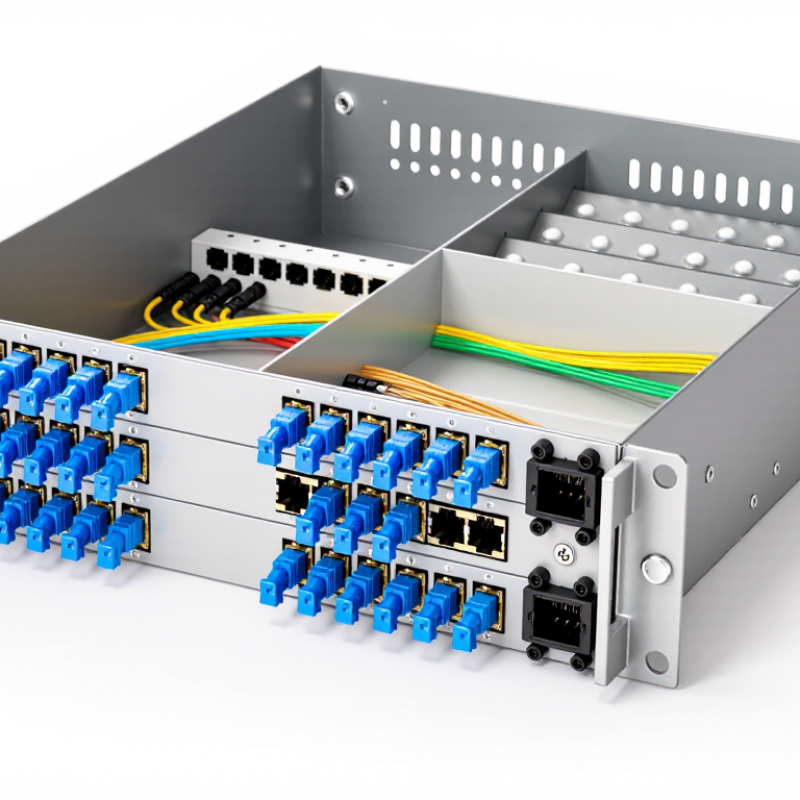
Definition and Role of a 24-Port Fiber Termination Box
How to Choose a 24-Port Fiber Termination Box
A 24-port fiber termination box is a passive enclosure for organizing, splicing, and protecting optical fibers. It normally holds adapters, pigtails, splice trays, and cable-management parts. The box connects feeder cables with distribution or drop cables. It also protects delicate fibers from dust, pulling force, and excessive bending.
Its role becomes more important as fiber networks expand. The OECD Broadband Statistics report, updated in 2024, shows fiber represented about 42% of fixed broadband subscriptions across OECD countries. ITU also reported 5.4 billion internet users in 2023. These figures suggest denser, more carefully managed access networks.
A 24-port box suits apartment floors, small offices, campus rooms, and roadside cabinets. Check connector type, splice capacity, bend-radius control, mounting method, and cable-entry space.
A compact design is useful, but cramped routing can increase insertion loss.
Tips: Leave spare ports and slack fiber. Confirm the box supports your connector format before ordering. During field inspections, clear labels and gentle fiber loops prevent many service errors. IP protection matters in dusty or damp areas. However, ratings can be misunderstood; verify the complete installation, not only the enclosure. I have seen neat boxes fail because cables entered without strain relief. Use a loss budget, test every completed link, and record port assignments. Small omissions become expensive later.

Assessing Fiber Capacity, Port Layout, and Connector Compatibility
Choosing a 24-Port Fiber Termination Box
In field installations, I first verify the real fiber capacity, not just the advertised port count. A 24-port box may support 24 simplex connections, but duplex adapters can change the usable count. Check the splice tray capacity, cable entry size, and space for future fibers. Keeping 10 to 20 percent spare capacity usually makes maintenance easier. It also prevents crowded trays and stressed fibers.
Port layout affects daily work. Front-facing adapters simplify testing and cleaning, while poor spacing can make connector removal awkward. I prefer clearly numbered ports, stable adapter panels, and enough room for bend-radius control. LC connectors suit dense installations, while SC connectors often provide a larger handling surface. The selected panel must match the installed connector type. Mixing incompatible adapters creates delays.
Small details matter.
Before ordering, confirm whether the box accepts single-mode or multimode fiber, and check the connector polish and insertion-loss requirements. An experienced installer should inspect cable routing, grounding provisions, sealing, and labeling methods. I once focused too heavily on port density and overlooked tray access. The installation worked, but later testing took longer than expected. That mistake changed my selection process: capacity matters, yet practical access and connector compatibility matter just as much.
Selecting the Right Enclosure, Materials, and Installation Method
How to Choose a 24 Port Fiber Termination Box
A 24 port fiber termination box should match the site, not only the fiber count. Check its internal layout, splice tray capacity, adapter alignment, and cable entry space. A crowded enclosure creates sharp bends and slows future maintenance. Leave practical slack for each fiber. Small details matter.
Material selection depends on the installation environment. Powder-coated steel offers strong impact resistance for indoor equipment rooms. ABS or polycarbonate can reduce weight and resist moisture in sheltered outdoor locations. However, plastic is not always the weaker option. Its performance depends on wall thickness, sealing quality, and temperature range. An enclosure with an IP-rated seal is useful where dust or water may enter. Verify the actual rating, rather than trusting a vague product description.
Installation method changes the box you need. Wall mounting requires a stable surface and accessible fixing points. Rack installation needs correct dimensions, cable support, and airflow around nearby equipment. For outdoor mounting, use suitable glands, drip loops, and corrosion-resistant fasteners. Keep bend-radius limits visible during installation. A common mistake is choosing a compact box to save space. That decision can make testing and repairs frustrating later.
Tips:
- Count incoming and outgoing cables before ordering.
- Check tray depth and adapter type.
- Label every port clearly.
- Inspect grounding needs for metal enclosures.
- If the route may expand, reserve capacity now.
- Recheck the layout on site; drawings are sometimes optimistic.
Comparing Cable Management, Protection, and Splicing Features
How to Choose a 24 Port Fiber Termination Box
A 24-port fiber termination box should make every fiber visible, traceable, and protected. Cable management matters first. Look for numbered adapters, clear routing paths, and enough slack storage behind the termination panel. The Fiber Optic Association recommends controlled fiber bends and warns that tight loops can increase attenuation or cause long-term damage. A crowded tray is a warning sign.
Protection depends on enclosure design. Choose a metal or reinforced housing with a secure door, strain relief, and sealed cable entries. In dusty plant rooms, basic openings may allow contamination near adapters. The IEC 61753 series classifies connector performance under environmental conditions, so the box should match its installation location. Indoor and outdoor enclosures need different sealing and impact protection. Do not assume one enclosure fits every site.
Splicing features deserve close inspection. Fusion-splice trays should hold fibers without sharp pressure points and should allow re-entry without disturbing nearby circuits. The Fiber Optic Association reports typical fusion-splice loss near 0.05–0.10 dB, while mechanical splices can be higher, commonly around 0.2–0.75 dB. Those figures are useful, but installation quality still changes results. A box with excellent trays can fail when technicians leave uneven slack. I would also check whether labels remain readable after years of heat, dust, and maintenance. That small detail is easy to overlook.
Verifying Standards, Environment Ratings, and Maintenance Requirements
Choosing a 24 Port Fiber Termination Box
A 24 port fiber termination box should match both your network design and installation environment. Check whether its adapters and splice components follow recognized fiber interface standards, such as IEC 61754. Confirm testing references for optical performance and mechanical durability. A datasheet alone is not enough. Request test records, drawings, and clear port capacity details.
Environment ratings deserve equal attention. For outdoor cabinets, verify the IP rating, temperature range, UV resistance, corrosion protection, and cable sealing method. Dust and moisture often enter through poorly tightened glands, not the enclosure itself. In indoor rooms, a lower rating may work, but heavy dust or condensation can still cause trouble. I have seen neat installations fail because the box lacked space for safe bend-radius control.
Tips: Leave service slack, label every fiber, and protect unused adapters with dust caps. Keep splice trays easy to open without disturbing active cables. During maintenance, inspect seals, clean connectors with approved tools, and record damaged pigtails or unusual loss readings. Do not assume a sealed box needs no inspection. A six-month check is a practical starting point, though harsh sites may require shorter intervals. Measure before replacing parts. This habit prevents guesswork and exposes weak installation practices.