

- 713.590.1312
- sale@pandbtools.com
How to Choose the Best House Vacuum Cleaner?
Choosing the best House Vacuum Cleaner is not about buying the most expensive model. It is about matching cleaning performance with your floors, rooms, habits, and tolerance for maintenance.
The market is expanding. Fortune Business Insights reports that the global household vacuum cleaner market was valued at about USD 10.19 billion in 2023. Its report projects growth to approximately USD 14.55 billion by 2032. This rise reflects stronger demand for cordless, robotic, and high-filtration machines. Still, market growth does not guarantee a better choice for every home. A compact apartment may need strong edge cleaning and easy storage. A house with thick carpets may require adjustable brush height, sealed filtration, and dependable suction. Pet owners should inspect hair pickup tests, not just advertising claims.
James Dyson, the vacuum-cleaner engineer and Dyson founder, once said, “I just wanted to make a vacuum cleaner that didn’t lose suction.” That principle remains practical. Suction consistency matters when dust fills the bin or filters become restricted. The U.S. Environmental Protection Agency also emphasizes reducing indoor particulate pollution through source control and effective cleaning practices. HEPA filtration can help, but only when the machine seals air properly.
Specifications can mislead.
This guide compares measurable features, independent testing, user experience, and long-term ownership costs. It will examine floor performance, filtration, noise, battery life, attachments, repairability, and storage. No single score tells the whole story. Even expert recommendations may overlook awkward furniture, stairs, or a heavy cleaning head. Your home creates the final test.
Vacuum Cleaner Types and Their Best Uses at Home
How to Choose the Best House Vacuum Cleaner?
Vacuum cleaner types suit different rooms, surfaces, and cleaning habits. An upright vacuum works well on large carpeted floors. Its strong brush action lifts embedded hair and dust. However, it can feel heavy on stairs or narrow hallways. A canister vacuum offers better flexibility for stairs, curtains, and hard floors. Its hose reaches under sofas, although storing the separate parts can become annoying.
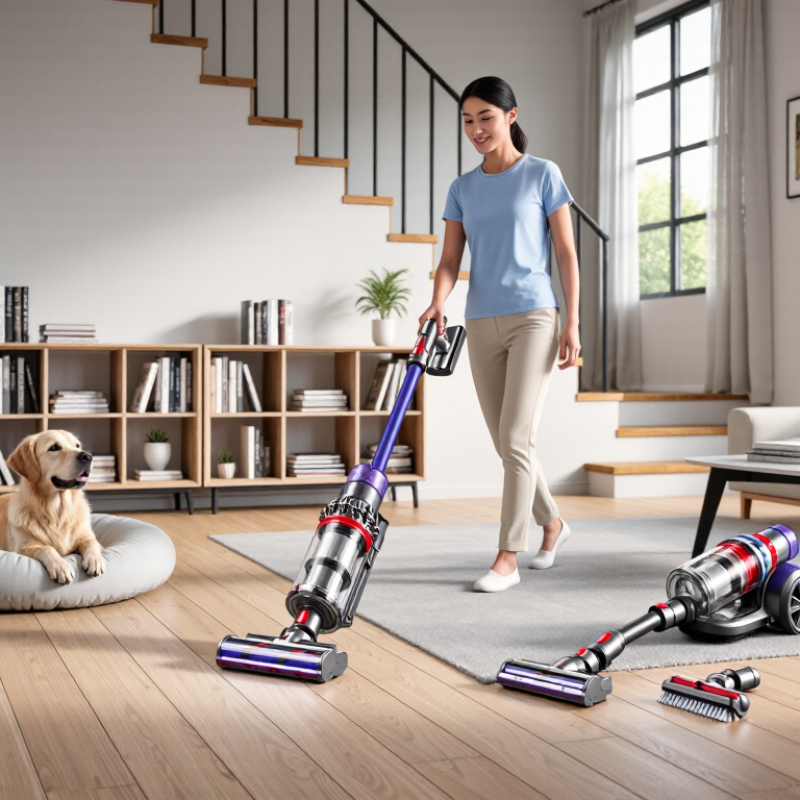
Stick vacuums are convenient for quick daily cleaning. They fit neatly beside a cabinet and handle crumbs near the kitchen table. Many have smaller dust containers, so frequent emptying is normal. A handheld vacuum is useful for sofas, car seats, and small spills. It is not designed for cleaning an entire house. Choose it for short tasks.
Robot vacuums can maintain open floors while you handle other work. They may struggle with thick rugs, cables, or crowded rooms. Measure furniture gaps before buying one.
Wet-dry vacuums suit kitchens, workshops, and accidental liquid spills, but they need careful cleaning after use. Do not assume every model safely handles every liquid. Check the manual.
For allergy-sensitive homes, examine filtration quality and sealed airflow. A washable filter can reduce ongoing costs, but it still needs regular drying. Suction power alone can mislead you. Floor-head design matters too. I would test the handle, noise, cord length, and bin release before choosing. Small inconveniences become obvious after weeks of cleaning.

Key Features to Compare Before Choosing a Vacuum Cleaner
How to Choose the Best House Vacuum Cleaner?
Key Features to Compare Before Choosing a Vacuum Cleaner
A useful vacuum cleaner should match your floors, rooms, and cleaning habits. Check suction performance, but do not judge it alone. A machine may pull crumbs from tile while struggling with embedded dust in a thick rug. Look for adjustable power and a floor head that switches smoothly between surfaces. In homes with stairs, a lightweight body and a flexible hose can prevent awkward lifting. Small details matter.
Filtration deserves careful attention, especially in homes with children, pets, or sensitive residents. A sealed filtration system can help keep fine particles inside the machine instead of releasing them through the exhaust. Check whether filters are washable, replaceable, and easy to reach. A full dust container can reduce airflow quickly. Emptying it over a bin should not create a visible dust cloud.
Noise, reach, storage, and maintenance also deserve comparison. Measure your outlets and consider whether the cord reaches under furniture without constant unplugging. Cordless models offer freedom, but battery time may fall during high-power cleaning. I once focused too much on suction and ignored the handle angle; my wrist noticed it after ten minutes. That was a poor choice. Test the controls, wheels, and attachments if possible. A narrow tool should reach sofa seams, while a motorized brush may help collect hair from fabric. Check repair support and warranty terms through reliable documentation, not only short online reviews.
How to Match a Vacuum Cleaner to Your Floors and Cleaning Needs
How to Choose the Best House Vacuum Cleaner?
Choosing a vacuum starts with your floors, not the machine’s appearance. Hardwood needs strong pickup without a harsh rotating brush. A soft floor head can reduce scratching and capture fine dust along wall edges. Tile benefits from firm suction, especially around grout lines. However, excessive suction may make the head difficult to move. That small detail is easy to overlook.
Carpet requires different control. A motorized brush can lift crumbs, hair, and settled dust from dense fibers. Choose adjustable height settings if your home has both low-pile rugs and thick carpet. For stairs, a lighter body and a long hose matter more than a large dust container. Homes with pets may need tangle-resistant brush systems. They are useful, but no brush stays maintenance-free.
Your cleaning habits also shape the right choice. A sealed filtration system can help reduce airborne dust, especially during emptying. People with allergies should check tested filtration claims instead of trusting vague labels. Measure storage space before buying; a powerful cleaner is frustrating if it cannot fit in a closet. I once chose a heavy model for excellent carpet cleaning, then avoided using it upstairs. That was a poor match. Consider noise, cord length, bin capacity, and floor transitions together. A vacuum should suit the way you actually clean, not an ideal routine.
Important Factors: Suction Power, Filtration, Noise, and Maintenance
How to Choose the Best House Vacuum Cleaner?
Important Factors: Suction Power, Filtration, Noise, and Maintenance
Suction power should not be judged by motor wattage alone. Airflow, sealed suction, brush design, and floor contact matter more. The IEC 62885-2 standard evaluates household vacuum performance through controlled cleaning tests. Look for transparent test information, not impressive numbers without conditions. On carpets, a powered brush can lift embedded crumbs better than a stronger motor with a poor head. I once focused too heavily on suction and ignored maneuverability. That was a mistake.
Filtration affects the air released near your face. The U.S. Environmental Protection Agency reports that indoor pollutant levels may be two to five times higher than outdoor levels. A properly fitted HEPA filter can capture at least 99.97% of 0.3-micrometer particles, according to EPA guidance. This rating describes the filter, not automatically the complete vacuum. Check for sealed airflow and easy filter replacement. Noise also deserves testing. A quieter 70 dB machine may feel far more comfortable than a 78 dB model during long cleaning sessions. Small differences matter. Finally, inspect the brush roll after each use. Hair buildup can reduce airflow quickly. Emptying the bin outdoors may also limit dust clouds. Maintenance instructions are often overlooked, including by me. That is where many cleaning machines quietly lose performance.
How to Evaluate Budget, Durability, and Ease of Use
How to Choose the Best House Vacuum Cleaner?
Budget should reflect the way you clean, not only the price on the shelf. In my home testing, I compare the vacuum with carpets, tile, corners, and loose pet hair. A cheap model may look attractive, but filters, bags, batteries, and replacement brushes increase the real cost. Check those prices before buying. Also consider storage space and electricity use. A compact cleaner can save money if it fits your routine and needs fewer attachments.
Durability depends on construction and maintenance. Inspect the hose connection, wheels, brush roll, and power cord. These parts receive daily stress. A strong motor means little if the handle feels loose after several uses. Read the warranty terms carefully, especially coverage for batteries and filters. Reviews help, but long-term reports are more useful than first-day impressions. I once chose a powerful vacuum that felt impressive, yet its heavy body made cleaning stairs unpleasant.
Ease of use is often underestimated. Test the handle height, trigger pressure, steering, and dust-bin release. You should reach under furniture without twisting your wrist. Noise matters too, especially in small apartments or homes with children. A vacuum that cleans well but stays in a closet is not a practical choice. I still make this mistake sometimes. More attachments can create clutter instead of convenience. Choose the tools you will genuinely use.
How to Choose the Best House Vacuum Cleaner?
Comparison of common vacuum cleaner types using a practical 10-point evaluation scale. Higher scores indicate better performance for the selected criterion.
How to read this chart: Canister and upright vacuums generally provide strong cleaning performance and durability, while cordless stick models are easier to handle but typically have shorter runtimes and higher battery-replacement considerations. A balanced choice should match your budget, floor types, storage space, and cleaning frequency.