
How to Choose the Best Stainless Steel Gate Valve
Choosing the right Stainless Steel Gate Valve requires more than comparing prices or catalog photographs. The valve must match the fluid, pressure, temperature, pipeline size, and installation environment. Stainless steel grades matter. Grade 304 suits many clean-water and general industrial applications, while Grade 316 offers better resistance to chlorides and coastal exposure. However, material selection alone does not guarantee long service life. A poorly specified seal, stem, or bonnet can still cause leakage.
Experienced engineers examine the complete operating picture. They verify pressure ratings, end connections, body construction, seat materials, and applicable standards such as API 600 or ASME B16.34. They also consider whether the valve will remain fully open or fully closed. Gate valves are not designed for routine throttling. In a real plant, a valve may face vibration, infrequent operation, sediment, or unexpected temperature changes. Small details become expensive problems.
Ask for test certificates, dimensional drawings, corrosion data, and traceable material records. Check the handwheel clearance before installation. It sounds obvious. It is often missed. Supplier reputation also matters, but documents should support every important claim. A reliable manufacturer can explain pressure testing, packing replacement, and maintenance intervals without vague promises. No selection method is perfect. Even careful buyers may underestimate future process changes. Reviewing the decision with a qualified valve engineer can reveal risks before the valve reaches the pipeline.
Understanding Stainless Steel Gate Valve Construction and Operation
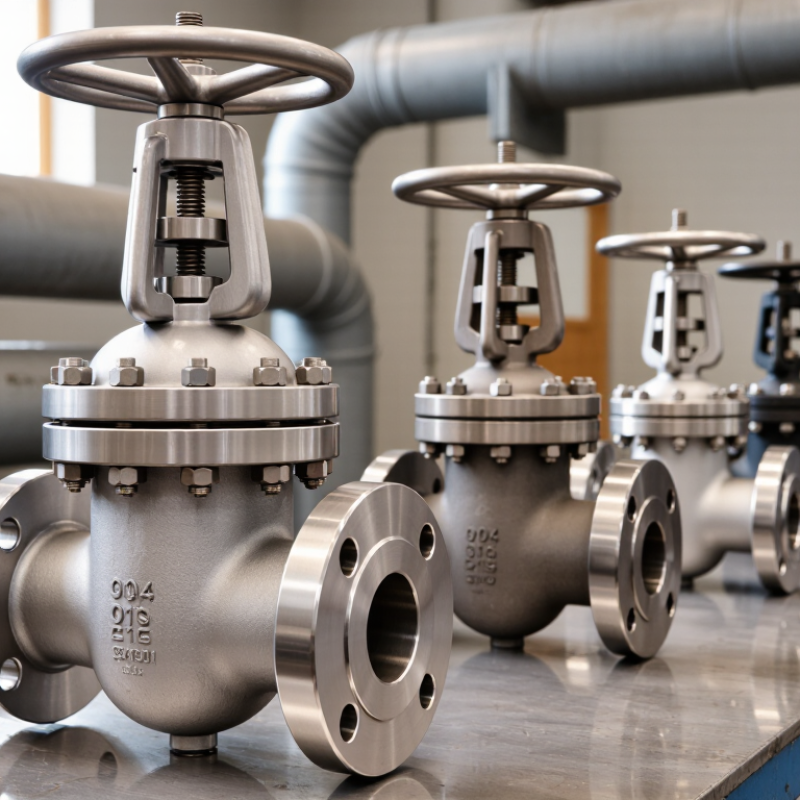
Stainless steel gate valves are built for straight-through flow and dependable isolation. Their body contains the flow passage, seats, gate, stem, bonnet, packing, and handwheel. A wedge gate presses against two seats when closed. This contact blocks the passage and limits leakage. The stem transfers handwheel force to the gate. Rising stems show valve position clearly, while non-rising stems save space. Packing surrounds the stem and helps prevent fluid escaping around it.
During operation, the gate moves vertically rather than rotating across the flow. The valve should be fully open or fully closed. It is not normally suitable for throttling. Partly opened gates can vibrate, erode, and create unstable flow. In field inspections, I check the handwheel, stem threads, packing, and flange bolts. A stiff handwheel may indicate corrosion, pressure loading, or poor maintenance. Forcing it can damage internal parts.
Choosing the best valve requires more than selecting stainless steel. Check pressure, temperature, fluid chemistry, pipe size, connection type, and required sealing performance. Common stainless grades resist many corrosive fluids, but none suit every chemical or temperature. Seat material also matters, especially with abrasive particles or repeated cycling. A full-port design reduces pressure loss. Still, it may require more installation space. I have found that simple specifications can hide important details, so reviewing service conditions with a qualified engineer remains worthwhile.
How to Choose the Best Stainless Steel Gate Valve - Understanding Stainless Steel Gate Valve Construction and Operation
| Selection or Construction Dimension | Common Options | Technical Characteristics | Recommended Application Guidance |
|---|---|---|---|
| Valve Function | Isolation or shutoff | A gate valve uses a movable gate that rises out of or lowers into the flow path. It is designed primarily for fully open or fully closed service. | Choose a gate valve where low flow resistance in the fully open position and reliable isolation are more important than throttling capability. |
| Body and Bonnet Material | Austenitic stainless steel, commonly 304/304L or 316/316L grades | Stainless steel provides corrosion resistance through a chromium-rich passive surface layer. Low-carbon grades such as 304L and 316L reduce the risk of sensitization after welding. | Use 316/316L when chloride exposure, salt water, or chemical contamination makes greater pitting and crevice-corrosion resistance necessary. Confirm compatibility with the actual medium. |
| Gate Design | Wedge gate or parallel gate | A wedge gate seals by seating against angled body seats. A parallel gate uses parallel sealing surfaces and may be selected for specific pressure, temperature, or piping arrangements. | Select the gate style according to pressure class, temperature, sealing requirements, installation orientation, and the applicable valve standard. |
| Stem Arrangement | Rising stem or non-rising stem | A rising stem visibly moves upward as the valve opens, providing a direct position indication. A non-rising stem remains inside the valve body or bonnet and requires less vertical clearance. | Use a rising stem where visual position confirmation is valuable. Consider a non-rising stem where overhead space is limited, while ensuring position indication is still available. |
| Stem and Sealing Arrangement | Stainless steel stem, packing, bonnet gasket, and seat sealing surfaces | The stem transmits torque or linear movement to the gate. Packing limits external leakage around the stem, while the bonnet gasket seals the body-to-bonnet joint. | Verify packing and gasket compatibility with process temperature, pressure, chemicals, emissions requirements, and maintenance procedures. |
| End Connection | Flanged, threaded, socket-weld, or butt-weld ends | The connection must match the pipe size, pressure rating, facing, wall thickness, joining method, and installation code. | Use flanged ends where removal is needed. Threaded ends suit smaller, lower-pressure services when permitted. Welded ends can provide compact, permanent connections. |
| Pressure and Temperature Rating | Pressure class and temperature-specific rating | Allowable pressure is affected by valve materials, design, temperature, end connections, and the governing standard. The maximum working pressure is not necessarily constant across all temperatures. | Select the valve using the highest expected operating pressure and temperature, including startup, shutdown, surge, and upset conditions. |
| Flow Characteristics | Full-bore or reduced-bore passage | A fully open gate valve generally offers a relatively unobstructed flow path and low pressure drop compared with many throttling valves. Reduced-bore designs may have a smaller internal passage. | Choose full bore when pressure loss, pigging, or passage of solids is important. Confirm that the internal diameter meets the piping system requirements. |
| Operating Method | Handwheel, gear operator, pneumatic actuator, electric actuator, or hydraulic actuator | Manual operation is simple for infrequent use. Actuators support remote operation and automation but require correct sizing based on breakaway, running, and seating torque. | Use a manual handwheel for accessible, occasional isolation. Select an actuator for remote, frequent, emergency, or interlocked operation. |
| Throttling Suitability | Not recommended for continuous throttling | Partial opening can create high local velocity, turbulence, vibration, and seat or gate erosion. These effects may reduce service life and compromise shutoff. | Use a globe, needle, or control valve when continuous flow regulation is required. Operate the gate valve fully open or fully closed whenever possible. |
| Installation Space | Face-to-face length, height, and actuator clearance | Gate valves can require significant vertical space, particularly with rising stems and actuators. Access is also needed for packing adjustment and maintenance. | Check piping layout drawings, stem orientation, handwheel clearance, lifting access, insulation thickness, and actuator service space before installation. |
| Leakage and Testing | Shell, seat, and external leakage testing | Testing verifies pressure boundary integrity, seat tightness, and stem or bonnet sealing performance. Acceptance limits depend on the selected standard and valve type. | Request documented test results and confirm that inspection, pressure testing, and leakage criteria match the project specification. |
| Maintenance Requirements | Packing adjustment, lubrication where applicable, inspection, and periodic exercising | Valves that remain stationary for long periods may become difficult to operate because of deposits, corrosion, packing friction, or seat loading. | Establish an inspection and exercising schedule based on service criticality, medium cleanliness, operating frequency, accessibility, and safety requirements. |
| Selection Checklist | Size, medium, pressure, temperature, materials, connection, operation, and standards | A valve is suitable only when all operating and installation conditions are within its documented design limits. | Confirm nominal size, flow direction requirements, corrosion conditions, pressure-temperature rating, end connection, actuator torque, testing standard, and required certifications before purchase. |
Related Posts
-
Best Cryogenic Ball Valves for Global Buyers in 2026?
-
Comparative Analysis of the Top 5 Best Swing Check Valves: Efficiency and Performance Metrics Revealed
-
Unlocking Efficiency in Manufacturing with the Best Swing Valve Applications and Installation Guide
-

How to Choose Cryogenic Ball Valves?
-
How to Choose the Best Cryogenic Ball Valves for Your Needs?
-
Mastering Flow Valves in Industrial Applications A Comprehensive Tutorial for Beginners