How to Choose the Best Mining Trucks in 2026?
Choosing the Best Mining Trucks in 2026 is not about chasing the biggest payload or newest dashboard. It is about matching a truck to the mine’s actual work. A haul road with sharp turns, steep grades, and loose rock places very different demands on a fleet than a wide, level route. The right choice affects tonnes moved, fuel use, tire life, maintenance hours, and operator fatigue.
Mining executive Mark Bristow has publicly emphasized disciplined, safe operations. Applying that principle to fleet selection, this guide uses a practical test: “Choose the truck that moves the required tonnes safely, reliably, and at a sustainable lifecycle cost.” This is a selection principle, not a verbatim quotation. Buyers should compare payload with cycle time, availability, service support, and site conditions. A truck that looks efficient on paper may lose that advantage when it waits for parts or struggles on a wet ramp.
The guide will examine diesel, trolley-assist, and battery-electric options, alongside automation readiness and total cost of ownership. It will also consider details that are easy to underestimate, such as turning radius, braking performance, cab visibility, and tire supply. No single model suits every mine. Even a careful comparison has limits; projected savings can shift with fuel prices, haul distance, and maintenance practice. Real operating data matters. So does a second look.
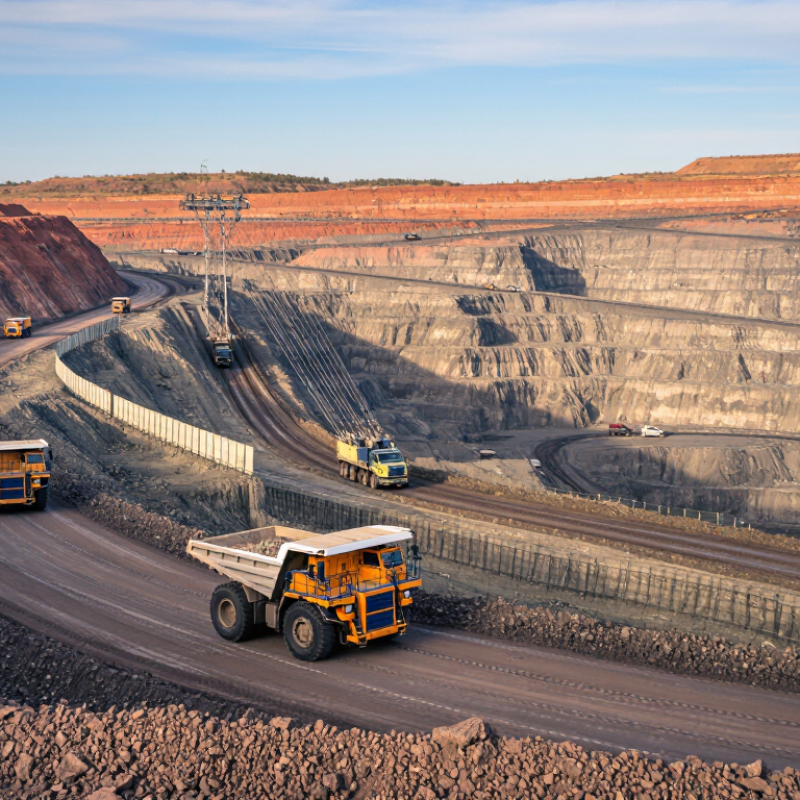
Set Payload Needs: Compare 400-Short-Ton (363-t) Haulage Classes
A 400-short-ton truck carries about 363 metric tonnes at its rated payload, but that figure alone is a poor selection rule. Start with the material: blasted rock, wet ore, and low-density overburden load differently by volume. Calculate typical and peak payloads from actual scale records, then check whether the body reaches its safe fill level before exceeding the truck’s rating. Numbers need context.
Compare trucks within this class using the mine’s haul profile, not brochure capacity alone. A long, steep ramp with sharp turns can reduce cycle efficiency and increase tire, brake, and road demands. Estimate loaded travel time, queueing, and dumping time across a representative shift; small delays matter when each load is enormous. Match the truck’s payload to shovel bucket size and pass count, since poor loading can cause both underloads and damaging overloads. Review payload-monitoring data after deployment, especially during wet-season changes. A spreadsheet may miss real variation, so leave room to revise assumptions. Also confirm that roads, bridges, maintenance bays, and recovery equipment can accommodate the truck’s dimensions and operating mass.
Compare Rated Capacity: Cat 797F and Komatsu 980E-5 at 400 Short Tons
How to Choose the Best Mining Trucks in 2026?
When comparing two mining trucks rated at 400 short tons, treat capacity as a starting point, not a daily target. Rated payload does not guarantee that every haul reaches the same weight. Road grade, rolling resistance, material density, and loading accuracy all affect real output. A bucket of wet ore can change the load quickly.
Compare the full haul cycle. Check how each truck performs on your site’s longest climb, tightest turn, and roughest section of road. A truck may carry the rated load but lose productivity through slower cycle times or frequent maintenance stops. Review payload records, tire life, fuel or energy use, and parts access. Small differences add up. I would also question optimistic production estimates; actual shift conditions are rarely perfect.
Tips: Ask for site-specific performance data, not just brochure figures. Weigh representative loads, inspect haul roads, and compare availability over a full operating period. Leave room below rated capacity when loading conditions vary. It may feel conservative, but it can protect tires and reduce avoidable strain.
Check Haul-Road Fit: 59/80R63 Tires Require Engineered Road Design
How to Choose the Best Mining Trucks in 2026?
A truck fitted with 59/80R63 tires needs more than a wide haul road. Its tire envelope affects clearance, turning, and safe passing, while payload and speed influence road wear. Assess the complete truck-and-tire combination before setting road dimensions. Check curves, intersections, gradients, drainage, and subgrade strength under real operating conditions. A road that looks broad enough may still create tight turns or unstable edges.
Tips: Map the truck’s swept path on the narrowest curves. Measure clearances at loading areas and dump points. Ask qualified mine-road and tire specialists to review loaded and empty vehicle movements. Include berms, drainage channels, and maintenance equipment in the assessment. Small details matter.
Do not rely on a single width measurement. Repeated tire contact can loosen surfaces, and standing water can weaken the road beneath them. Review actual traffic patterns and inspect wear after operations begin. Then adjust the design where evidence points to a problem. This takes extra work. It can also reveal an uncomfortable truth: the planned route may not suit the chosen truck. Better to catch that before routine hauling makes the mismatch costly.
Evaluate Powertrains by Duty Cycle, Fuel Use, and Energy per Tonne-Kilometre
Choosing a mining truck starts with the work it must repeat, not its peak power rating. Map the duty cycle: loaded distance, empty return, gradients, road condition, payload, and time spent waiting. A short, steep route may reward strong low-speed torque and regenerative braking. Long, steady hauls can favor a different balance of engine efficiency, battery capacity, or charging access. Details matter.
Compare fuel use over a complete operating cycle. Include idle time, queuing, cold starts, and energy used on the return leg. Then calculate energy per tonne-kilometre: total energy consumed divided by payload moved and loaded distance. Keep the measurement boundary consistent across trucks. A lower figure can indicate better efficiency, but only if payload and route conditions are comparable. That matters.
Use dispatch records and fuel or charging data from representative shifts, not just catalogue estimates. Separate unusually wet roads or extended delays from normal operation, while keeping those difficult shifts in view. A tidy spreadsheet can still mislead if it hides changing payloads or empty running. Recheck the result after road repairs, seasonal changes, or route redesign. The “best” powertrain may change with the duty cycle, and the data will never be perfectly clean.
How to Choose the Best Mining Trucks in 2026?
Compare representative powertrain energy intensity across common haul-duty cycles.
Lower values indicate less energy input per tonne moved over one kilometre. These are scenario-based planning estimates, not measured fleet results; actual consumption depends on payload, gradient, speed, road condition, and operating strategy. Energy is compared at the vehicle powertrain input, excluding upstream fuel and electricity production. For context, 0.16 MJ/t·km is approximately 4.5 litres of diesel per 1,000 tonne-kilometres, using diesel at 35.8 MJ/L.
Calculate Cost per Tonne: Include Tires, Maintenance, Availability, and Service
A low purchase price does not guarantee low hauling costs. Compare mining trucks by cost per tonne across the same route, payload, and operating period. Use actual site records where possible; estimates can hide expensive assumptions. Keep the calculation simple and consistent.
Include tire purchases, repairs, retreading, and damage linked to road conditions. Track maintenance labor, parts, and scheduled service, then add the cost of lost production during downtime. Divide these costs, plus fuel and other operating expenses, by tonnes actually delivered—not theoretical capacity. Small gaps matter. A few extra tire failures on a rough ramp can shift the result more than a modest difference in initial price.
Availability also affects the denominator. A truck that is technically ready but waiting for parts is not moving tonnes. Record delays by cause, and check whether service teams can reach the machine quickly during night shifts or remote operations. Compare planned and unplanned downtime separately. Use site data. Review results over several months, since a short sample may miss seasonal road damage or major repairs. No spreadsheet removes uncertainty; some assumptions will still be wrong. Revisit them when operating conditions change.