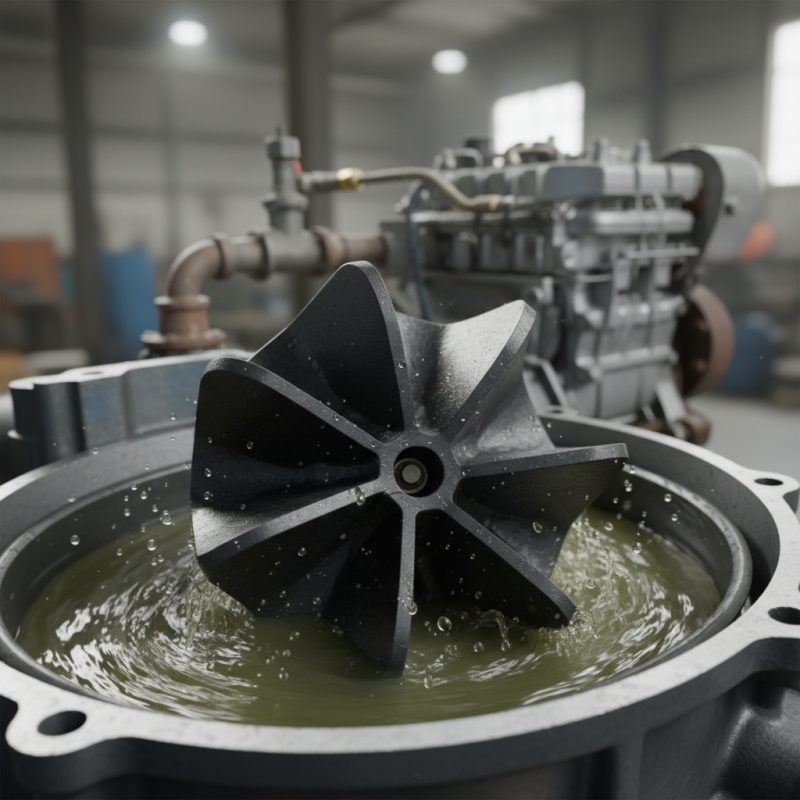
Why Choose a Rubber Pump Impeller for Your Applications?
Choosing a Rubber Pump Impeller for your applications is a vital decision. These components play a critical role in pump performance. Their design influences efficiency, longevity, and overall effectiveness.
Rubber pump impellers offer unique advantages. They provide excellent corrosion resistance and flexibility. These qualities allow them to handle diverse fluids and challenging environments. Moreover, rubber materials can absorb shock and vibrations, enhancing pump durability. This ensures consistent operation even in harsh conditions.
However, not every application may benefit from a rubber impeller. Certain environments may require different materials. It's essential to weigh your options carefully. Each application has unique demands. The wrong choice could lead to decreased performance. Understanding these factors can lead to better, more informed choices in your pumping systems.
Advantages of Rubber Pump Impellers in Various Industries
Rubber pump impellers have gained popularity across various industries due to their versatile benefits. They excel in handling abrasive substances, which can be particularly useful in mining and construction. Their ability to resist wear and tear extends the lifespan of the pump. This durability can lead to cost savings, yet one must regularly assess their condition.
In industries dealing with chemicals, rubber impellers offer excellent corrosion resistance. This feature is crucial when transporting aggressive liquids. The flexibility of rubber allows for better adaptability in different applications. However, the downside is that extreme temperatures can affect performance. Operators should monitor any changes in efficiency closely.
The lightweight nature of rubber impellers enhances ease of installation and maintenance. This aspect can streamline operational workflows. Yet, there may be challenges with rubber degrading over time, especially in harsh environments. Regular inspections and proactive replacements can mitigate potential issues and enhance performance.
Performance Comparison: Rubber vs. Metal Pump Impellers
When considering pump impellers, the choice between rubber and metal can significantly impact performance. Rubber pump impellers offer excellent flexibility. They can absorb shock and vibration better than metal. This quality makes them suitable for high-wear environments. For example, in applications with abrasive materials, rubber outperforms metal. It resists erosion, extending the service life.
On the other hand, metal impellers are known for strength and durability. They excel in high-pressure situations. However, they can be prone to corrosion in certain liquids. Repairing or replacing a damaged metal impeller can be costly. In contrast, rubber impellers are often easier to replace. Their lighter weight also contributes to energy efficiency.
Yet, rubber doesn’t always stand up to extreme temperatures as well as metal. High temperatures can degrade rubber, leading to potential failures. Users must carefully assess the operational environment. Understanding the specific needs of your application is crucial. Balancing these factors will lead to a more informed decision. There is no one-size-fits-all approach in pump impeller selection.
Durability and Resistance: The Benefits of Rubber Materials
Rubber pump impellers offer unique advantages due to their durability and resistance. These materials withstand harsh environments. Rubber can handle high pressure and extreme temperatures effectively. This resilience makes them suitable for various applications, from water treatment to chemical processing.
In these demanding settings, wear and tear can be significant. Rubber’s natural elasticity reduces the impact of abrasion. This extends the life of the impeller. Additionally, rubber functions well in corrosive substances. Unlike metals, it resists degradation, ensuring consistent performance.
However, not all rubber materials are the same. Improper selection might lead to issues down the line. Users must also consider factors like temperature limits and chemical compatibility. Understanding these properties can help in making informed decisions. A little research can prevent costly mistakes in the future.
Applications of Rubber Impellers in Fluid Transfer Systems
Rubber impellers are increasingly used in fluid transfer systems due to their unique properties. They provide excellent resistance to abrasion and corrosion. This makes them ideal for handling various fluids, such as slurries and chemicals. The flexibility of rubber helps in reducing vibrations during operation. This leads to lower noise levels in many applications.
In industries like mining and agriculture, rubber impellers prove invaluable. They efficiently transport abrasive materials without significant wear. Their lightweight nature also contributes to energy savings during operation. However, improper installation can lead to early failure. Regular maintenance checks are crucial in ensuring optimal performance.
Despite their advantages, rubber impellers may have limitations. Temperature extremes can affect their durability. In some cases, they may not be suitable for high-pressure applications. Understanding these factors can guide better choices in fluid transfer systems. Balancing the pros and cons is essential for effective use.
Applications of Rubber Impellers in Fluid Transfer Systems
Cost-Effectiveness and Maintenance of Rubber Pump Impellers
When considering pump components, rubber pump impellers stand out for their affordability. They are often less expensive than metallic alternatives. This makes them a popular choice for budget-conscious projects. The initial savings are noteworthy. However, it’s vital to consider long-term costs.
Rubber impellers require regular maintenance, but upkeep can be straightforward. A simple inspection can reveal wear or damage. Keeping them clean enhances their lifespan. Unlike metal, rubber resists corrosion from various fluids. Yet, neglecting to check for wear can lead to issues down the line.
Besides cost and maintenance, their performance in different environments matters. Rubber impellers perform well in many applications. Still, they may not be suited for extreme temperatures. Users must consider these factors carefully. Balancing cost and performance is a thought-provoking challenge for every project manager.