How to Choose the Right pH ORP Controller at 139th Canton Fair?
Choosing the right ph orp controller is crucial for various industries. Accurate pH and ORP measurements ensure product quality and process efficiency. The market for these controllers is expected to grow significantly, with estimates indicating a rise from $1.5 billion in 2022 to over $2 billion by 2027.
At the 139th Canton Fair, advances in technology will enhance how buyers select their ph orp controllers. Features like AI-powered search will streamline the process. Buyers can filter suppliers based on certifications like ISO and CE. However, despite these innovations, challenges remain. Understanding the specific needs of your application is vital.
Many still overlook the importance of proper calibration and maintenance. A poorly maintained controller can lead to inaccurate readings. This affects water quality in industries like aquaculture and food processing. As the industry evolves, it is essential to balance technology with fundamental practices. Ultimately, the right choice can elevate your operations significantly.
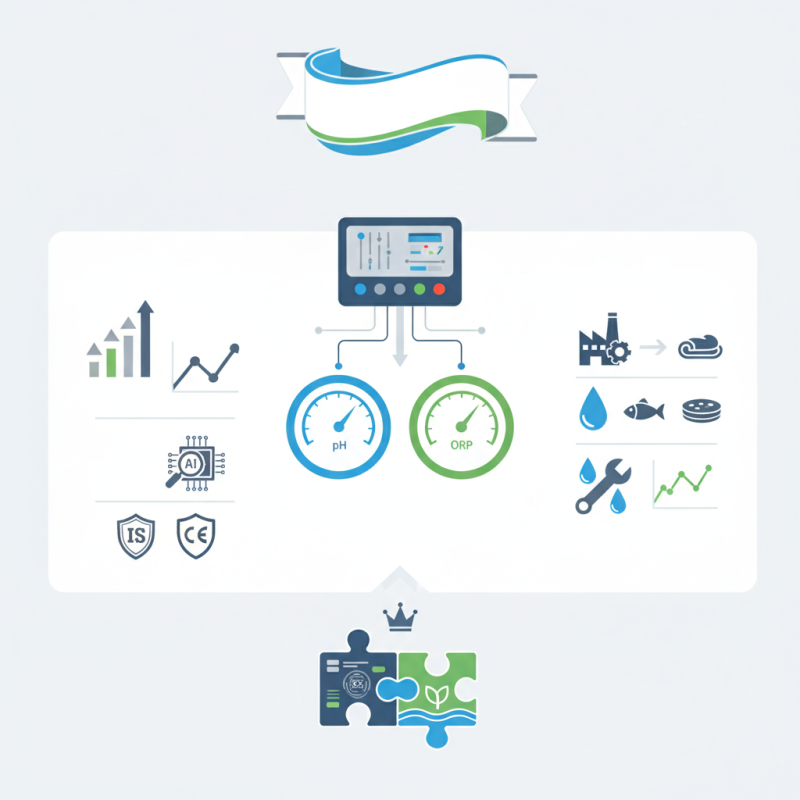
Understanding pH and ORP Controllers: Key Concepts and Functions
pH and ORP controllers are essential tools for managing water quality. pH measures the acidity or alkalinity of a solution. It operates on a scale from 0 to 14. A pH of 7 is neutral. Values below 7 are acidic, while those above 7 are alkaline. Understanding pH is crucial for various applications, including aquaculture, swimming pools, and hydroponics.
ORP, or oxidation-reduction potential, measures the cleanliness of water. It indicates the water's ability to oxidize contaminants. High ORP values suggest cleaner water. Lower values can indicate a higher level of pollutants. Both pH and ORP are key for maintaining healthy systems. These controllers can help in monitoring and adjusting chemical levels.
Choosing the right controller involves certain challenges. Users should consider ease of use and accuracy. Some controllers may overcomplicate tasks that could be simple. It's important to reflect on what features truly matter. Not all applications need the same specifications. Evaluate your unique needs before making a choice.
How to Choose the Right pH ORP Controller at 139th Canton Fair?
| Feature | Description | Importance | Price Range |
| pH Measurement Range | Typically from 0 to 14 pH | Essential for accurate chemical balance | $100 - $500 |
| ORP Measurement Range | Commonly from -2000 to +2000 mV | Determines the oxidation-reduction potential | $150 - $550 |
| Controller Type | Analog, Digital, or Smart Controllers | Affects user interface and data logging | $200 - $1000 |
| Calibration Options | Manual or Automatic Calibration | Crucial for accuracy and reliability | $50 - $300 |
| Data Logging | Built-in memory or USB connectivity | Useful for trend analysis | $100 - $600 |
| Display Type | LCD, LED, or Touchscreen | Affects user experience | $80 - $400 |
Identifying Your Specific Needs: Applications of pH and ORP Controllers
Choosing the right pH ORP controller involves understanding specific applications. Different industries require precise control for various reasons. Aqua farming, for example, relies heavily on stable pH levels to optimize fish health. Studies show that a 0.1 unit change in pH can significantly impact fish growth and survival rates.
In industrial settings, pH control is critical for process efficiency. Chemical production often demands strict pH levels. Deviating from these levels can lead to subpar product quality. A report indicated that improper pH management increases costs by up to 15%. Such figures highlight the importance of selecting the right controller for your needs.
Environmental applications also benefit from precise measurements. Wastewater treatment plants must manage pH and ORP to meet regulatory standards. Failure to do so can result in costly fines. Engaging with the right technology can prevent these financial setbacks. However, it's essential to assess available options carefully. Many controllers feature advanced capabilities that might go unused in simpler applications. The key is finding a balance between sophistication and necessity.
Comparison of Features: Manual vs. Automatic pH ORP Controllers
When attending the 139th Canton Fair, choosing the right pH ORP controller is crucial. Manual controllers offer basic functionalities. They require regular calibration and adjustments. This demand for operator intervention can be a double-edged sword. A recent report highlighted that 35% of operators struggled with manual settings. While manual systems may be less expensive, their need for constant attention can lead to human error.
In contrast, automatic pH ORP controllers provide a hands-free experience. These devices adjust pH levels automatically, promoting stability. According to industry research, automatic controllers reduce the risk of fluctuations by up to 50%. They also save on operational costs in the long run. However, they do come with higher upfront costs. This can make businesses hesitant to invest in them.
Tips:
Consider your specific application before making a choice. Assess your team's expertise. If your staff is not well-trained, an automatic system could suit you better. Keep in mind the environmental conditions as well. Temperature and chemical composition affect performance significantly.
Evaluating Brand Reputation and Customer Reviews at the Fair
When attending the 139th Canton Fair, evaluating brand reputation is crucial. Many attendees rely on customer reviews to make informed decisions. According to a recent industry report, around 80% of buyers consider reviews before making a purchase. This statistic highlights the impact of customer feedback on brand perception.
Before engaging with a brand, look for consistency in reviews. A well-reputed brand often has positive feedback across various platforms. Don’t be swayed by a few glowing reviews; check the overall trend. Remember, the presence of negative feedback can signal potential issues.
Tips: Focus on details in reviews. Specific experiences can reveal more about product quality. Look for mentions of customer service. Prompt, reliable support is often a good sign. Cross-reference reviews on multiple sites to confirm authenticity. Even negative reviews can offer insights. They might indicate problems you can avoid.
Conduct your own due diligence. Brand reputation matters, but so does the quality of the controller. Prepare a list of questions before visiting. Ask about warranties and support services too. A cautious approach will lead you to a well-informed decision at the fair.
Budget Considerations: Finding Cost-Effective Solutions at Canton Fair
When attending the 139th Canton Fair, budget considerations should be at the forefront of your mind. Finding cost-effective solutions is essential in today’s competitive market. Industry reports suggest that nearly 70% of buyers prioritize affordability without compromising quality. With such data, you can approach your purchasing decisions with confidence.
Understanding the average costs of pH ORP controllers is crucial. Reports indicate that these devices can range from $100 to $500. It’s vital to evaluate features that fit your specific needs. Buyers often overlook critical aspects—like durability and accuracy—focused solely on price. This oversight can lead to long-term operational costs that surpass initial savings.
Some suppliers may offer incentives for bulk purchases or package deals. However, the temptation to rush into a deal can result in regret. Always compare multiple products. Asking for product samples can provide clarity on quality. Ultimately, a well-researched approach can lead to better investments in pH ORP controllers, aligning with both budget and performance needs.