Top 10 Tips for Choosing the Right Miniature Circuit Breaker
In the world of electrical safety, choosing the right Miniature Circuit Breaker (MCB) is crucial. Renowned industry expert John Smith once stated, "The right MCB can make all the difference in protecting your home and equipment." His words echo the importance of understanding MCB functionality and specifications.
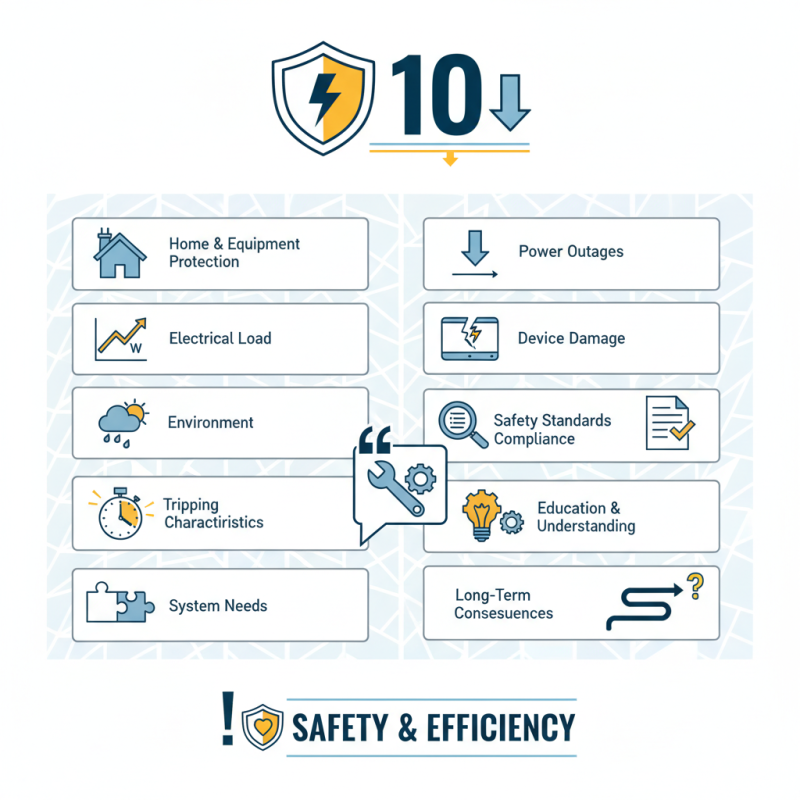
Selecting an MCB involves more than just picking a brand. It requires awareness of the system's unique needs. Consider factors like the electrical load, environment, and required tripping characteristics. Failing to address these specifics often leads to inadequate circuit protection. Without the right MCB, users may face unexpected power outages or even device damage.
Lastly, many overlook the importance of compliance with safety standards. This oversight can result in dangerous configurations. Remember, educating yourself about MCBs isn't just beneficial; it is essential for both safety and efficiency. The consequences of a hasty choice can haunt users for years to come.
Understanding the Basics of Miniature Circuit Breakers
Miniature circuit breakers (MCBs) are essential for electrical safety. They protect against overloads and short circuits. Understanding how they work is crucial for making the right choice. MCBs automatically turn off the circuit when problems arise. This prevents potential fire hazards and equipment damage. Knowing the basics can guide you in selecting the appropriate MCB for your needs.
Characteristics of MCBs vary significantly. Current ratings differ, ranging from low to high. It's important to match the MCB to your circuit requirements. The tripping characteristics also change with different MCB types. Choosing an incorrect type can lead to nuisance tripping or inadequate protection. Sometimes, people overlook the importance of proper installation. An incorrect setup can diminish the overall efficacy of the device.
Reflect on the environment where the MCB will be used. Some settings may have more dust or moisture, requiring special considerations. Always consult guidelines to ensure reliable performance. The right MCB can safeguard your home or business from electrical hazards. Taking the time to understand these basics can save you trouble down the line. Ultimately, the goal is to achieve safety and reliability in your electrical systems.
Top 10 Tips for Choosing the Right Miniature Circuit Breaker
| Tip Number | Tip | Description |
| 1 | Understand the Load Requirements | Calculate the total current load to select the appropriate AMP rating. |
| 2 | Select the Right Breaking Capacity | Choose a breaker that can handle potential fault currents. |
| 3 | Consider the Type of Circuit | Select different types of breakers for different applications (B, C, D). |
| 4 | Evaluate Enclosure Ratings | Choose enclosures based on environmental conditions (e.g., IP ratings). |
| 5 | Check Compatibility with Local Standards | Ensure compliance with electrical codes and standards in your area. |
| 6 | Consider the Installation Method | Decide between panel mounts or DIN rail suitable for your setup. |
| 7 | Look for Additional Features | Consider breakers with surge protection, remote trip, or smart technology. |
| 8 | Assess Brand Reputation | Research and read reviews to gauge reliability and support. |
| 9 | Consider the Price | Balance budgetary constraints with desired quality and features. |
| 10 | Seek Professional Advice | Consult with a qualified electrician for optimal selections. |
Identifying the Correct Current Rating for Your Application
Choosing the right miniature circuit breaker (MCB) involves understanding current ratings. The current rating indicates the maximum load the breaker can handle. For instance, a standard household circuit often uses a 16A MCB. This rating usually aligns with appliances requiring similar power levels, such as washing machines.
However, applications vary widely. Industrial setups might require MCBs rated at 40A or more to accommodate heavy machinery. According to recent industry reports, improper current ratings can lead to system failures or safety hazards. In one survey, 30% of installations reported issues due to incorrect MCB ratings. This reflects a lack of awareness among users regarding the specific current requirements of their systems.
Users must also consider environmental factors. Temperature, humidity, and installation conditions play significant roles in MCB performance. A breaker rated correctly for one environment may fail in another. Reports show that ambient temperature exceeds 30°C can reduce the MCB's effective capacity. Therefore, evaluating the application's context is crucial. Knowing these factors can prevent costly mistakes and ensure system reliability.
Assessing Tripping Characteristics: B, C, or D Curve Selection
When selecting a miniature circuit breaker (MCB), understanding tripping characteristics is crucial. The tripping curve defines how the circuit breaker reacts to overcurrent conditions. Common types are B, C, and D curves, each designed for specific applications.
Curve B is ideal for lighting and socket circuits. It trips between 3-5 times the rated current. This ensures that minor surges don’t interrupt power supply. If your equipment is more sensitive, like motors or transformers, a C curve may be a better choice. It trips between 5-10 times its rated current, allowing for brief inrush currents without nuisance tripping. For heavy-duty industrial equipment, consider the D curve. This option can handle 10-20 times the rated current.
Choosing the right curve can prevent operational issues. However, many users overlook these details. Sometimes, a B curve is chosen by habit, even when a C or D curve is a better fit. It’s essential to reflect on the actual use case. An unnecessary trip can delay productivity.
Proper assessment of the load, potential inrush currents, and equipment needs is vital. Don't rush this decision; it could save time and money in the long run.
Evaluating the Size and Mounting Type for Your Installation
When selecting a miniature circuit breaker (MCB), size and mounting type are crucial factors. The dimensions of the MCB must fit into your distribution board. Consider the available space carefully. A breaker that is too large can create installation issues. Conversely, a smaller unit might lack the capacity you need. Accuracy in measurement can prevent costly mistakes.
Mounting type is equally important. Options include din rail and panel mounting. Din rail mounts are popular for their ease of installation. They allow for quick replacements and adjustments. However, some users may find them less stable in high-vibration environments. Panel-mount breakers require more installation effort but can be easier to access. You should weigh the pros and cons based on your unique requirements.
Understanding the specific needs of your installation can guide your choices. Do not rush the decision-making process. Ensuring the right fit can save time and resources in the long run. Evaluate your choices carefully, as the right MCB will enhance safety and reliability.
Exploring Additional Features and Compliance Standards in MCBs
When selecting a miniature circuit breaker (MCB), compliance standards are crucial. These standards ensure the safety and reliability of the devices. Look for MCBs that meet local and international safety protocols. This compliance guarantees the breaker will perform as intended under various conditions. Some common standards include IEC and UL. Understanding these can be overwhelming. It's easy to overlook small details that matter.
In addition to compliance, consider additional features that enhance an MCB's functionality. Features like surge protection can safeguard your electrical system. Indicators for fault detection help assess the MCB’s health. These details often go unnoticed but can significantly affect performance. Many buyers focus on the basics and miss these vital features. This could lead to issues later. Always take a closer look at specifications and features beyond the surface.
Lastly, reflect on your own needs. What might work for one installation may not be suitable for another. Each environment presents unique challenges. Assess your specific requirements carefully. Aim for an MCB that not only fits your current needs but also adapts to future demands. The best choice is the one that aligns with your goals and safety standards.
Top 10 Tips for Choosing the Right Miniature Circuit Breaker