
How to Choose Metering Equipment for Global Procurement?
Global procurement of Metering Equipment is no longer a simple price comparison. Energy, water, and industrial buyers now require accurate readings, secure data, and dependable service across borders. The International Energy Agency’s Electricity 2024 report projects global electricity demand will grow by an average of 3.4% annually from 2024 to 2026. That growth increases pressure on utilities and manufacturers to measure consumption precisely. Small errors multiply.
Water procurement faces similar pressure. The United Nations World Water Development Report 2024 states that agriculture accounts for approximately 70% of global freshwater withdrawals. A meter used in a dry agricultural region must therefore withstand dust, heat, pressure changes, and irregular maintenance. Laboratory accuracy alone is not enough. Site conditions matter.
A practical selection process should examine measurement range, accuracy class, calibration traceability, ingress protection, communication protocols, cybersecurity, and replacement support. IEC standards and relevant OIML recommendations can provide a technical reference, while ISO/IEC 17025-accredited laboratories strengthen confidence in calibration results. Yet compliance marks do not automatically guarantee field performance. A device may pass testing but fail when condensation enters its enclosure or a network protocol changes. That assumption can be costly.
Experienced procurement teams compare total ownership costs, not only unit prices. They request sample test reports, verify production consistency, and confirm spare-part availability in the destination market. Regional certification requirements should also be reviewed before purchase. No checklist is perfect. However, combining independent evidence, supplier audits, pilot installations, and clear acceptance criteria can reduce avoidable risk. This guide explains how to make those decisions with greater technical confidence and commercial discipline.
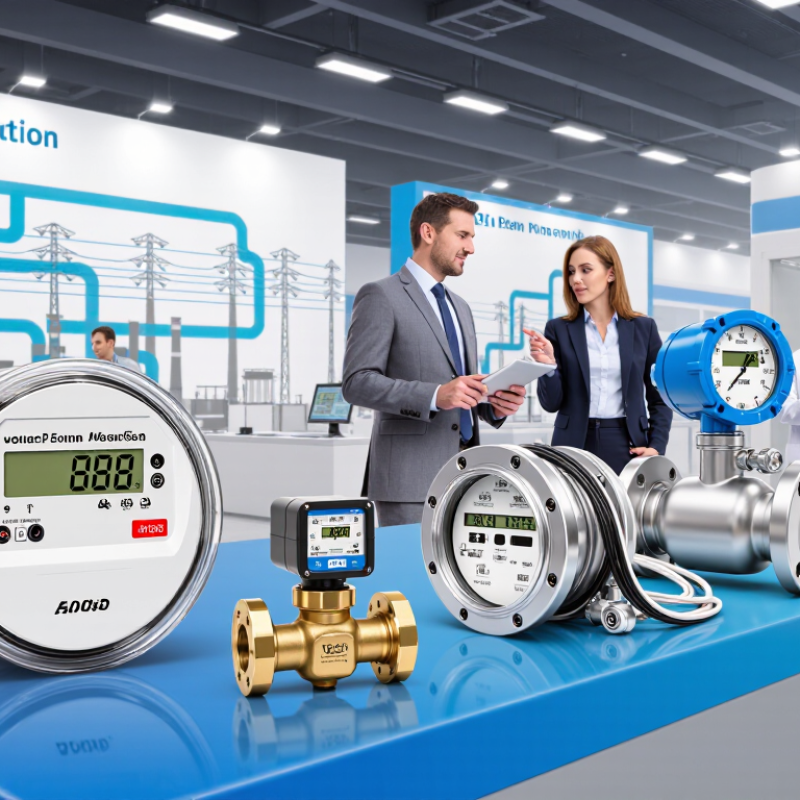
Define the Measurement Goals and Procurement Requirements
Global procurement starts with a clear measurement question, not a catalog search. Define what must be measured: flow, pressure, temperature, level, energy, or several variables together. State the required range, accuracy, repeatability, and response time. A practical specification prevents costly overengineering. It also exposes missing information. For example, a chilled-water line may need stable readings during low nighttime demand. Field experience shows that normal conditions matter as much as peak conditions.
Procurement requirements should describe the installation environment in plain detail. Record pipe size, connection type, fluid properties, ambient temperature, vibration, humidity, and available power. Ask whether operators need local displays, remote data, alarms, or audit-ready records. Compatibility with existing control systems should be verified before quotations arrive. This step is often rushed. That is a mistake. Require calibration documents, inspection procedures, warranty terms, spare-part support, and delivery commitments. For international projects, confirm units, language, packaging, export documents, and service response expectations.
Use a weighted evaluation sheet instead of choosing the lowest initial price. Give measurable weight to accuracy, lifecycle cost, maintenance access, cybersecurity controls, and supplier testing evidence. Request sample reports and references from comparable operating conditions. Evidence matters. Still, specifications are never perfect. A first draft may overlook condensation, unstable power, or difficult access above a crowded pipe rack. Review it with operators and maintenance technicians before approval. Their practical objections can prevent failures that a spreadsheet will not reveal.
| Measurement Goal | Recommended Equipment Type | Key Measurement Parameters | Typical Specification Target | Relevant Standards or Requirements | Procurement Priority | Global Procurement Checkpoints |
|---|---|---|---|---|---|---|
| Liquid flow measurement for process control | Electromagnetic flow meter | Volumetric flow rate, flow velocity, totalized volume, conductivity | Accuracy commonly within ±0.5% of reading; suitable for conductive liquids; no moving parts in the flow tube | Confirm applicable ISO, IEC, local metrology, sanitary, and pressure-rating requirements | High | Verify minimum conductivity, liner and electrode materials, flange standard, power supply, display language, and regional approvals |
| Clean-liquid flow measurement with low pressure loss | Ultrasonic flow meter | Volumetric flow rate, velocity, total flow, transit-time difference | Accuracy often within ±1.0% to ±2.0%, depending on installation and meter configuration; requires suitable straight-pipe conditions | Check installation guidance, electromagnetic compatibility, enclosure protection, and applicable flow-calibration requirements | High | Confirm pipe material, pipe diameter range, fluid temperature, air or solids content, clamp-on or in-line installation, and spare sensor availability |
| Gas consumption and distribution monitoring | Thermal mass flow meter or differential-pressure flow meter | Mass flow, standard volumetric flow, pressure, temperature, totalized consumption | Define reference conditions explicitly, such as standard temperature and pressure; accuracy depends on gas composition and operating range | Review gas safety classification, pressure equipment rules, hazardous-area requirements, and local calibration regulations | High | Specify gas type, moisture level, pressure range, temperature range, pipe size, reference conditions, hazardous-area classification, and data output |
| Custody-transfer or allocation measurement | Calibrated flow measurement system with flow computer | Flow rate, total volume or mass, density, pressure, temperature, corrected volume | System accuracy must be defined by the contract, applicable legal metrology rules, and the complete measurement chain—not only the sensor | Consider OIML recommendations, national legal-metrology rules, traceable calibration, tamper control, and audit records | High | Require calibration certificates, uncertainty statements, verification procedures, sealing arrangements, software revision control, and data retention |
| Pressure monitoring and equipment protection | Pressure transmitter or digital pressure gauge | Gauge, absolute, or differential pressure; process temperature; alarm status | Typical industrial accuracy classes range from approximately 0.1% to 0.5% of span; select range so normal operation is near the middle of span | Confirm pressure rating, overpressure protection, electrical safety, EMC, and hazardous-location requirements where applicable | High | Specify pressure reference, process connection, wetted materials, diaphragm seal, temperature compensation, output signal, and calibration points |
| Temperature control and product quality | Resistance temperature detector or thermocouple assembly | Process temperature, sensor resistance or thermoelectric signal, alarm limits | Platinum resistance sensors are commonly selected for stable industrial measurement; thermocouples support wider temperature ranges but require correct compensation | Check IEC 60751 for platinum resistance sensors, IEC 60584 for thermocouples, and required tolerance class | High | Define sensor type, tolerance class, sheath material, insertion length, response time, thermowell design, connector type, and calibration range |
| Energy monitoring in electrical systems | Power meter or multifunction electrical meter | Voltage, current, active power, reactive power, power factor, frequency, energy, harmonics | Accuracy class must be specified separately for energy, voltage, current, and power-quality functions; current-transformer performance affects total accuracy | Review IEC 61557, IEC 62052, IEC 62053, IEC 61000 series, and local electrical installation rules as applicable | High | Specify system voltage, phase arrangement, CT or direct connection, frequency, short-circuit category, energy class, communication protocol, and panel dimensions |
| Water and utility consumption measurement | Water meter or utility flow meter | Instantaneous flow, cumulative volume, leakage indication, pressure, temperature | Define permanent flow rate, minimum flow rate, pressure loss, and accuracy ratio; meter sizing should be based on actual demand rather than pipe size alone | Check ISO 4064 or equivalent regional water-meter requirements, potable-water material approvals, and local verification rules | Medium | Confirm water quality, installation orientation, connection size, pulse output, remote reading, frost protection, and approved materials for intended use |
| Tank level and inventory management | Radar level meter or hydrostatic level transmitter | Level, distance, volume, interface position, high and low alarms | Radar measurement is generally suitable for non-contact applications; hydrostatic systems require stable density and correct pressure compensation | Review tank design, process safety, electromagnetic compatibility, hazardous-area rules, and local pressure or chemical-service requirements | Medium | Specify tank geometry, measurement range, vapor and foam conditions, dielectric properties, nozzle dimensions, material compatibility, and false-signal handling |
| Air-quality and environmental compliance | Particulate matter, gas, humidity, or emissions monitoring analyzer | Concentration, particle size fraction, humidity, temperature, flow, alarm status | Performance must be selected according to the pollutant, detection limit, sampling method, averaging period, and required regulatory reporting interval | Confirm applicable ISO, EN, EPA, or national environmental methods; regulatory acceptance may require type testing and site verification | High | Define target pollutants, detection limits, sampling conditions, calibration gases, maintenance intervals, data integrity, and authority acceptance requirements |
| Remote data collection across multiple countries | Industrial gateway, data logger, or metering communication module | Timestamped readings, device status, alarms, energy or utility totals, audit trail | Choose communication interfaces such as Modbus RTU, Modbus TCP, M-Bus, pulse, Ethernet, cellular, or wireless protocols according to the site architecture | Check IEC 62443-related cybersecurity practices, radio regulations, electrical safety, EMC, data-protection requirements, and local telecom approvals | High | Confirm protocol compatibility, time synchronization, local SIM or network support, encryption, user access control, cloud hosting location, and offline data buffering |
| Verification, calibration, and audit readiness | Reference calibrator, portable test instrument, or calibration service | Reference value, measured value, deviation, uncertainty, as-found and as-left results | Calibration equipment should have suitable accuracy ratio and traceability for the instruments being verified; uncertainty must be documented | Use ISO/IEC 17025-accredited calibration where required and maintain traceability to recognized national or international measurement standards | High | Specify certificate format, measurement points, uncertainty, environmental conditions, language, recalibration interval, service location, and record-retention period |
| Installation durability in harsh environments | Industrial enclosure, remote sensor assembly, or ruggedized meter | Measurement stability under dust, water, vibration, corrosion, and temperature variation | Ingress protection should match the installation environment; IP ratings describe protection against solids and water but do not replace hazardous-area certification | Review IEC 60529 for IP ratings, IEC 60068 environmental testing, corrosion requirements, EMC, and hazardous-area certification where applicable | Medium | Define ambient temperature, humidity, vibration, corrosive agents, UV exposure, washdown conditions, enclosure material, cable entry, and mounting method |
| Lifecycle cost and international serviceability | Metering package with documented spare-parts and service plan | Purchase cost, installation cost, calibration cost, energy use, spare-parts cost, downtime risk | Evaluate total cost of ownership over the planned service life rather than comparing purchase price alone | Require documented quality procedures, warranty terms, change-control process, export documentation, and regionally available technical support | High | Compare lead time, customs classification, packaging, replacement parts, firmware policy, training, repair turnaround, warranty coverage, and end-of-life notice period |