

- 713.590.1312
- sale@pandbtools.com
How to Choose an Aluminum Tube Evaporator in 2026?
Choosing an Aluminum Tube Evaporator in 2026 is not just a matter of comparing price tags. The right unit must match the equipment, operating conditions, and service environment. A compact cooler in a humid kitchen has different demands from a large cold-storage system. Small details matter.
Start with the basics: required cooling capacity, temperature range, refrigerant, airflow, and available installation space. Then check tube dimensions, fin spacing, connection layout, and expected pressure drop against the system design. Ask suppliers for performance data under stated test conditions, material specifications, pressure ratings, and corrosion-protection details. If the figures cannot be compared fairly, pause. A polished brochure is not proof.
Field experience also matters. Dusty rooms can clog tight fin spacing; frequent washdowns may expose weak coatings or joints. Look for accessible drain pans, practical cleaning clearance, and replacement-part support. Confirm that the evaporator works with the compressor and controls, rather than judging it alone. In 2026, buyers may also weigh energy use, refrigerant changes, and lifecycle cost, but these depend on the full system and local operating conditions.
There is no universal best choice. An Aluminum Tube Evaporator may offer a useful balance of weight, heat transfer, and corrosion resistance, yet construction and application determine the result. I would verify claims with drawings, test data, and a qualified refrigeration professional. One detail can change the decision. Even careful selection has limits: real performance can differ when installation, airflow, or maintenance falls short.
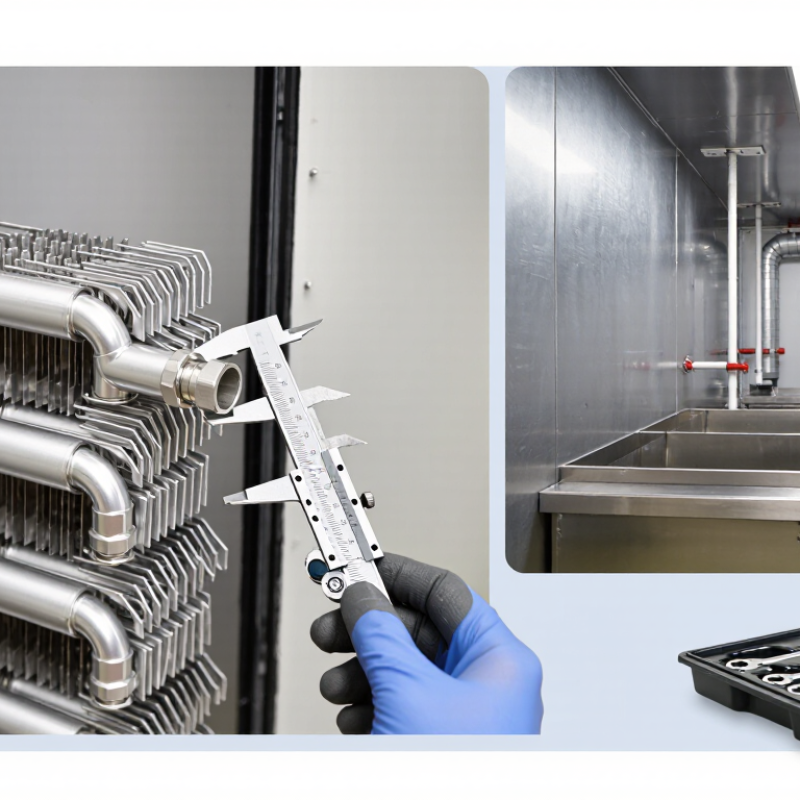
Define the Duty Point: Cooling Load, Evaporating Temperature, and Airflow
How to Choose an Aluminum Tube Evaporator in 2026?
Choose the evaporator around its actual duty point, not a headline capacity. Estimate the room’s cooling load at the expected outdoor and indoor conditions, including product heat, people, lighting, and door openings. Then check the required evaporating temperature. A lower temperature can increase the temperature difference across the coil, but it may also affect efficiency, frost formation, and defrost frequency. Record the design conditions clearly; a load estimate based on a mild afternoon can undersize equipment during a busy, hot period.
Tips: Match airflow to the coil’s rated conditions. Check fan volume, coil face area, and pressure drop together. Too little airflow can leave parts of the coil cold and uneven. Too much may reduce moisture removal. Ask for capacity data at your intended evaporating temperature and airflow, rather than comparing ratings with different test conditions.
One easy-to-miss detail is the air path around the installed coil. Shelves, filters, and tight bends can restrict flow, even when the fan looks adequate. Allow room for service and inspect how condensate drains. Recheck assumptions before ordering; airflow measurements or room-load records may be imperfect. That uncertainty is worth noting, not hiding.

Compare Tube Materials: Aluminum Conductivity ≈205 vs Copper ≈390 W/m·K
How to Choose an Aluminum Tube Evaporator in 2026?
Aluminum conducts heat at about 205 W/m·K, while copper is near 390 W/m·K. The difference matters, but it does not decide performance by itself. Not the whole story. Tube-wall thickness, diameter, fin contact, and refrigerant flow also shape heat transfer. A thin aluminum tube may perform well in a carefully designed coil, even with lower material conductivity.
When comparing units, check the actual tube dimensions and coil layout, not just the alloy name. For example, a compact evaporator with tightly fitted fins can move heat effectively, while poor fin-to-tube contact creates a bottleneck. Ask for rated capacity under stated test conditions. Compare the same air temperature, refrigerant, and airflow. Otherwise, the figures may mislead.
Aluminum is lighter, which can help with handling and support loads. Copper’s higher conductivity may suit designs where space is tight, but the complete assembly matters more than one number. Inspect joining methods and corrosion protection, especially where dissimilar metals meet. I would also question any claim that aluminum always saves energy. That depends on the whole system, and it is easy to overlook installation quality.
Select Tube Geometry: 5–12.7 mm Outside Diameter and Frost-Suitable Fin Pitch
For a 2026 aluminum tube evaporator, treat 5–12.7 mm outside diameter as a design range, not a universal answer. Smaller tubes can provide compact circuits, but they may increase refrigerant pressure drop and complicate distribution. Larger tubes can reduce that penalty, yet need careful circuiting to maintain even cooling. ASHRAE’s 2022 Handbook—Refrigeration explains how evaporator performance depends on refrigerant flow, heat transfer, and operating conditions. Match tube diameter to capacity, circuit length, and the actual temperature difference—not just cabinet size.
Fin pitch matters just as much when frost is expected. Tight spacing adds surface area, but frost can bridge the gaps and restrict airflow. Wider spacing gives frost more room, though it may reduce heat-transfer area within the same coil face. Start with a frost-tolerant pitch based on room humidity, defrost frequency, and fan airflow, then validate it under real operating conditions. Check the coil after a humid pull-down; a clean-room test can mislead. ASHRAE’s 2021 Handbook—Fundamentals reports pure aluminum thermal conductivity near 237 W/(m·K) at room temperature, while tube-alloy values vary. Good conductivity helps, but it cannot compensate for blocked air passages. Small details matter. Test frost buildup across the full coil, not only at the inlet.
Verify Refrigerant Compatibility, Design Pressure, and ASHRAE 34 Safety Class
How to Choose an Aluminum Tube Evaporator in 2026?
Verify Refrigerant Compatibility, Design Pressure, and ASHRAE 34 Safety Class
An aluminum-tube evaporator must suit the exact refrigerant and operating conditions, not just the equipment dimensions. Check the manufacturer’s compatibility data for the refrigerant, lubricant, tube materials, and joining methods. Also consider moisture, cleaning chemicals, and contact with dissimilar metals, which can contribute to corrosion. Small details matter. Confirm the unit’s rated design pressure against the system’s expected pressures and temperatures. A rating that looks adequate at one condition may not cover another.
Tips: Ask for the pressure rating and test basis in writing. Verify that the stated refrigerant is approved for the specific evaporator configuration. Do not guess from a similar model.
Check the refrigerant’s ASHRAE 34 safety class, including its toxicity and flammability designation. The class helps inform system safeguards, ventilation, and installation decisions; it does not replace applicable codes or a qualified design review. An A1 designation, for example, does not prove that every component is compatible or correctly rated. Read the technical documents closely, and resolve gaps with the supplier or a refrigeration engineer. Even a polished datasheet can leave questions unanswered, so it is worth pausing before purchase.
Validate Coil Ratings to AHRI 410 and Check Corrosion, Defrost, and Service Needs
How to Choose an Aluminum Tube Evaporator in 2026?
Start with the coil’s published rating, not a catalog headline. Confirm that performance is rated to AHRI 410, and compare capacity, airflow, and entering-air conditions. A rating is useful only when its test conditions resemble your actual operating range. Check the refrigerant and temperature data, too. Small mismatches can change the result.
Tips: Request the rating sheet and installation dimensions. Verify that the stated capacity matches your design load.
Then consider the environment around the coil. Coastal air, cleaning chemicals, and persistent moisture can speed corrosion. Ask about protective treatments and compatibility between connected metals. Inspect the drain pan and nearby joints; corrosion often starts where water collects. I would not treat “aluminum” as a complete durability answer. Site conditions matter.
Defrost and service details deserve equal attention. In low-temperature rooms, ask how the coil handles frost, where meltwater drains, and whether the control schedule fits door traffic. Check that technicians can reach connections, sensors, and the drain pan without dismantling nearby equipment. Request documented maintenance guidance and confirm that replacement parts are available. A compact coil may fit neatly, but restricted access can turn a routine repair into a longer shutdown.
How to Choose an Aluminum Tube Evaporator in 2026? — Validate Coil Ratings to AHRI 410 and Check Corrosion, Defrost, and Service Needs
| Selection dimension | What to verify | Why it matters | Practical selection check |
|---|---|---|---|
| AHRI 410 rating basis | Ask whether the coil is rated under the applicable edition of AHRI Standard 410 and whether the specific model is listed in a relevant certification directory, where applicable. | Standardized ratings help make coil performance comparisons more meaningful. A claim of compliance is not, by itself, proof that a model is independently certified. | Request the rating or certification documentation for the exact model and confirm the rating conditions match the intended application. |
| Capacity and design conditions | Review the stated cooling capacity alongside entering-air conditions, airflow, refrigerant, evaporating conditions, and any stated frost or wet-coil assumptions. | Capacity depends on operating conditions. A rating measured under different conditions may not represent performance in the planned system. | Have the supplier select or rate the coil using the project’s actual design conditions; do not compare capacity figures without their conditions. |
| Airflow and air-side pressure drop | Check rated airflow, face area or face velocity, and air-side pressure drop. Confirm that the fan can deliver the required airflow with the coil installed. | Excessive resistance can reduce delivered airflow and increase fan power. Airflow also affects heat transfer and frost formation. | Compare the coil pressure drop with the available fan static pressure and the rest of the air path, including filters and ductwork. |
| Refrigerant-side design | Confirm refrigerant compatibility, design pressure and temperature, circuiting, connections, and the specified refrigerant distribution method. | Incorrect pressure or refrigerant assumptions can compromise safety and performance. Circuiting and distribution affect how evenly the coil operates. | Match the coil documentation to the system’s refrigerant and operating envelope; verify design limits against applicable codes and project requirements. |
| Aluminum construction and corrosion exposure | Identify which components are aluminum, the joining and coating details, and any documented corrosion testing or protection options for the intended environment. | Corrosion risk varies with moisture, salts, cleaning chemicals, and contaminants. “Aluminum” alone does not establish suitability for a particular exposure. | Describe the actual environment to the supplier, including coastal or process exposure and cleaning agents; request written limits and maintenance guidance. |
| Defrost strategy | Confirm the intended defrost method, controls, sensor locations, termination logic, and compatibility with the coil’s installation and operating conditions. | Frost accumulation restricts airflow and reduces heat transfer. Defrost settings affect temperature stability, energy use, and recovery time. | Check that the system design includes a suitable defrost method and control sequence; verify drainage and post-defrost recovery for the application. |
| Drainage and condensate management | Review drain-pan material, slope, outlet location, insulation needs, and freeze protection where relevant. | Poor drainage can cause standing water, leakage, icing, or hygiene issues, particularly in low-temperature or humid applications. | Confirm the pan and drain arrangement suit the unit orientation and installation; check that the drain can remain open and accessible. |
| Service access and repairability | Check access to connections, sensors, drain pan, fan components, and inspection surfaces. Ask about approved cleaning and repair procedures. | Restricted access can increase cleaning and maintenance time. Repair methods must be compatible with the coil construction and system requirements. | Review service clearances on the installation drawing and obtain written cleaning, inspection, and repair instructions before purchase. |
| Dimensions and installation fit | Verify overall dimensions, connection orientation, mounting points, airflow direction, shipping constraints, and required service clearances. | A coil that meets performance requirements may still be unsuitable if it cannot be installed, connected, or maintained in the available space. | Check a dimensioned drawing against the unit and site layout, including access for removal and replacement. |
| Documentation and warranty | Request a model-specific performance schedule, installation and maintenance instructions, material details, and written warranty terms. | Clear documentation supports commissioning, future service, and comparison of offered equipment. Warranty coverage may depend on operating and maintenance conditions. | Keep the approved submittal and confirm exclusions, required maintenance, and operating limits before placing the order. |