
- 713.590.1312
- sale@pandbtools.com
How to Choose a POY Spinning Line for Global Production?
Choosing a POY Spinning Line for global production is an engineering decision, not a simple equipment purchase. Polyester remained the world’s most produced fibre in 2023, according to Textile Exchange’s Materials Market Report 2024. That scale creates pressure for stable output, lower energy use, and consistent yarn quality across different factories.
A practical evaluation should begin with the target denier, polymer viscosity, annual capacity, and product mix. Check the melt-extrusion system, spinning beam design, quenching performance, winding speed, and automatic doffing. Small details matter. A poorly controlled quench zone can create uneven dye uptake across thousands of packages. A weak winding system may produce hard edges, slippage, or frequent breaks during downstream texturing.
Energy performance deserves close attention. The International Textile Machinery Federation’s International Textile Machinery Shipments Statistics show continuing investment in modern, higher-productivity textile equipment. However, shipment growth does not prove that every new line suits every plant. Local electricity stability, cooling-water quality, maintenance skills, and spare-parts access can change the result.
Supplier credibility should be tested through factory visits, audited references, and measured acceptance data. Ask for long-run denier variation, broken-filament rates, power consumption per kilogram, and start-up performance. Require evidence, not promises. The best POY Spinning Line is not always the fastest one. It is the line that delivers repeatable quality under your actual operating conditions.
There is room for doubt. Forecasts can shift, and capacity plans can age quickly. A careful buyer should model conservative demand, not ideal demand. This approach supports safer investment, stronger technical accountability, and more reliable global production.
POY Spinning Line Fundamentals and Production Objectives
How to Choose a POY Spinning Line for Global Production?
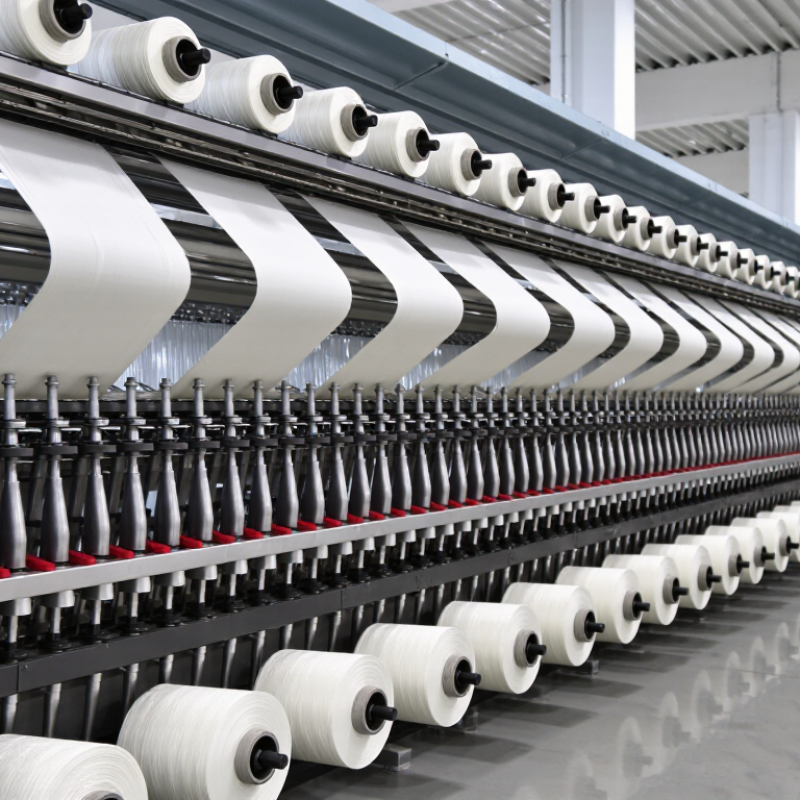
POY means partially oriented yarn, produced by controlled melt spinning and high-speed winding. A reliable line should connect the extruder, melt filter, metering pumps, spinnerets, cooling zone, godets, and winding units smoothly. Each section affects denier consistency, filament breaks, and package formation. Small temperature changes can become visible defects later.
Production objectives should guide the equipment choice. A factory targeting fine-denier polyester may need precise metering, stable cooling, and excellent tension control. Heavy-denier products require different spinneret designs and stronger process stability. Define the planned output, yarn range, operating hours, raw material properties, and acceptable waste before comparing capacity figures. More speed is not always better.
Not always efficient.
During line evaluation, request trial data under similar polymer conditions. Check denier variation, break frequency, winding hardness, energy use, and changeover time. Ask how operators respond to alarms and how quickly maintenance teams replace filters or calibrate sensors. A clean layout matters when technicians inspect a hot spinning area at night. Spare-part availability and training support also influence long-term reliability.
A digital control system can record pressure, temperature, and tension trends, but it cannot correct poor process discipline. A spreadsheet may show excellent output while hiding frequent manual adjustments. That deserves attention. Global production also involves different climates, utility stability, workforce skills, and local compliance requirements. Leave room for testing, because the first production target may prove too optimistic.
How to Choose a POY Spinning Line for Global Production?
POY line capacity depends on the number of spinning positions, output per position, and operating availability. The chart estimates monthly production using a planning rate of 15 kg/h per position, 85% availability, and a 30-day month.
Higher-position lines provide greater output potential, but they also require stronger utilities, melt distribution, winding coordination, quality control, and maintenance planning. Final line selection should balance target volume, product mix, operating flexibility, and energy efficiency.
Key Specifications for Global Manufacturing Requirements
How to Choose a POY Spinning Line for Global Production?
A POY spinning line should match the polymer, denier range, and production volume required at each site. Start with melt throughput, spinning positions, and maximum winding speed. These figures determine real capacity, not brochure language.
In factory evaluations, I check whether the line can maintain stable tension during speed changes. Small tension swings can create uneven dye uptake later.
That detail matters.
Global manufacturing also demands adaptable utilities. Confirm power requirements, compressed air quality, cooling-water temperature, and installation space before purchase. The quenching system should provide uniform airflow across every position. The godet configuration must support consistent yarn speed and temperature control.
Automatic doffing can reduce operator exposure and improve package consistency. However, automation is not always the best answer for every plant. Local maintenance skills may be limited.
Control architecture deserves close attention. A reliable line should record temperature, pressure, speed, vibration, and alarm history. Remote diagnostics can shorten downtime, but only with secure access and clear data ownership.
Ask for validated performance records under comparable polymer and denier conditions. Request details about spare-parts availability, training, calibration, and service response times.
These practical points often decide whether output remains stable after commissioning. I would also leave room for uncertainty.
Pilot trials may reveal filament behavior that calculations miss. A perfect spreadsheet cannot replace yarn testing.
Evaluation of Polymer, Spinning, and Winding Systems
How to Choose a POY Spinning Line for Global Production?
Selecting a POY line starts with polymer behavior, not advertised output. Textile Exchange’s 2024 Materials Market Report recorded 124 million tonnes of global fiber production in 2023. Polyester represented about 59% of that volume. This scale increases pressure on stable polymer preparation and efficient melt handling.
Evaluate intrinsic viscosity control, chip moisture, melting uniformity, and filtration capacity. Small differences matter. A reliable polymer system should limit residence-time variation and prevent frequent filter changes. Spinning performance depends on precise temperature control, stable quenching, and consistent oil application. Measure denier variation, broken filaments, and tenacity across several production shifts. One impressive trial is not enough.
Winding systems deserve equal attention. Check tension stability, package density, traverse accuracy, and doffing time. The International Textile Machinery Federation’s 2023 shipment statistics showed continued investment in automated textile machinery, reflecting labor and productivity pressures across regions.
However, automation should match local maintenance skills and spare-parts access. A high-speed winder may create hidden losses if operators cannot correct tension drift quickly.
I would not trust a glossy throughput claim alone. Energy use, compressed-air demand, waste rate, and changeover time should be recorded under real factory conditions.
The best specification is often incomplete. Weather, utilities, polymer quality, and operator habits can change the result.
Assessment of Energy Use, Automation, and Operational Reliability
Choosing a POY spinning line for global production requires more than comparing output figures.
In plant assessments, energy use often separates a stable investment from an expensive surprise. Measure electricity per kilogram, not only installed motor capacity. Check heaters, cooling systems, compressed air, and standby consumption. A line may look efficient during full production but waste power during changeovers. Small losses accumulate across continuous operation.
Automation should support operators, not simply add screens.
Useful systems track temperature, winding tension, speed, and filament quality in real time. Clear alarms help technicians act before defects spread through several packages. Remote diagnostics can shorten response times, but local staff still need practical training. No interface replaces experience. Ask for production records, alarm histories, and trial data from comparable conditions. Marketing claims are not enough.
Operational reliability depends on mechanical access, control stability, spare-part planning, and maintenance discipline. Inspect threading paths, filter changes, lubrication points, and emergency procedures before signing a specification.
Factory acceptance tests should include startup, speed changes, power interruptions, and extended running. These details reveal weaknesses that short demonstrations hide. A perfect spreadsheet can still miss operator fatigue.
Energy targets may also conflict with rapid acceleration or higher quality requirements. Leave room for measured adjustment after installation, because real factory conditions rarely match laboratory assumptions.
Supplier Selection, Compliance, Installation, and Lifecycle Support
How to Choose a POY Spinning Line for Global Production?
Choosing a POY spinning line starts with the supplier, not the machine brochure. Request verified production records, reference sites, energy data, and test results from comparable polymers. Ask how the line performs during denier changes, power fluctuations, and extended high-speed operation. A factory visit can reveal details that drawings often hide. Clean cable routing matters. So does operator access.
Compliance should be checked before commercial negotiations finish. Confirm applicable machinery, electrical, workplace safety, and environmental requirements in each target market. Require risk assessments, guarding layouts, emergency-stop circuits, technical files, and language-appropriate manuals. Do not accept a certificate without checking its scope and validity. Local inspection rules may still require additional testing. This step is easy to underestimate.
Installation planning should include floor loading, foundation tolerances, chilled water, compressed air, exhaust, and material flow. A supplier should provide interface drawings and a named commissioning team. During startup, record temperatures, pressures, winding tension, and yarn defects. Small deviations become expensive later. Lifecycle support needs defined spare-part lists, response times, software access, training, and preventive-maintenance schedules. I have seen projects focus heavily on commissioning and neglect the fifth year. That was a costly lesson. A strong supplier remains accountable after production begins, while the buyer keeps independent records and challenges optimistic promises.
How to Choose a POY Spinning Line for Global Production? - Supplier Selection, Compliance, Installation, and Lifecycle Support
A practical evaluation framework for comparing POY spinning line proposals across capacity, quality, compliance, project execution, and long-term operating value.
| Evaluation Area | Decision Dimension | Recommended Benchmark or Requirement | Why It Matters for Global Production | Supplier Evidence to Request | Suggested Weight | Review Status |
|---|---|---|---|---|---|---|
| Product and Capacity | Target product range | Confirm the intended POY denier range, filament count, luster options, cross-section requirements, and polymer types before comparing equipment. | Line configuration, spinning components, winding technology, and process controls must match the actual product portfolio rather than a single reference product. | Written product matrix, approved process window, sample packages, and production references for comparable specifications. | 10% | Must verify |
| Product and Capacity | Nominal and guaranteed output | Separate nameplate capacity from guaranteed saleable output. Evaluate output per position, total line output, operating hours, and expected utilization. | Higher nameplate capacity does not automatically produce higher annual sales if uptime, doffing time, quality losses, or changeover performance are weak. | Guaranteed performance table, mass-balance calculation, ramp-up assumptions, and historical acceptance-test results. | 12% | Must verify |
| Product and Capacity | Spinning and winding speed | Assess the required spinning speed and winding speed together with yarn stability, package build quality, and the selected polymer grade. | Speed claims are meaningful only when they are linked to stable denier, low defects, acceptable package density, and the specified product range. | Speed-versus-product charts, package-quality data, defect records, and trial results using the buyer's polymer and additives. | 8% | Trial required |
| Product and Capacity | Energy intensity | Request electricity, compressed-air, cooling-water, and HVAC consumption per kilogram of saleable POY under defined operating conditions. | Energy cost directly affects yarn conversion cost and can also influence environmental reporting and eligibility for efficiency programs. | Utility balance, measurement method, operating assumptions, and energy figures from comparable installations. | 8% | Must verify |
| Quality and Process Control | Yarn uniformity and defect control | Define acceptance limits for denier variation, tensile properties, elongation, shrinkage, interlace performance, oil pickup, and visible defects. | Clear quality limits make supplier comparisons objective and reduce disputes during commissioning and final acceptance. | Inspection plan, test methods, control charts, laboratory equipment list, and sample test reports. | 12% | Critical |
| Quality and Process Control | Automation and traceability | Prioritize recipe management, alarm history, trend recording, batch identification, electronic production records, and controlled user access. | Traceability supports consistent production across countries, faster root-cause analysis, and more reliable customer audits. | Control-system architecture, sample dashboards, data-retention policy, cybersecurity controls, and user-role matrix. | 8% | Must verify |
| Supplier Selection | Relevant engineering experience | Evaluate completed POY projects with similar polymer, product range, line scale, climate, utilities, and operating model. | Comparable references provide stronger evidence than general machinery experience or unverified capacity claims. | Reference-site list, contactable users, project scope, start-up date, achieved output, and current operating performance. | 10% | Reference check |
| Compliance and Safety | Machine and electrical compliance | Define applicable local requirements and request conformity documentation for machinery safety, electrical equipment, guarding, emergency stops, and risk assessment. | Regulatory obligations vary by destination country; compliance should be agreed during design rather than corrected after shipment. | Risk assessment, declaration of conformity where applicable, electrical schematics, safety-circuit validation, and inspection records. | 8% | Mandatory |
| Compliance and Safety | Environmental and chemical requirements | Review applicable requirements for emissions, wastewater, refrigerants, restricted substances, chemical handling, waste oil, and polymer-additive management. | Environmental obligations can affect permitting, operating cost, export eligibility, and customer sustainability audits. | Material declarations, safety data sheets, emissions information, waste-handling procedures, and environmental design statement. | 6% | Site-specific |
| Installation and Commissioning | Site-readiness requirements | Confirm building loads, floor flatness, equipment access, temperature and humidity control, power quality, cooling water, compressed air, ventilation, and fire protection. | Many installation delays originate from incomplete civil works or utilities rather than from the machinery itself. | General arrangement drawings, foundation loads, utility list, installation interface matrix, and site-readiness checklist. | 7% | Plan early |
| Installation and Commissioning | FAT, SAT, and performance acceptance | Use staged acceptance: design review, factory acceptance test, site acceptance test, ramp-up verification, and final performance test with agreed sampling rules. | Milestone-based acceptance reduces ambiguity over what has been tested and when payment or warranty obligations begin. | Signed acceptance protocol, test recipes, sampling plan, punch-list process, and remedy or retest procedure. | 8% | Contract item |
| Installation and Commissioning | Training and knowledge transfer | Include operator, maintenance, process, laboratory, safety, and troubleshooting training before and during production ramp-up. | Competent local teams improve start-up speed, reduce avoidable stoppages, and protect product quality after specialists leave the site. | Training plan, language coverage, competency assessment, operating manuals, maintenance schedules, and spare-parts catalogue. | 6% | Required |
| Lifecycle Support | Spare-parts availability | Define critical spares, recommended start-up inventory, normal lead times, obsolete-part policy, and local or regional stocking arrangements. | Long lead times for specialized components can turn a minor failure into a prolonged production interruption. | Critical-spares list, pricing validity, lead-time matrix, service stock locations, and parts interchangeability policy. | 7% | Contract item |
| Lifecycle Support | Remote and field service | Agree response times, remote diagnostic capability, escalation routes, regional field coverage, preventive-maintenance visits, and service reporting. | Global production requires support that remains effective across time zones, languages, and different local technical capabilities. | Service-level agreement, support organization chart, escalation workflow, remote-access protocol, and field-engineer coverage. | 7% | Must verify |
| Commercial and Risk | Total cost of ownership | Compare purchase price, installation, utilities, labor, consumables, maintenance, spare parts, software, training, downtime risk, and end-of-life costs over a defined period. | The lowest initial quotation may not provide the lowest cost per kilogram over the operating life of the line. | Lifecycle-cost model, assumptions sheet, warranty terms, consumption guarantees, and sensitivity analysis for energy and utilization. | 10% | Compare fully |
| Commercial and Risk | Delivery, warranty, and change control | Clarify delivery milestones, liquidated damages, warranty start date, exclusions, software updates, documentation language, and engineering-change approval. | Clear commercial terms protect the production schedule and prevent uncontrolled scope growth during a multi-country project. | Detailed project schedule, responsibility matrix, warranty conditions, change-order process, and insurance requirements. | 6% | Contract item |