
How to Choose a Natural Gas Piston Compressor in 2026?

Choosing a Natural Gas Piston Compressor in 2026 means balancing dependable output with operating cost, maintenance access, and emissions performance. The International Energy Agency’s Gas 2024 report projected global gas demand would reach a record 4,200 billion cubic metres in 2024. More throughput can mean greater pressure on equipment. But a larger compressor is not automatically the better choice.

The IEA’s Global Methane Tracker 2024 estimated that fossil fuel operations emitted nearly 120 million tonnes of methane in 2023. That figure is not a compressor-specific measurement, yet it makes leakage control a serious selection factor. Check seal design, packing options, monitoring provisions, and the supplier’s documented emissions data. Also compare required flow, suction and discharge pressures, gas composition, turndown, and expected starts per day. Small details matter. A compressor sized around an average condition may struggle when inlet pressure falls or demand changes.

API Standard 618 provides a useful technical reference for reciprocating compressors in process applications. Review it alongside the project specification and the manufacturer’s performance curves. As IEA Executive Director Fatih Birol put it in describing the gas outlook, “We may be entering a golden age of gas.” That broad market observation is not equipment-selection advice. The harder question is whether the chosen machine fits your actual duty cycle. A careful 2026 evaluation should weigh lifecycle service, parts availability, vibration limits, and maintainability—not just purchase price. There is no perfect shortlist. The right choice depends on verifiable operating data and a supplier willing to explain its assumptions.
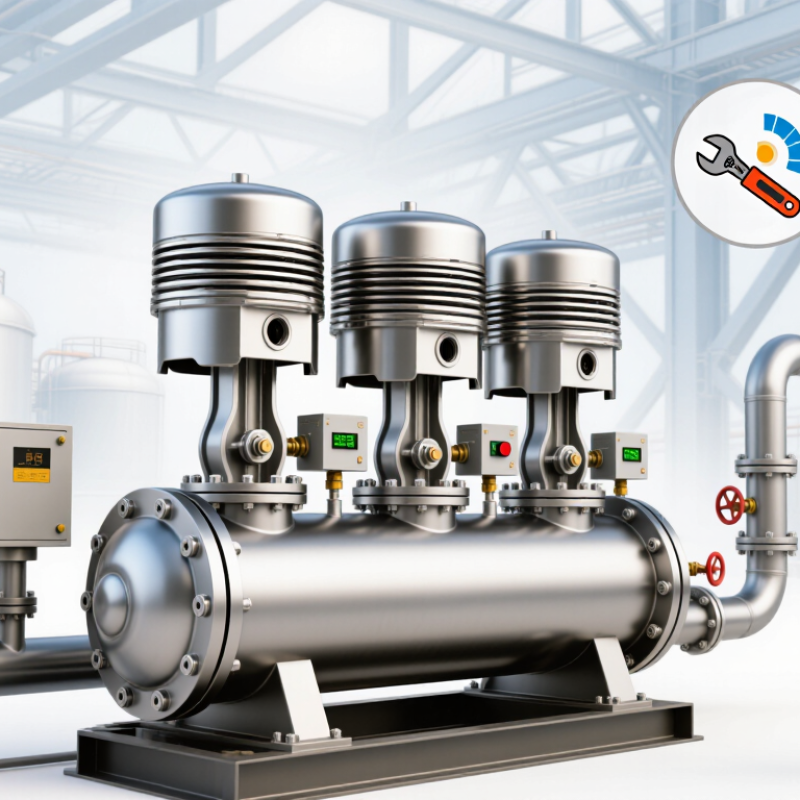
How to Choose a Natural Gas Piston Compressor in 2026?

Define the Gas Composition, Flow Rate, and Operating Conditions

Start with a current gas assay, not a pipeline label. Methane, ethane, nitrogen, carbon dioxide, water, and heavier hydrocarbons affect molecular weight and compressibility. EIA’s Natural Gas Annual 2023 reports average U.S. dry-gas heat content near 1,036 Btu per cubic foot; a specific supply can differ by basin and season. Treat that figure as context, not a design value. Request composition ranges, water and hydrocarbon dew points, and sulfur data. Small details matter. These influence valve performance, cylinder lubrication, corrosion risk, and liquid carryover.

Define minimum, normal, and peak flow, and state whether each figure is actual or standard volume. Include the reference temperature and pressure for standard flow. Then record suction and discharge pressures, inlet temperature, ambient extremes, and expected operating hours. API Standard 618 provides design guidance for reciprocating compressors, including capacity control and pulsation considerations. Ask the supplier to model the full operating envelope, not just one convenient point. A tidy average can mislead; I would challenge any selection based on a single gas sample or a steady-flow assumption. Recheck the inputs when supply composition or seasonal demand changes.


Select a Suitable Piston Compressor Type and Configuration

A suitable piston compressor starts with the gas and the operating envelope, not a catalog image. Record suction pressure, discharge pressure, flow range, gas composition, and expected turndown. A single-stage unit may suit a modest pressure ratio; higher ratios can require multiple stages with intercooling. Check discharge temperature and valve loading at both normal and peak conditions. Small details matter. A dusty inlet, frequent starts, or changing gas composition can alter maintenance needs.

Choose a lubricated or non-lubricated cylinder based on gas quality, contamination tolerance, and downstream requirements. Then compare frame type, cylinder arrangement, cooling method, and capacity control. Skid-mounted packages simplify installation, but access for valve and piston maintenance still needs space. IEA’s Global Methane Tracker 2024 estimated energy-sector methane emissions at about 120 million tonnes in 2023. That figure makes sealing, vent management, and leak monitoring practical selection criteria, not afterthoughts.

Ask suppliers to document performance across the full operating range, including part-load conditions and start-up limits. Review pulsation control, vibration loads, materials compatibility, and the site’s cooling-water or ambient-air constraints. A neat specification sheet is not the whole story. I would also challenge one assumption: the largest machine is not automatically the safest choice. Oversizing can mean poor turndown and avoidable cycling. Real operating data may be imperfect, so leave room to revisit the configuration after commissioning.

Check Materials, Seals, and Safety Requirements for Natural Gas

When choosing a natural gas piston compressor in 2026, start with the gas itself. Methane-rich gas may still contain moisture, carbon dioxide, or hydrogen sulfide, which can affect metals and seals. Ask for material compatibility data for the cylinder, valves, and wetted fittings. A shiny finish proves little. Corrosion resistance must match the actual gas composition, pressure, and operating temperature.

Seals need equal care. Elastomers can swell, harden, or lose flexibility when exposed to hydrocarbons or heat. Compare seal specifications with the compressor’s full pressure and temperature range, including startup conditions. Check how often seals require inspection and replacement, and whether leakage can be detected early. Small details matter. A seal that works in a workshop test may age differently in continuous service; that uncertainty deserves a direct question to the supplier.

Safety features should suit the installation, not just the machine. Confirm pressure-relief protection, emergency shutdown provisions, ventilation, and gas detection where required by the site risk assessment. Review leak paths around rod seals and connections, and make sure maintenance access does not put workers near hot or pressurized parts. Check applicable codes and have a qualified engineer verify the design. I would not rely on a brochure alone; request documented test limits and clear operating instructions.

How to Choose a Natural Gas Piston Compressor in 2026

Typical upper continuous service temperatures for common seal materials (°C)

These approximate temperature limits vary by compound and manufacturer; confirm the exact seal grade against the compressor’s operating temperature, pressure, gas composition, and risk of rapid gas decompression. Also verify wetted-part material compatibility and applicable safety requirements, including hazardous-area, pressure-system, and leak-control provisions.

Compare Efficiency, Controls, and Total Cost of Ownership

A natural gas piston compressor should be compared at the same inlet pressure, discharge pressure, gas composition, and flow rate. Otherwise, an efficiency figure can flatter the wrong machine. Ask suppliers for measured fuel or electrical use across expected loads, not just a best-point rating. Small details matter: suction temperature, frequent starts, and valve wear can shift real-world performance. The spreadsheet will still be approximate.

Controls affect both energy use and operating life. Compare capacity steps, unloaders, clearance pockets, and variable-speed options against the site’s changing demand. A unit that cycles repeatedly may incur extra wear; one sized too large may spend hours unloaded. Check whether alarms capture high discharge temperature, vibration, and packing leakage, and whether operators can review trends without specialist software.

Build total cost of ownership around purchase price, energy, scheduled maintenance, replacement valves and rings, packing, downtime, and inspection labor. Normalize costs per unit of gas compressed over a stated duty cycle. The IEA’s Global Methane Tracker 2024 estimates fossil-fuel operations emitted 120 million tonnes of methane in 2023. That figure is not compressor-specific, but it makes leak monitoring and packing performance worth including in the evaluation. Pressure assumptions deserve a second look, too; a small error can distort the cost comparison.

Verify Standards, Supplier Support, and Commissioning Plans

A natural gas piston compressor should be evaluated against the standards and operating conditions that apply at its installation site. Ask the supplier to identify the standards used for design, materials, pressure protection, controls, and electrical equipment. Request current drawings, inspection records, and a clear list of exclusions. Paperwork matters. Confirm that the proposed unit matches your gas composition, pressure range, temperature, and expected duty cycle—not just its headline capacity.

Supplier support is part of the equipment decision. Clarify who answers technical questions, how quickly critical spares can be supplied, and whether maintenance training is available. Ask for a parts list with realistic lead times. A polished brochure is not proof of dependable support. The uncomfortable detail is often the small one: who helps your crew interpret an alarm at 2 a.m.?

Agree on a commissioning plan before delivery. It should assign responsibilities and define checks for installation, alignment, lubrication, controls, leak testing, and staged loading. Set acceptance limits for vibration, temperature, pressure, and performance, with documented baseline readings. Use qualified personnel and the site’s approved procedures. No checklist catches every site-specific issue; cable routing, for example, may need revision once the skid is in place. Record deviations and resolve them before routine operation.

REQUEST A QUOTE

Menu
[all-fields]