
How to Choose a Furniture Side Drilling CNC Machine?

Choosing a Furniture Side Drilling Cnc Machine starts with the parts you make every day. A cabinet workshop drilling 18-millimeter panels has different needs from a factory processing long, custom components. Look closely at panel dimensions, hole patterns, daily volume, and required accuracy. Then compare the machine’s working range, spindle configuration, clamping method, software compatibility, and service support. The brochure is only a starting point.

A practical principle for this guide is: “Choose the machine around your real parts and workflow, not its headline speed.” This is an original editorial quote, not a verified statement from a named industry expert; no source was provided for an attributable expert quotation. That distinction matters. A reliable purchase decision should rest on measurable specifications, sample-part tests, and documented support—not invented endorsements. Ask the supplier to drill your actual panel, then inspect hole positions, edge quality, setup time, and changeover steps. Watch the operator load a panel. Small details count.

Also consider what may be harder to predict. Product designs change, operators need training, and a machine that fits today’s layout may constrain tomorrow’s workflow. A slower evaluation can prevent an expensive mismatch. Compare total operating needs, including tooling, maintenance access, dust handling, and software training. This guide will help you assess those factors and identify questions worth asking before you choose.
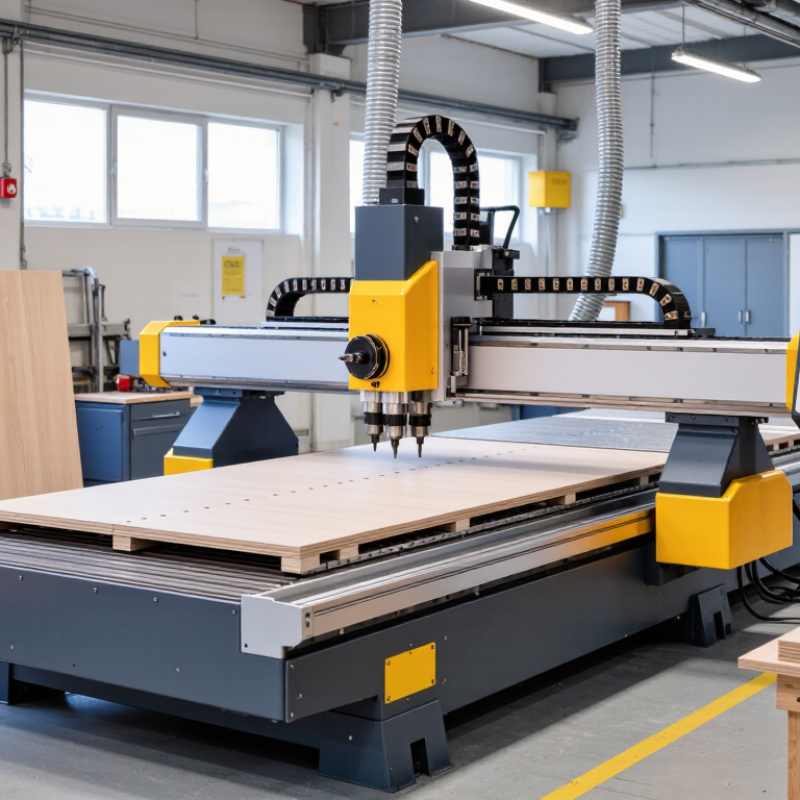
How to Choose a Furniture Side Drilling CNC Machine?

Define Your Furniture Production Needs and Workpiece Requirements

Before comparing machines, map the work you actually make. List daily panel volume, batch sizes, and the share of custom orders. Record each workpiece’s length, width, thickness, material, and drilling-face requirements. A cabinet side may need rows of shelf-pin holes, while a narrow drawer component needs accurate edge drilling. Include warped panels, laminated surfaces, and occasional oversized parts. They often expose limits that standard samples hide.

The market context is substantial: Grand View Research estimated the global furniture market at USD 556.3 billion in 2022 and projected 5.9% annual growth from 2023 to 2030.

That forecast does not tell you which machine to buy; your own product mix matters more. Compare your real panel range with the machine’s working envelope, clamping method, and tool-change needs. Also check whether operators can load parts safely and identify the correct drilling program. This is easy to miss. A tidy specification sheet can still conceal a poor fit for short runs or frequent size changes.

Keep a sample set of your most common and most difficult parts, then use it to assess positioning accuracy, cycle time, and setup effort before choosing.


Compare Side Drilling Machine Types and Configurations

A furniture side drilling CNC machine should match the panel flow, not just the catalog speed. Single-head units suit varied, low-volume work and quick setup changes. Multi-spindle configurations drill repeated hole patterns faster, but require consistent panel dimensions and careful tooling choices. CNC machining centers offer more flexible positioning for mixed orders; they may be excessive when every panel uses the same pattern. Small details matter. Check maximum panel thickness, drilling depth, edge distance, clamping access, and whether the machine handles one or both sides. A 32 mm hole pattern, for example, is only useful if the machine holds its position across the full panel.

Automation figures offer context, not a buying shortcut. The International Federation of Robotics’ World Robotics 2024 report counted 4,281,585 industrial robots operating worldwide in 2023, a 10% increase from 2022. That growth reflects wider automation, but does not prove a complex drilling cell will suit every furniture shop. Compare actual cycle times using your own panels, including loading, tool changes, and dust removal. Ask operators to test the software workflow, too. A fast spindle can still create a bottleneck. I would also review service access and spare-tool availability; these are easy to overlook during a showroom demonstration. No setup is perfect. Some throughput estimates deserve skepticism.

How to Choose a Furniture Side Drilling CNC Machine? — Compare Side Drilling Machine Types and Configurations
Machine Type Typical Configuration Best-Suited Work Advantages Trade-Offs What to Check Before Choosing
Single-side drilling machine One drilling unit works on one panel edge or face at a time; manual, pneumatic, or CNC positioning may be available. Small-batch cabinet parts, shelf-pin holes, dowel holes, and straightforward edge drilling. Simple setup, relatively compact footprint, and a practical choice for lower or variable production volumes. May require repositioning or a second operation to drill the opposite side; output depends heavily on loading and setup time. Confirm the usable panel range, clamping method, hole-position repeatability, and whether the machine supports the required drilling direction.
Double-side drilling machine Drilling units are arranged to process opposing sides of a panel, either simultaneously or in coordinated operations. Repeated cabinet and furniture components that need matching holes on both sides. Can reduce handling and help keep opposing hole patterns aligned when the workpiece is correctly referenced. Requires suitable panel access and setup; tooling or operating costs may be higher than for a basic single-side machine. Check whether both sides are drilled simultaneously, the minimum and maximum panel dimensions, and how the machine references the workpiece.
Multi-spindle side drilling machine A drilling head carries multiple spindles at fixed or adjustable spacing; configurations may be manual or CNC-controlled. Repeated rows of holes, connector patterns, and batch production with consistent spacing. Several holes can be produced in one cycle, reducing repeated tool movements for suitable patterns. Fixed spindle spacing can limit flexibility; adjustable or additional tooling may be needed for changing hole patterns. Match spindle count, spacing range, drill diameter, and pattern layout to actual drawings—not just the maximum number of spindles.
CNC gantry or moving-head side drilling machine A controlled drilling head moves along programmed axes; the workpiece is clamped on a table or supported by a positioning system. Mixed-size panels and jobs with varied hole locations or frequent program changes. Programmable positioning supports repeatable layouts and can reduce manual measurement between different jobs. Requires program setup and operator training; actual cycle time depends on travel, clamping, tool changes, and part handling. Review the number of controlled axes, workpiece referencing method, program workflow, and compatibility with the shop’s design or production files.
Combined side-drilling and routing configuration Drilling is paired with a routing or milling unit, sometimes with multiple tool stations or automatic tool selection. Parts that need side holes plus compatible slots, notches, or other routed features in one setup. Can reduce transfers between machines and keep related features referenced from the same setup. More complex tooling and programming; a combined machine may not match the throughput of dedicated equipment for every operation. Confirm which operations are supported, the available tool positions, workpiece clearance, and whether the required tools are included.
Automatic in-line side drilling system Side-drilling equipment is integrated with conveyors, automatic loading, or upstream and downstream production stations. High-volume production with stable part families and repeatable workflows. Automation can reduce manual handling and support a more continuous production flow. Needs careful line integration, adequate floor space, and reliable coordination between stations; less suitable for irregular one-off work. Assess required throughput, infeed and outfeed handling, changeover time, guarding, dust collection, and how faults or jams are managed.
Key selection criteria Compare machine type, work envelope, spindle arrangement, axes, clamping, controls, tooling, and automation as one complete configuration. Any shop selecting equipment for a defined mix of furniture panels, hole patterns, and production volumes. A needs-based comparison helps avoid paying for unused capacity or choosing a machine that cannot handle required parts. Catalog specifications alone may not reflect real cycle time, finish quality, or operator workflow. Test representative panels and programs. Verify material thickness, edge access, hole diameter and depth, accuracy requirements, safety features, service support, and total installed cost.

Configurations and capabilities vary by machine. Confirm specifications and processing results with the manufacturer using representative workpieces and production programs.

Assess Drilling Precision, Automation, and Software Compatibility

When choosing a furniture side drilling CNC machine, judge precision on the panel you actually make, not only on the brochure. Drill a test piece and measure hole spacing, diameter, and edge distance with calipers. Repeat the test after a tool change. Small differences matter. Ask how the machine compensates for panel movement and whether operators can verify calibration without stopping production for long. ISO 230-2 provides methods for testing machine-tool positioning accuracy, though it is not a guarantee of finished-part quality. The International Federation of Robotics reported 553,052 industrial robot installations in 2022 and 541,302 in 2023 in its World Robotics reports. Those figures show automation remains substantial, but they do not prove that a side drill will suit your workflow.

Assess automation by tracing one real order from design file to drilled panel. Can the machine read your existing cabinet software’s output, preserve hole patterns, and flag missing or conflicting instructions? Confirm supported file formats, post-processors, and version updates with a sample project before purchase. The 2023 and 2024 World Robotics reports track industrial robot installations, not furniture-machine adoption; treat them as broad context, not a buying forecast. Ask the supplier to demonstrate a job with your own data, including an edit and re-run. Software compatibility often looks simple until a file changes. I would also check recovery steps after a misfeed; this detail is easy to overlook, and real shops are rarely perfect.

Check Machine Capacity, Safety Features, and Total Operating Costs

A furniture side drilling CNC machine should match the panels you actually process, not just the largest job in last year’s schedule. Check the maximum panel length, thickness, drilling depth, and number of sides handled in one setup. Leave room for occasional oversized pieces, but avoid paying for capacity that sits idle. A machine with ample speed may still slow production if loading, positioning, or tool changes take too long. Run a sample panel and time the full cycle. Small delays add up.

Safety deserves a close inspection on the shop floor. Look for effective guarding, accessible emergency stops, and interlocks that prevent operation when covers are open. Check how dust is captured around the drilling area; fine chips can collect near moving parts and complicate cleanup. Ask operators whether controls are easy to understand during a busy shift. They may notice awkward access that a specification sheet misses. I might be overcautious here, but a rushed operator is a poor test of safety.

Compare total operating costs over several years, not only the purchase price. Include electricity, drills and other consumables, maintenance, software, training, and expected downtime. Ask what routine service involves and how quickly common wear parts can be replaced. A lower-cost machine can become expensive if production stops while waiting for a simple component. Estimates are imperfect; review them after a few months of real use.

Evaluate Supplier Support, Installation, and Maintenance Services

How to Choose a Furniture Side Drilling CNC Machine?
Evaluate Supplier Support, Installation, and Maintenance Services

A side drilling CNC machine can look straightforward in a showroom, but reliable production depends on what happens after delivery. Ask who handles installation, machine leveling, software setup, and operator training. A technician should demonstrate a complete drilling cycle using your own panel dimensions and hole pattern. Watch how the machine handles dust extraction and tool changes. Small details matter. Confirm the supplier provides clear manuals, spare-part lists, and realistic response times for service requests. Promises sound reassuring; written service terms are more useful.

Tips: Request a sample maintenance schedule and check which parts require frequent replacement. Ask how remote troubleshooting works and whether technicians can visit your facility. Keep a record of installation checks, training, and service calls.

Maintenance support is not just a repair plan. Ask about routine checks for spindle condition, drill alignment, clamps, and pneumatic connections. Find out whether replacement tools and common components are readily available. If the machine stops mid-shift, delayed support can disrupt several production steps. A supplier who asks about your daily workload may offer more relevant guidance than one who only quotes specifications. Still, even a thorough evaluation cannot prevent every breakdown; that is worth acknowledging when planning production capacity.

How to Choose a Furniture Side Drilling CNC Machine?

Evaluate supplier support, installation, and maintenance services using the suggested buyer-scoring weights below. These are planning weights, not measured market statistics.

When comparing suppliers, check response-time commitments, commissioning and operator training, spare-parts lead times, and the preventive-maintenance schedule. Score each supplier against the same criteria.

REQUEST A QUOTE

Menu
[all-fields]