China Top 10 Home Energy Storage Battery Manufacturers
China’s home energy storage market is shaped by battery makers, inverter partnerships, and changing household needs. A Home Energy Storage Battery can store rooftop solar power for evening use, provide backup during outages, and help households manage energy consumption. The details matter. A battery’s usable capacity, chemistry, power output, warranty terms, and compatibility with an existing inverter can affect daily performance.
At Tesla’s 2015 Powerwall launch, Elon Musk said, “The future is going to be solar power and energy storage.” That vision helps explain why manufacturers in China are attracting global attention. Still, factory scale alone does not establish product quality. Buyers and installers should examine independently verifiable certifications, product documentation, after-sales support, and the conditions behind warranty coverage. They should also check whether a system suits local grid requirements and household loads.
This guide introduces ten Chinese manufacturers and offers a practical starting point for comparison. It does not treat the list as a universal ranking; market position and product availability can change. Some company claims are difficult to compare directly, which deserves caution. A polished specification sheet is not field experience. Look for clear test information, transparent service channels, and evidence of long-term reliability. Small details count: a battery’s operating temperature range, monitoring app, or replacement process may matter more than a headline capacity figure. The right choice depends on the home, installer, and support available—not just the brand name.
China’s Home Energy Storage Battery Industry: Scope and Development
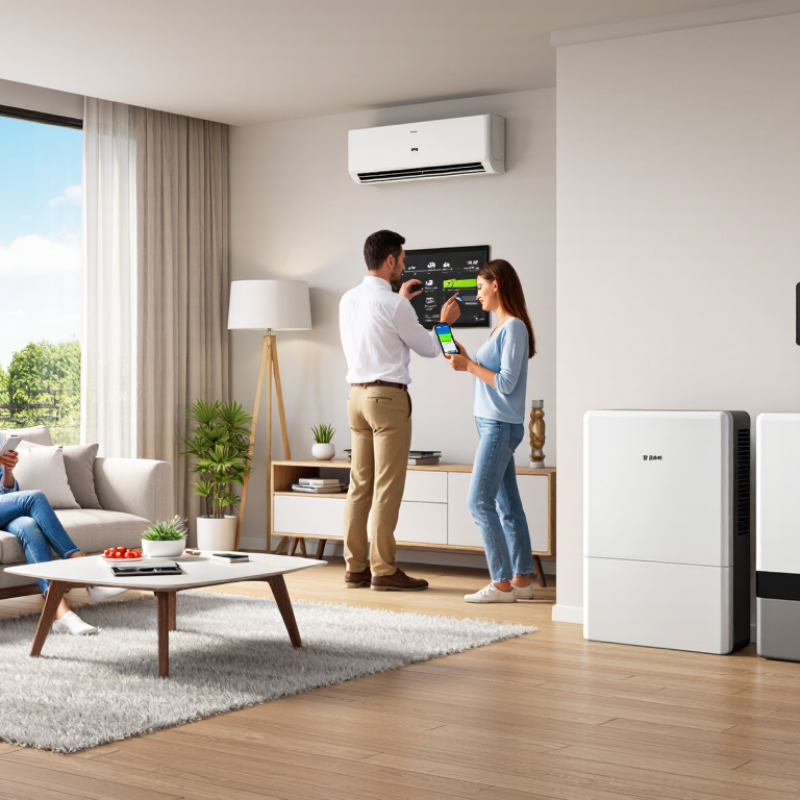
China’s home energy storage battery industry covers more than battery cells. It includes residential battery packs, battery management systems, inverters, monitoring software, and installation support. These components must work together inside homes, where space, temperature, and household electricity use vary widely. A compact wall-mounted unit may serve a small apartment, while a larger system can support a house with rooftop solar and higher evening demand.
Development is shaped by the growing need to store electricity for later use. During sunny hours, a household can charge its battery with surplus solar power, then draw from it after sunset or during an outage. Not everywhere. Regional climate, housing design, grid conditions, and local installation capacity all affect which system is practical. In real projects, matching storage capacity to actual daily use matters more than choosing the largest unit.
Manufacturers are also improving cell consistency, thermal control, system monitoring, and product testing. These details matter: a battery installed in a warm utility room faces different conditions from one placed in a cool garage. Service access and clear operating instructions are just as important as headline capacity. The industry’s progress is not perfectly even; product performance, installer expertise, and long-term support can differ. That gap deserves attention. As the market develops, dependable system integration and transparent technical information will help households make better-informed choices.
China’s Home Energy Storage Battery Industry: Scope and Development
Cumulative installed power capacity of China’s new-type energy storage sector grew rapidly from 2020 to 2024. This sector-wide measure provides context for the broader market in which home energy storage develops; it is not a residential-only figure.
Capacity is measured in gigawatts (GW). Source: China Energy Storage Alliance (CNESA), annual industry statistics; figures are rounded where applicable.
Key Criteria for Assessing Home Storage Battery Manufacturers
Assess a home-storage manufacturer by evidence, not brochure claims. The International Energy Agency’s Batteries and Secure Energy Transitions report states that battery storage additions reached 42 GW in 2023, 130% above 2022. This rapid expansion makes production consistency and after-sales support practical concerns, not minor details. Ask for batch-level quality records, independent laboratory test reports, and clear warranty terms.
Check usable capacity, round-trip efficiency, cycle-life conditions, and performance at different temperatures. A cycle-life figure means little without its test temperature, depth of discharge, and remaining-capacity threshold. Ask whether quoted capacity is measured at the battery terminals or includes conversion losses. Numbers need context. Verify that safety certificates apply to the exact battery model and system configuration, rather than a related product.
Request references from installations in climates similar to yours, then ask how faults and replacement claims were handled. The IEA’s growth data describes the wider market; it does not prove any supplier’s quality.
That distinction matters.
A neat datasheet can still leave gaps around software updates, spare parts, and response times. I would also compare warranty exclusions carefully: the wording is often less simple than the headline years suggest.
Profiles of Ten Leading Chinese Manufacturers
Profiles of ten leading Chinese manufacturers reveal a market built around different strengths, not one standard product. Some specialize in lithium iron phosphate cells, while others focus on battery packs, inverters, or complete residential systems. A useful comparison checks usable capacity, continuous output, cycle-life test conditions, warranty terms, and monitoring functions. Ask how the system behaves during a cloudy week, not only how it performs in a lab. Small details matter.
The International Energy Agency reported that China held about 75% of global battery-cell manufacturing capacity in 2021, alongside major shares of cathode and anode production. This is upstream context, not proof that every home-storage product has equal quality. The IEA’s 2024 Batteries and Secure Energy Transitions report says battery storage capacity needs to grow sixfold, to 1,200 GW, by 2030 in its net-zero pathway. That demand helps explain manufacturers’ investment in scale and system integration. Still, a factory’s size cannot replace independent safety testing or clear service commitments. Rankings can also miss regional support and long-term repairability. That distinction is easy to overlook.
Product Technologies, Capacity, and Safety Standards
Chinese home-storage manufacturers typically build systems around lithium iron phosphate cells, modular battery packs, and battery-management software. LFP chemistry offers strong cycle life, but it still needs careful temperature and voltage control. Modular designs let installers add capacity as household demand grows. Field results vary.
IEA’s Batteries and Secure Energy Transitions report says global battery-storage additions reached about 42 GW in 2023, up roughly 130% from 2022. That figure covers storage markets broadly, not home batteries alone. BloombergNEF’s 2024 Battery Price Survey put average lithium-ion pack prices at US$115 per kWh, 20% below 2023. Lower cell costs do not automatically mean a safer or better household system. Yet a tidy datasheet can hide awkward installation trade-offs.
Safety depends on cell quality, enclosure design, monitoring, and verified testing. IEC 62619 addresses safety requirements for industrial lithium batteries, while UL 9540 covers energy-storage systems and equipment. UL 9540A tests how thermal runaway and fire may spread. Buyers should check test scope, usable capacity, inverter compatibility, and warranty conditions—not just headline capacity. Paper compliance is not enough. A clear installation record matters.
Market Trends and International Presence of Chinese Manufacturers
China’s home energy storage manufacturers are competing on more than battery-cell output. International buyers increasingly compare system safety, inverter compatibility, warranty terms, and local technical support. The International Energy Agency’s Batteries and Secure Energy Transitions report (2024) estimates that China held about 85% of global battery cell manufacturing capacity in 2023. That manufacturing depth supports competitive pricing and broad product availability. It does not guarantee a smooth installation or reliable service in every market.
Demand is expanding, but unevenly. The IEA reports that global battery storage capacity additions in the power sector reached roughly 42 gigawatts in 2023, more than doubling from 2022. Residential systems form only part of this growth, yet rising rooftop solar adoption is creating opportunities for Chinese suppliers in Europe, Australia, and other markets. Their international presence often depends on partnerships with local installers and distributors. A container may cross an ocean quickly; spare parts and trained service staff are harder to scale.
Export growth also brings practical questions. Product certifications, grid settings, and household energy habits differ by country. Strong factory output is useful, but it is not the whole story. Buyers should examine tested cycle-life data and warranty conditions, not just headline capacity. Public reports rarely separate residential exports from larger battery shipments, so market rankings can be less precise than they appear. That caveat matters.