
- 713.590.1312
- sale@pandbtools.com
China Top Flow Valves Manufacturers and Suppliers?
China has become a major sourcing base for industrial Flow Valves, serving oil and gas, water treatment, power generation, chemical processing, and marine projects. According to Grand View Research, the global industrial valves market was valued at approximately USD 73 billion in 2023. The report also expects continued growth through 2030, supported by infrastructure investment and stricter process-control requirements. China’s manufacturing depth makes it important, but supplier quality remains uneven.
This guide examines leading Chinese Flow Valves manufacturers and suppliers through practical purchasing criteria. These include product range, pressure ratings, materials, machining capability, testing procedures, export experience, and after-sales support. Relevant standards may include API 6D, API 598, ASME, EN, and ISO 9001 certification. A reliable supplier should provide heat-number traceability, dimensional inspection records, hydrostatic test results, and clear documentation for each shipment. Small details matter. A clean valve body, readable nameplate, and complete test certificate can prevent costly installation delays.
Market reports do not always agree on market size or growth rates. That difference deserves attention. “Top” should not mean the largest factory or the lowest quoted price. It should describe a supplier that consistently matches technical specifications, delivery commitments, and project risk controls. Factory audits, sample testing, and reference checks remain essential, even when a company presents impressive certifications. Some manufacturers may have strong production capacity but limited engineering support. Others may offer excellent customization but lack stable export logistics. This overview therefore compares capabilities carefully, while recognizing that supplier rankings can change with project requirements, certification scope, and real-world performance.
What Are Flow Valves and How Do They Work?
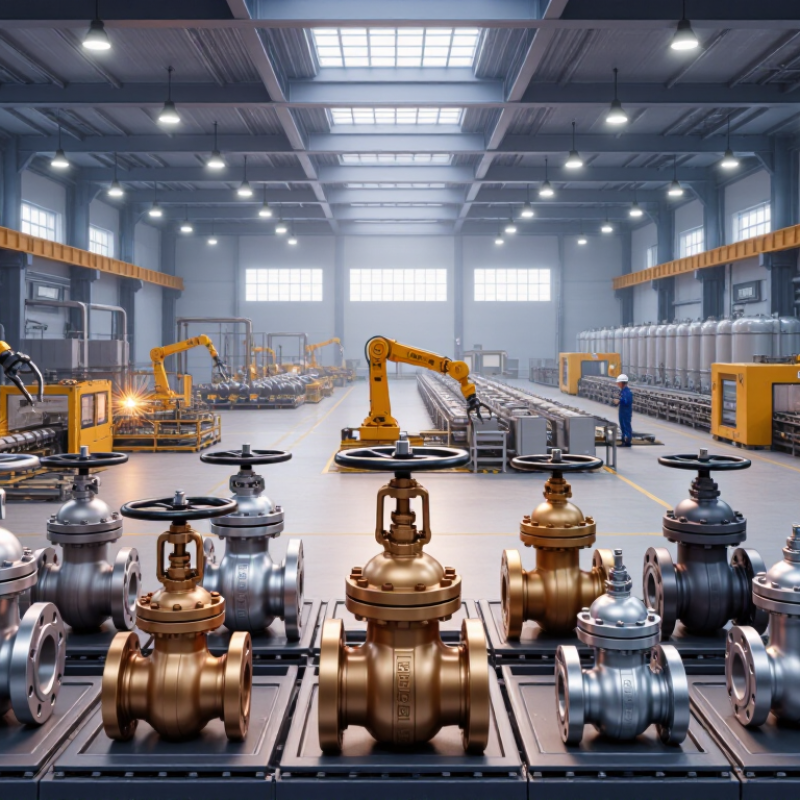
Flow valves control the movement of liquids, gases, or mixed fluids inside piping systems. They regulate flow rate, direction, and sometimes pressure. A valve uses an internal element, such as a ball, disc, plug, or needle. The element moves when a handle, actuator, or control signal turns the stem. This changes the opening area and the resistance inside the pipe.
A valve is not simply an on/off door. A fully open valve usually creates less pressure loss. A partially closed valve increases resistance and may produce turbulence, noise, or vibration. For this reason, professional buyers should check flow rate, fluid temperature, pressure, viscosity, and pipe size. Chinese manufacturers and suppliers may provide manual, pneumatic, or electric options. However, technical drawings and test records matter more than attractive catalog language. No selection is perfect on paper. Even experienced teams can oversize a valve, causing unstable control and unnecessary cost.
Tips: Match the valve body and seals with the actual fluid. Ask for leakage data, pressure ratings, material certificates, and actuator torque. Confirm installation direction before fitting. After startup, inspect joints and listen for unusual noise. Small details matter.
Why Choose Chinese Flow Valve Manufacturers and Suppliers?
Chinese flow valve manufacturers and suppliers attract buyers through practical engineering, flexible production, and competitive sourcing. Many factories combine casting, machining, assembly, pressure testing, and export packing under one roof. This arrangement can shorten communication between design and production teams. It also makes technical corrections easier when a valve fails a trial test. Buyers can request materials such as ductile iron, carbon steel, stainless steel, or engineered plastics. They may also specify pressure classes, connection standards, actuator types, and operating temperatures. Detailed drawings matter more than attractive catalog images. A reliable supplier should provide a clear data sheet, inspection plan, and delivery schedule. Ask for test records.
Experienced suppliers usually maintain traceability from raw material certificates to final inspection. They understand that a valve beside a boiler, pump, or process line faces different risks. Their engineers can review flow direction, media compatibility, cavitation, torque, and maintenance access. Independent inspections can add confidence before shipment. Factory audits are useful, especially when documentation looks unusually perfect. That concern deserves examination. Not every low quotation represents real savings. Some prices exclude testing, spare parts, packaging, or after-sales support. Clear contracts should define tolerances, warranty response, replacement procedures, and communication channels. Sample approval can reveal machining marks, uneven coating, or difficult handwheel movement. Small details matter. Chinese manufacturers can provide strong value when buyers verify capability instead of relying on promises. However, quality depends on the selected supplier and the discipline of the purchasing process.
Key Types of Flow Valves Made in China
China’s flow-valve industry serves water treatment, energy, chemicals, and general manufacturing. Grand View Research estimated the global industrial valves market at about USD 78 billion in 2023. Its report also identifies energy and water infrastructure as important demand centers.
Ball valves provide quick shutoff with a quarter-turn handle. Butterfly valves suit large pipes because their discs remain compact and lightweight. Globe valves offer finer throttling, although pressure loss can be higher. Gate valves support full-flow isolation and are common on pipelines. Check valves prevent reverse flow without manual operation. Control valves use actuators and signals to regulate pressure, temperature, or flow rate.
Details matter.
Chinese manufacturers commonly produce cast and forged bodies in carbon steel, stainless steel, and special alloys. Selection should match pressure class, fluid temperature, corrosion risk, and cycling frequency. The MarketsandMarkets control-valve report projected steady market growth through 2028, supported by process automation and industrial upgrades. However, market growth does not prove product quality. Buyers should request material certificates, pressure-test records, leakage results, and traceability documents. ISO 5208 and API 598 provide useful testing references. A practical factory audit should inspect machining accuracy, seat testing, actuator calibration, and final packaging. Catalog claims can look convincing. Field performance still depends on correct sizing and installation.
How to Evaluate China’s Top Flow Valve Companies
Evaluating China’s top flow valve companies requires more than comparing prices and product photos. China has a large manufacturing base, but capability varies sharply between factories and trading companies. Market estimates also differ. Mordor Intelligence values the global industrial valves market at about USD 78 billion in 2024. Fortune Business Insights reports a different figure and projects steady growth through 2032. This gap matters. It shows why supplier claims need independent verification.
Start with production evidence. Ask whether the supplier owns machining, assembly, and pressure-testing equipment. A factory visit should reveal calibration records, material storage, and clear batch identification. Request recent inspection reports, material certificates, and serial-number traceability. For pipeline applications, confirm testing against relevant requirements such as API 6D and ISO 5208. For water systems, check coating thickness, sealing materials, and corrosion protection. Practical details often expose weak quality control.
Review experience, not only export volume. Ask for anonymized project references, failure rates, warranty procedures, and spare-parts availability. Delivery records should include actual lead times, not promotional estimates. A useful scorecard can assign separate weights to engineering, testing, documentation, cost, and after-sales support. I would avoid choosing the lowest quotation immediately. It may hide thinner materials, incomplete testing, or expensive replacement work later. Even a careful audit has limits; one factory visit cannot prove long-term field reliability. That uncertainty deserves a written risk allowance.
China Top Flow Valves Manufacturers and Suppliers? - How to Evaluate China’s Top Flow Valve Companies
| Evaluation Dimension | What to Evaluate | Objective Evidence to Request | Relevant Standard or Reference | Suggested Weight |
|---|---|---|---|---|
| Product Scope | Suitability of the valve portfolio for the required media, pressure class, temperature range, connection type, and operating mode. | Product datasheets, pressure-temperature ratings, dimensional drawings, material options, and published operating limits. | ASME B16.34; applicable project specifications; relevant valve product standards. | 15% |
| Pressure and Functional Testing | Whether each valve is tested for shell integrity, seat tightness, operation, and correct pressure rating before shipment. | Test procedures, inspection and test plans, signed test reports, calibration records, and sample certificates linked to serial numbers. | API 598; ISO 5208; applicable product standard. | 15% |
| Materials and Traceability | Consistency between the specified alloy, actual material, pressure-containing parts, trim, fasteners, and supplied documentation. | Heat-number traceability, positive material identification records, material test certificates, casting or forging records, and weld documentation where applicable. | EN 10204 type 3.1; project material specifications; applicable ASTM or ISO material requirements. | 15% |
| Quality Management | Maturity of documented processes covering purchasing, production, inspection, nonconformities, corrective actions, and document control. | Current quality certificate, certification scope, audit reports, corrective-action records, inspection procedures, and internal quality objectives. | ISO 9001 certification issued by an accredited certification body. | 12% |
| Leakage and Emissions Control | Ability to control internal leakage, external fugitive emissions, packing performance, and stem or shaft sealing reliability. | Type-test reports, production test records, packing specifications, stem-seal design details, and emissions test results for the intended service. | ISO 15848-1; ISO 15848-2; ISO 5208 where applicable. | 10% |
| Special-Service Capability | Experience with sour service, oxygen service, cryogenic service, fire-safe applications, abrasive fluids, or severe-cycle operation when required. | Application-specific qualification reports, material restrictions, cleaning procedures, fire-safe or cryogenic test reports, and service references without confidential customer data. | NACE MR0175/ISO 15156; ISO 10497; ISO 28921-1; project-specific requirements. | 10% |
| Design and Engineering | Technical depth in sizing, flow characteristics, actuator selection, pressure drop, cavitation risk, noise, and maintainability. | Calculation sheets, sizing software output, 3D or sectional drawings, finite-element analysis where needed, and engineering change records. | IEC 60534 series for control-valve applications; project engineering specifications. | 8% |
| Manufacturing and Inspection Resources | Control of casting, forging, machining, welding, heat treatment, coating, assembly, and final inspection activities. | Factory audit access, equipment list, process flow chart, non-destructive examination qualifications, calibration records, and subcontractor controls. | ISO 9001; applicable welding, NDE, casting, forging, and project requirements. | 8% |
| Delivery and Supply-Chain Reliability | Ability to meet confirmed lead times while maintaining material availability, production capacity, packaging quality, and export documentation. | Historical on-time delivery data, production schedule, capacity statement, inventory policy, packing specification, and shipping-document samples. | Contract terms, agreed inspection milestones, and customer-specific logistics requirements. | 5% |
| After-Sales Support | Responsiveness for installation, commissioning, troubleshooting, spare parts, warranty claims, and technical documentation updates. | Support process, response-time commitment, spare-parts list, warranty terms, service organization, and sample corrective-action report. | Purchase contract, warranty requirements, and service-level agreement. | 2% |
| Total Suggested Evaluation Weight | 100% | |||
What Industries Use Flow Valves from Chinese Suppliers?
Chinese flow valve suppliers serve many industries where controlled movement of liquids, gases, or slurries is essential. Water treatment plants use these valves on intake lines, filtration systems, dosing units, and wastewater outlets. Engineers often specify stainless steel or lined bodies when chemicals may cause corrosion. A small leakage can affect an entire treatment cycle.
Building services are another major market. Chinese suppliers provide valves for chilled water, heating systems, fire protection, and industrial cooling loops. On a commercial project, technicians may install butterfly valves near pumps and smaller control valves above ceiling panels. Access matters. A valve that performs well but cannot be serviced easily creates avoidable costs.
Process industries also depend on flow valves. Chemical factories, food processors, pharmaceutical facilities, power stations, and mining operations require accurate isolation and regulation. Food plants may request hygienic surfaces, while mining sites need durable equipment for abrasive slurry. Agricultural irrigation projects use electrically actuated valves to manage remote water zones. Specifications should include pressure ratings, temperature limits, seal materials, and actuator response time.
Experience shows that a low purchase price does not guarantee reliable operation. Supplier audits, material certificates, pressure testing, and sample inspections provide stronger evidence. Some buyers overlook spare seals or local maintenance skills. That mistake can delay production. Chinese manufacturing capacity is broad, but quality still depends on clear drawings, traceable testing, and disciplined communication. Suppliers should also explain where their standard design may not fit the application.
Related Posts
-
What is a Flanged Gate Valve and Why It’s the Best Choice for Your Industrial Needs?
-
Comparative Analysis of the Top 5 Best Swing Check Valves: Efficiency and Performance Metrics Revealed
-
Top Globe Valve Manufacturers for Global Buyers Guide
-
Unlock Global Excellence with China’s Premier Gate Valve Components
-
What is an Angle Globe Valve and How Does it Work?
-

Unlocking Global Opportunities for Cryogenic Ball Valves at the 137th Canton Fair in Guangzhou